
Published Date:
Published By:

Digital Nomad FAQ’s
Is Canggu, Bali a good destination for digital nomads?
Absolutely — Canggu is one of the largest digital nomad hubs in the world. Areas like Berawa, Batu Bolong, Pererenan, and Echo Beach offer fast WiFi, world-class cafés, dozens of coworking spaces, and a huge international community. Combine that with the beach lifestyle, surf, yoga, and incredible food, and it's easy to see why so many nomads end up basing here for months at a time.
How is the internet speed and reliability in Canggu?
Excellent for Southeast Asia — Canggu has some of the best WiFi in Bali. Across my tests in cafés and colivings I consistently hit 60–85 Mbps download and 40–80 Mbps upload, with top spots like SatuSatu, Two Faces, Miel, and Outpost Cowork delivering 75+ Mbps. Carrying a local eSIM (Telkomsel or XL) is a smart backup for outages and scooter days. See a full breakdown of speeds here.
Is it easy to meet people and make friends in Canggu?
Yes — Canggu is one of the easiest places in the world to make friends as a digital nomad. Coliving spaces (Outpost, Tropical Nomad, Shashvata), coworking spaces, yoga classes, surf line-ups at Old Man's, and beach sunsets at La Brisa or Old Man's create constant opportunities to connect. Most cafés are full of remote workers happy to chat over a flat white. Learn how to connect with others here.
How much does it cost to live in Canggu per month?
Canggu is more expensive than other parts of Bali but still very affordable for the lifestyle. Budget nomads in shared rooms or basic homestays can live on $900–$1,200 USD per month, while a comfortable lifestyle with a private 1BR villa, scooter rental, gym, and a mix of local + Western meals typically runs $1,500–$2,500 depending on neighborhood and season. See a full cost breakdown here.
Are there good places to work remotely in Canggu?
Canggu has dozens of laptop-friendly cafés and a handful of world-class coworking spaces. Top picks include The Slow, SatuSatu, Two Faces, Miel, Kawisari Coffee Farm Shop, and Lusa By Suka for cafés, plus Outpost Cowork and Tropical Nomad for dedicated coworking. Most spots offer fast WiFi, plenty of outlets, and quality coffee. More details here.
What are the best areas for digital nomads in Canggu?
Berawa is the most popular for first-timers — central, social, and full of cafés. Batu Bolong is the heart of the surf-meets-coffee scene. Pererenan is quieter, more local, and ideal for longer stays. Echo Beach is great for surfers who want the ocean at their doorstep. Most digital nomads end up basing in Berawa or Pererenan and moving around the rest of Canggu by scooter.
Bali Visas for Digital Nomads
The visa information below may not be up to date. This should not be used as official visa advice. Always refer to your nearest Indonesian embassy or the official Directorate General of Immigration website (imigrasi.go.id) for the latest information. At Digital Nomad Lifestyle we believe in following the laws and regulations of every country we visit. Please respect the local laws and apply for your visa accordingly.
Want to learn more about digital nomad visas around the world? Click here: Digital Nomad Visa Guide: Countries Offering Long-Term Stay Options 2025
Visa rules in Indonesia can change often, so always check the official immigration website before traveling: imigrasi.go.id. This is a general guide, not official visa advice.
For most travelers, the easiest option is the Visa on Arrival, also called VOA or e-VOA.
Visa on Arrival / e-VOA
This is the best option if you are staying in Bali for a short trip.
- Stay: 30 days
- Cost: 500,000 IDR (approx. $35 USD)
- Extension: usually one extra 30-day extension
- Total stay: up to 60 days
- Best for: short visits, holidays, and first-time travelers
The official Indonesian eVisa website lists the Visitor Visa fee as IDR 500,000 (approx. $35 USD). Card payments may include extra bank fees.
Longer Tourist Visa
If you want to stay longer than 30–60 days, apply for a longer visit visa before entering Indonesia.
- Stay: usually up to 60 days
- Cost: around 2,000,000 IDR
- Extension: depends on the visa type
- Best for: travelers or digital nomads staying a few months in Bali
The official eVisa portal lists some 60-day visit visas as IDR 2,000,000.
Digital Nomad Visa
Indonesia also offers the E33G Remote Worker Visa, often called the Digital Nomad Visa.
This visa is for people who work online for companies or clients outside Indonesia.
- Stay: longer-term remote work option
- Best for: digital nomads with foreign income
- Requirement: proof of work or contract with a company outside Indonesia
- Important: you cannot work for Indonesian companies unless your visa allows it
The official eVisa information states that applicants need an employment contract with a company established outside Indonesia.
Other Long-Term Options
For longer stays, you can also research:
- KITAS: for people sponsored by an Indonesian company, investor structure, or other eligible category
- Second Home Visa: for long-term residents who meet Indonesia’s financial requirements
These visas are more complex, so it is better to check with immigration or a licensed visa agent before applying.
Arrival in Bali
Most travelers arrive at Ngurah Rai International Airport (DPS) in Denpasar.
From the airport to Canggu, the drive usually takes around 45 minutes to 1 hour, depending on traffic. Bali traffic can be heavy, especially around Kuta, Seminyak, and Canggu.
You can use Grab, Gojek, airport taxis, or private drivers, but pickup rules at the airport may change.
Quick Checklist
Before flying to Bali, make sure you have:
- Passport valid for at least 6 months
- Proof of onward travel
- Accommodation details
- Card or cash for visa fees
- Travel or health insurance
- The correct visa for your stay
Once in Canggu, public transport is very limited. Most people use Grab, Gojek, taxis, or scooters. If you rent a scooter, wear a helmet and check if you need an international driving permit.
Cost of Living in Canggu, Bali
Below you'll find a quick overview of typical costs in Canggu, Bali, plus extra context for digital nomads. For deeper data, check the Canggu cost of living page on Numbeo. Want a deeper breakdown of how to budget as a digital nomad? Read my full Digital Nomad Budget Guide.
(Single Adult, Excl. Rent)
(1 Bedroom, City Center)
Restaurant
(0.5 Liter)
(One Way)
(10GB+ Data)
/ Month
WiFi Speed Tests in Canggu
Reliable internet is one of the most important factors when choosing a destination as a digital nomad. Speeds can vary significantly depending on the area, type of accommodation, and local infrastructure, so it’s important to know what to expect before you arrive.
Read my guide to getting fast wifi anywhere in the world here
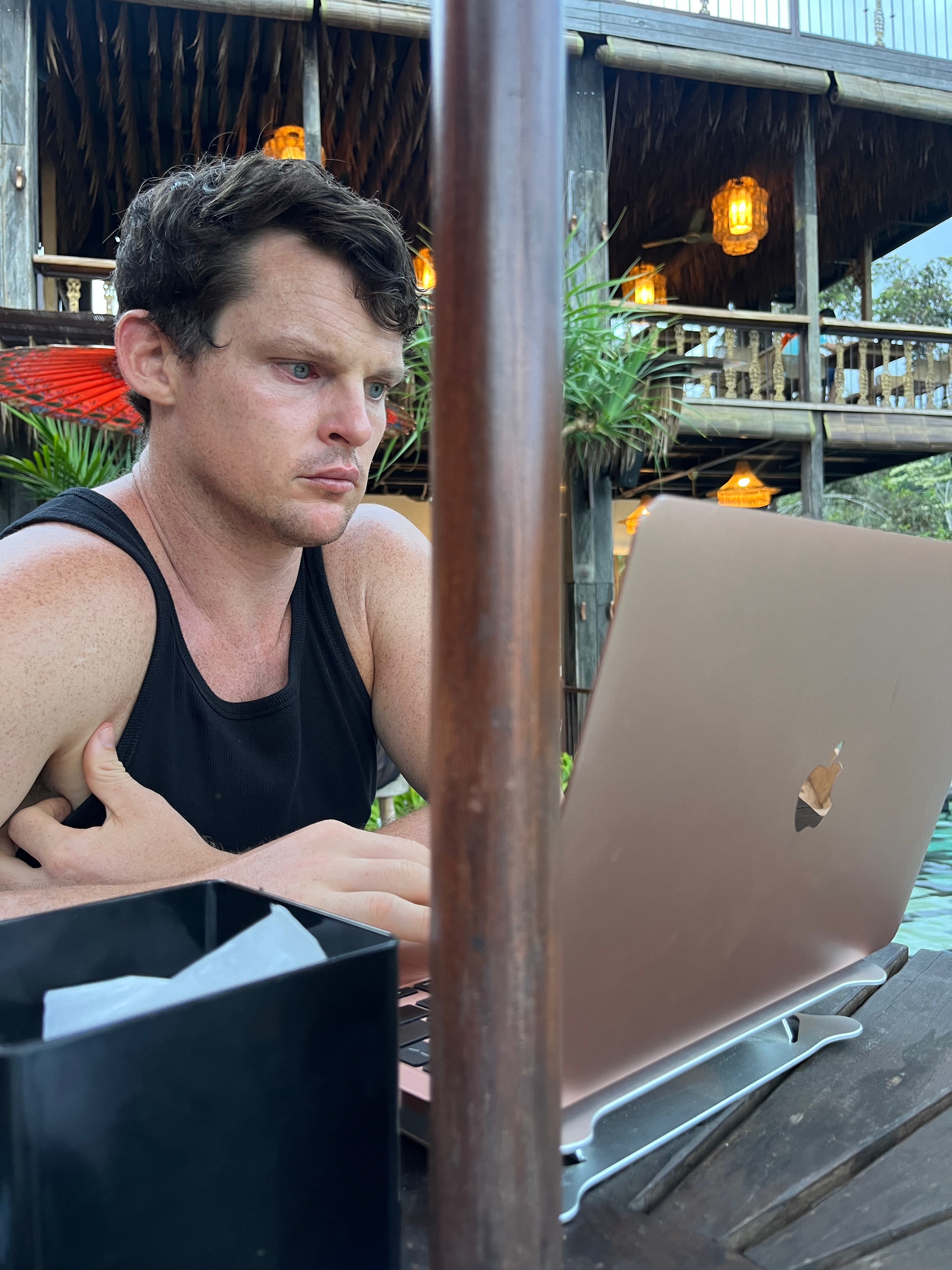
Working from one of the many laptop-friendly cafés in Canggu.
A Map of Where to Stay & Work in Canggu, Bali
Below is an interactive map of the best places to stay and work in Canggu — including hotels, colivings, my favorite cafés, and coworking spaces. Color coding helps you spot the type of spot at a glance.
Co-Lives in Canggu & Where I Stayed
Coliving
Hotel
Places To Stay – Honorable Mentions
Coliving
Tropical Nomad Canggu
Berawa, Canggu
Retreat
The Chillhouse
Batu Bolong, Canggu
Hostel
Mad Monkey Hostel Canggu
Berawa, Canggu
Hotel
Frii Bali Echo Beach
Echo Beach, Canggu
Luxury
COMO Uma Canggu
Berawa, Canggu
Co-Works & My Favorite Places To Work From in Canggu
Café
☆
An iconic Canggu boutique-hotel café with a beautiful indoor-outdoor design. Quality brunch, top-tier coffee, and a quiet enough atmosphere for focused work.
Café
☆
Spacious, plant-filled café with the best upload speeds in Canggu (88 Mbps) — perfect for video calls and uploads. Excellent coffee and brunch options too.
Café
☆
Modern, plant-filled café in Berawa with consistently fast WiFi, big work-friendly tables, and an excellent brunch menu. A daily favorite for many Canggu nomads.
Café
☆
A laid-back café with a beautiful tropical garden setting. Strong WiFi, great coffee, and one of the lowest latencies in town for Zoom calls.
Café
☆
A quiet, beautifully designed coffee shop perfect for deep work. Single-origin Indonesian beans, peaceful atmosphere, and excellent upload speeds.
Café
☆
Vegan-friendly café with a strong work-from-here culture. Big tables, quality wifi, and a great brunch menu.
Café
☆
A small, design-forward café in Pererenan. Quiet, peaceful, and the lowest latency we tested in Canggu — ideal for video calls.
Café
☆
A cozy café with great matcha drinks and healthy bowls. Solid wifi for remote work and a calmer atmosphere than the bigger cafés.
Café
☆
A long-running family-friendly café in Berawa with garden seating and a very strong upload speed (71 Mbps). Good for relaxed work sessions.
Health & Safety
Bali generally feels very safe, especially in established expat hubs like Canggu, Berawa, and Pererenan. The atmosphere is friendly, locals are warm, and most digital nomads move freely day and night without major issues. The biggest day-to-day risk is not crime — it's scooter accidents. Bali's traffic is chaotic, helmets are mandatory, and rainy roads can be slick. Beyond that, watch your bag on a parked scooter, avoid leaving valuables on the beach unattended, and don't flash large amounts of cash. As always, common sense is your best defense.
🛡️ Safety Ranking
Global Peace Index: Indonesia ranks 49 out of 163 (Relatively Peaceful). Bali itself is generally considered safer than most parts of Indonesia for foreign visitors.
Crime Index: 44.0 — Low to Moderate. Petty crime exists, but violent crime against tourists is rare in Canggu.
Common Risks: Scooter accidents (most common by far), petty theft from parked scooters or unattended bags, occasional bag-snatching from drive-by scooters, motorbike rental scams, ATM skimming, and pick-pocketing in busy markets.
Areas to Avoid at Night: Quiet, unlit back streets in Kuta and around the Sunset Road area. Canggu, Berawa, and Pererenan stay relatively busy late and feel safe to walk through main streets — but always be cautious in dark, isolated rice field paths.
Solo Traveler Safety: Excellent. Canggu has one of the largest solo-female nomad communities in the world, and most coliving spaces are very welcoming. Stick to main streets at night, use Grab or Gojek instead of unfamiliar private cars, and trust your instincts.
💡 Nomad Tip: Use Grab or Gojek (Indonesia's two main ride-hailing apps) for safe, transparent fares — they work for both cars and scooters in Canggu. Never leave your passport as a deposit when renting motorbikes — it's a well-documented scam where the renter claims something is missing and demands extra money to release your passport. Always pay a cash deposit, take photos of the scooter (front, sides, scratches) plus the helmets when picking it up, and rent only from well-reviewed shops on Google Maps. Canggu's main streets (Pantai Berawa, Batu Bolong) and Pererenan stay busy and feel safe well into the night.

🍽️ Food & Water Safety
Bali's food scene is one of the best things about Canggu. From Indonesian classics like nasi goreng, mie goreng, gado-gado, bebek goreng, and nasi campur, to one of the best plant-based and Western brunch scenes in Southeast Asia, you'll never be bored at the table. For digital nomads, the main rule is simple: tap water is not safe to drink, but most established cafés, restaurants, and warungs use filtered water and ice — so the famous "Bali belly" is more often a result of new bacteria, spicy food, or dehydration than truly contaminated food. Eat where it's busy, drink bottled water, and you'll mostly be fine.
Tap Water: Not safe to drink anywhere in Bali. Use bottled water, refill at filtered water stations (most colivings have them), or use a filter/purifier (LifeStraw, Grayl) for drinking, brushing teeth, and rinsing fruit.
Ice in Drinks: Generally safe at established cafés, restaurants, and beach clubs in Canggu — they use commercial ice cubes (the kind with a hole in the middle). Be more cautious with ice at small local warungs and roadside stalls.
Street Food: Generally safe at busy warungs with high turnover. Try Warung Local, Warung Bu Mi, and the family-run warungs along Pantai Berawa and Batu Bolong. Night markets like Sindhu (Sanur) are great for an authentic local food experience.
Fresh Salads / Raw Vegetables: Safer at mid-range and Western-style restaurants in Canggu (most cafés in Berawa and Batu Bolong use filtered water for washing produce). Be more cautious at very cheap warungs.
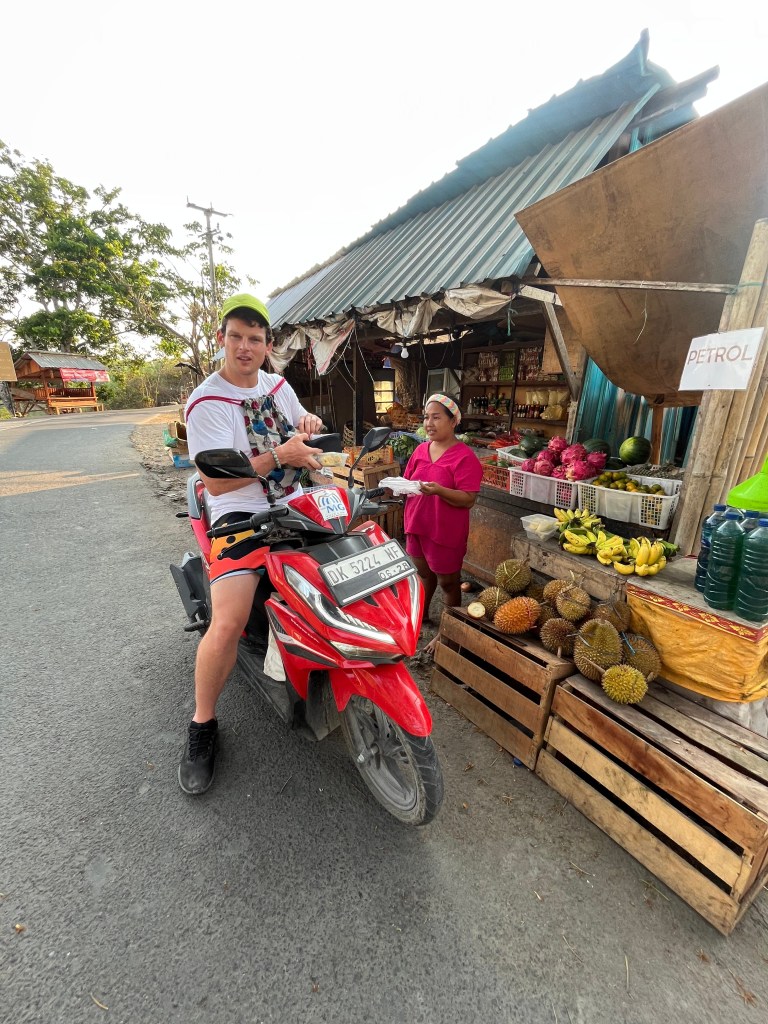
Fruit: Bali has incredible tropical fruit — mangosteen, snake fruit (salak), mango, papaya, dragon fruit, rambutan, jackfruit, and durian.
From my experience, my top recommendations are durian and jackfruit. I absolutely love durian, even though many people find the smell too strong and some hotels may not allow it inside. Still, if you are curious and open-minded, it is one of the most unique fruits to try in Bali.
Jackfruit is much easier to love right away — sweet, tropical, and perfect as a snack.
When possible, buy fruit whole, peel it yourself, and rinse cut fruit with bottled water before eating
Common Illnesses: "Bali belly" / traveler's diarrhea (very common in the first week), occasional dengue fever (mosquito-borne, especially rainy season Nov–Mar), rare cases of typhoid. Bring oral rehydration salts and consider a probiotic.
Must-Try Indonesian Dishes: Nasi goreng (fried rice), mie goreng (fried noodles), nasi campur (mixed rice plate), babi guling (Balinese suckling pig), bebek betutu (slow-cooked duck), satay (grilled skewers), sate lilit (Balinese lemongrass satay), and a fresh young coconut from any roadside stall.


🏥 Healthcare System
Bali's healthcare options for digital nomads are far better than most of Southeast Asia. The island has several internationally accredited private hospitals — BIMC Hospital (Kuta and Nusa Dua), Siloam Hospitals Bali (Denpasar), and Kasih Ibu Hospital — all with English-speaking staff and modern facilities for everything from routine checkups to surgery. For minor issues, pharmacies (apotek) are everywhere in Canggu and most prescriptions are available over the counter at much lower prices than in Western countries. For anything serious or life-threatening, many expats opt to fly to Singapore or Bangkok, both within 3 hours. Travel insurance with evacuation coverage is essential.
Travel Insurance: Non-negotiable for Bali — scooter accidents alone make it worth every cent. I personally use Genki — flat monthly rate, covers worldwide, includes Indonesia, and the claims process is actually reasonable. Check them out here: My Travel Insurance (Genki)
🌍 Travel Insurance for Nomads
Don’t travel without proper health coverage. We recommend Genki — built specifically for digital nomads and long-term travelers with flexible monthly plans.
Taking care of your health as a digital nomad goes beyond food and water safety. Mental well-being is just as important when living abroad, especially if you’re constantly moving or working remotely. If you’re struggling with isolation or want to stay balanced while traveling, check out this guide on: Beating Loneliness: 18 Essential Mental Health Tips for Digital Nomads.
Transportation in Canggu
Transportation in Canggu is unlike anywhere else you'll work as a digital nomad. There's almost no public transport, taxis are mostly replaced by Grab and Gojek (the local ride-hailing apps), and the dominant way of getting around is the scooter. If you're staying for more than a week, renting a scooter for the month is the cheapest, fastest, and most flexible option — but Bali's traffic is chaotic, so build up your confidence on quiet streets first. Here are the best options ranked for digital nomads:
🛵 Scooter Rental Tips
If you rent a scooter in Canggu, do not leave your passport as a deposit — this is one of the most common scams on the island. Some shops will hold your passport and later claim a part is missing, charging extra to release it. To avoid problems: leave a cash deposit only, take photos of the scooter and helmets before riding off, choose well-reviewed Google Maps shops (Bali Bike Rental, Canggu Bike Rental), and always wear a helmet. Expect to pay 800,000–1,500,000 IDR per month (~$50–100 USD).
🚗 Grab & Gojek Tips
Grab and Gojek are the two essential apps for getting around Bali. They cover both cars ("Grab Car" / "GoCar") and scooter rides ("GrabBike" / "GoRide"). Some Canggu areas — especially around popular cafés — have local taxi mafia zones where Grab/Gojek drivers won't pick up directly; you may have to walk a few minutes to a pickup spot. Best tip: message your driver in the app to confirm pickup, and download the apps before you arrive. You'll also need an Indonesian SIM card (Telkomsel or XL) to use them reliably.
Best Neighborhoods in Canggu
Canggu is not just one neighborhood — it's actually a sprawling area on Bali's southwest coast made up of distinct sub-areas, each with its own personality. From the buzzy heart of Batu Bolong with its coffee shops and surf cafés, to the quieter, more upscale vibe of Berawa, to the laid-back local feel of Pererenan, to the surf paradise of Echo Beach, there's a neighborhood here for every type of digital nomad. Pererenan continues to be one of the most magical pockets of Canggu — quieter, more local, with an incredible food scene and a slower pace, while still being minutes from the main action.
🏖️ Berawa
The most popular Canggu neighborhood for first-time digital nomads. Slightly more upscale, packed with cafés (SatuSatu, Two Faces, Lusa By Suka), gyms (Body Factory, S2S), beach clubs (Finns, Atlas), and great accommodation. Walking distance to Berawa Beach.
🏄 Batu Bolong
The heart of Canggu — busy, vibrant, and packed with cafés (The Slow, Old Mans), surf shops, yoga studios, and bars. Old Man\u2019s beach break is the local favorite for surfers of all levels. Walkable streets but heavy traffic.
🌾 Pererenan
Quieter, more local, and the rising star of the Canggu area. A great choice for longer stays — slower pace, beautiful rice fields, top-tier cafés (Miel, Koloni), and a calmer beach. Still 5–10 min by scooter to all the action.
🌊 Echo Beach
A surf-first neighborhood with epic beach views, dramatic black-sand beaches, and a more relaxed vibe than central Canggu. Best for surfers and nomads who want oceanfront living without the crowds.
💎 Hidden Gems in Bali
Beyond Canggu and the well-known southern hotspots like Seminyak, Uluwatu, and Ubud, there are several underrated parts of Bali that offer a great lifestyle for digital nomads — often with fewer tourists, lower costs, and a much more authentic Balinese experience. Most travelers stick to the southern Canggu–Ubud–Uluwatu loop, which is great, but Bali's real magic shows up in the highlands, the east coast, and the surrounding islands. If you're looking for something quieter and more soulful, these are the places to base yourself for a few weeks at a time.
| Hidden Gem | Why it's special for digital nomads |
|---|---|
| Sidemen Valley | A peaceful mountain village in East Bali surrounded by rice terraces and views of Mount Agung. Slower pace, fewer tourists, beautiful homestays, and a perfect base for quiet, focused work weeks. WiFi is workable but slower than Canggu — bring a Telkomsel eSIM as backup. |
| Munduk | A misty mountain town in the highlands of north Bali. Stunning waterfalls (Munduk, Banyumala), cool weather, twin lakes nearby, and a deep sense of nature. Ideal for nomads who need a creative reset away from the south. WiFi is limited; use offline tools or a hotspot. |
| Amed | A relaxed black-sand fishing village on Bali's east coast, famous for snorkeling and freediving (USS Liberty wreck nearby). Small but growing nomad scene, beautiful sunrises, and a slower pace than the south. Best as a 1–2 week breakaway from Canggu. |
| Nusa Penida | A dramatic, rugged island a 30-minute boat ride from Bali. Iconic cliffs (Kelingking, Diamond Beach), incredible snorkeling with manta rays, and a steadily growing accommodation scene. Limited WiFi makes it more of a weekend escape than a long-term base. |
| Lovina | A quiet beach town on Bali's north coast known for early-morning dolphin watching and calm black-sand beaches. Mostly visited by Indonesian travelers and older Western expats — a true escape from Canggu's intensity. |
| Tegallalang & Tegenungan (Ubud area) | Just outside of Ubud — Tegallalang's iconic rice terrace and Tegenungan's jungle waterfall are the kind of spots that remind you why you came to Bali. Easy day trip from Canggu (~1.5 hr scooter), or a great overnight if you stay in Ubud. |

Canggu Climate
Bali has a tropical climate with two clear seasons rather than four, and Canggu's weather is one of the most stable you'll experience as a nomad. The island shifts between a dry season (April–October) with hot sunny days and warm evenings — perfect for surfing, scootering, and outdoor work — and a wet season (November–March) with intense afternoon storms, lush green rice fields, and noticeably fewer tourists. Temperatures stay between 24–32°C (75–90°F) year-round with high humidity. The best months for digital nomads are typically May, June, and September — dry, less crowded, and the surf is on point.
Finding Community in Canggu
Being a digital nomad isn't just about where you work, it's also about the people you meet along the way. Canggu has one of the biggest digital nomad communities in the world — you can spend a month here without trying and still meet new people every day. Coworking spaces, yoga classes, surf line-ups, beach sunsets, and coliving common areas are constant social engines, so building a community here is genuinely effortless.
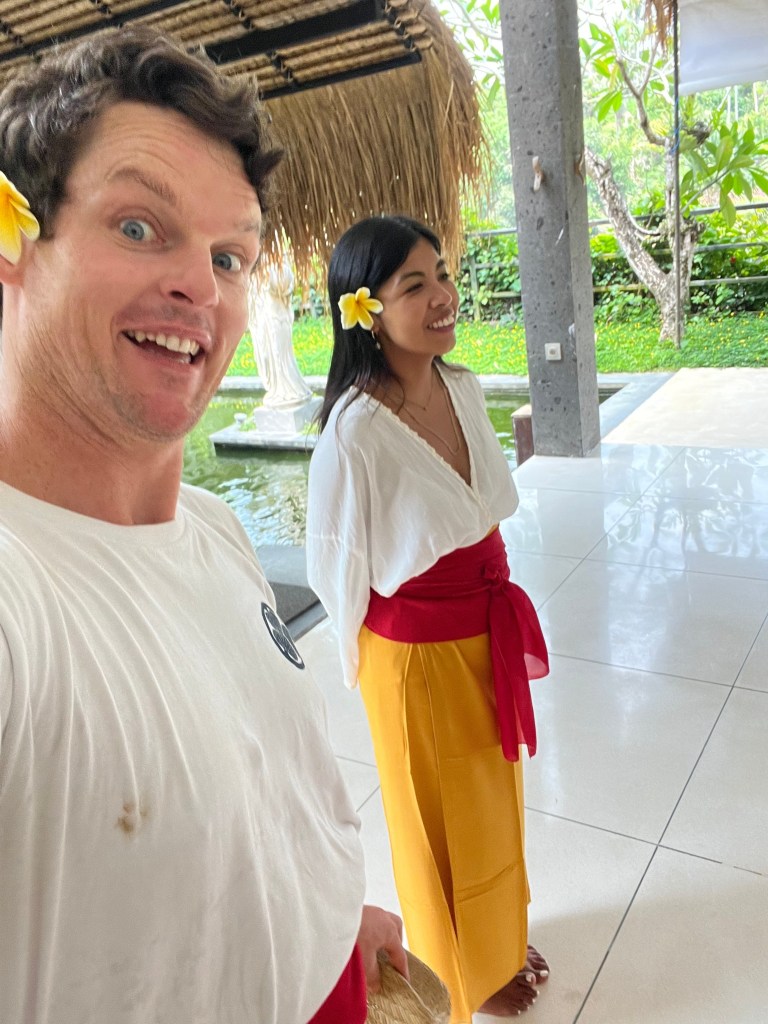
During our time in Canggu, both the local Balinese community and the international nomad community felt incredibly welcoming. Bali has a deep tradition of hospitality — locals will go out of their way to help you, and conversations with the staff at your favorite warung often turn into real friendships. The combination of welcoming locals and a global community of curious, ambitious nomads makes Canggu one of the most socially rewarding places I've ever lived.
Find your tribe — Canggu has communities for every type of nomad.
Here are some ways to build community while living in Canggu:
Canggu Community (FB)
Canggu Nomads (FB)
Bali Expats (FB)
Bali Digital Nomad WhatsApp groups (linked from coliving spaces)
Exercise & Outdoors in Canggu
Canggu is one of the easiest places in the world to stay active as a digital nomad. You can surf in the morning, take a yoga class in the afternoon, go to a gym before sunset, or simply walk along the beach. Bali also has a very strong spiritual and wellness culture, so it is one of the best places to explore yoga, meditation, breathwork, and other mindful practices.
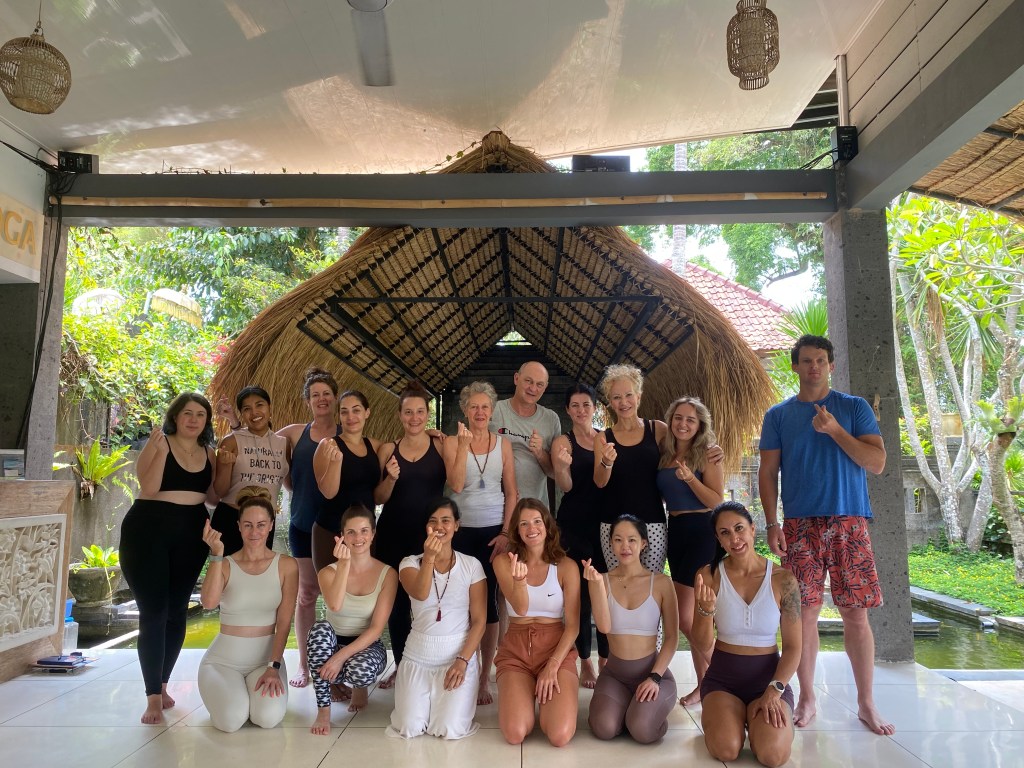
Personally, one of my favorite experiences in Bali was doing a one-week yoga retreat with my girlfriend at Blooming Lotus Yoga Retreat. The week was slow, peaceful, and deeply relaxing. We practiced yoga and meditation two to three times a day, ate healthy food, and learned more about yoga postures, breathing, and mindfulness.
It was also my first real experience with meditation, and honestly, it was pretty funny. At one point, I reached such a deep state of relaxation that I genuinely thought I was dying — or maybe already dead. In reality, I just had no idea how meditation was supposed to feel. Looking back, it makes me laugh, but it also made the experience unforgettable.
Bali is not just a place to exercise. It is one of the best places to reconnect with your body, slow down, and explore more spiritual practices in a very accessible way.
Bike: Cycling around Canggu and the nearby villages is a beautiful way to explore the area. Go early in the morning, avoid the busiest roads, and expect a mix of scooters, dogs, potholes, and peaceful rice-field views.
Run: The beach path from Berawa to Echo Beach at sunrise is one of the best runs in Canggu — flat, scenic, and quiet before the heat hits.
Hike: Take a day trip to Mount Batur for the classic Bali sunrise hike. It is around a 2-hour drive each way, and you can book a guided hike through your accommodation or a local tour operator.
Surf: Old Man’s, Batu Bolong, and Echo Beach are the main local breaks. They are great for beginners and intermediate surfers. Serangan and Medewi are also good day trips if you want cleaner waves.
Go to the gym: Body Factory Bali, S2S Bali, and Fight Sports Bali are some of the most popular gyms among digital nomads.


Been to Canggu, Bali? Share Your Experience!
About Me

The Creator Of Digital Nomad Lifestyle
Hi! My name is Loren Ross, after establishing my own business while traveling the world I decided to create this blog for existing and aspiring digital nomads.
See My Full Journey To Being A Digital Nomad Here
Anything you want that you’re not seeing? Please reach out to me on one of the social media channels below, I’d love to see if I can help out. Check out my digital marketing business.
searchmarketingconsultingdenver.com
Leave a Comment