I spent over a week living and working in Edinburgh as part of a month on the road across Scotland with my sister and my girlfriend, and of every Scottish city I tried, this was the easiest one to fall into a proper remote-work routine. So this is my honest digital nomad guide to Edinburgh: what it actually costs, the UK visa and ETA situation, the best neighborhoods, where the Wi-Fi genuinely holds up for a client call, and exactly where I’d stay, work and train in 2026.
Native. English is the everyday language in Edinburgh
Type
Historic European Capital · University & Cultural City
Continent
Europe · Scotland, UK (GMT / BST, UTC+0 / +1)
Digital Nomad Edinburgh FAQs
Is Edinburgh a good city for digital nomads?
Yes, and it was the easiest Scottish city I visited for building a proper remote-work routine. There are plenty of cafés, work-friendly accommodation with real coworking areas, and the centre is compact enough to walk almost everywhere. Buses and trams cover the rest, gyms and outdoor exercise are easy to fit around a workday, and there is more than enough to do once you shut the laptop. The catch is money: Edinburgh is expensive, summer more so, and August festival season can send accommodation prices through the roof.
How reliable is WiFi in Edinburgh for remote work?
Generally fine, but it swings hard by venue. Our 2026 Scotland WiFi Study put Edinburgh at an average of roughly 44 Mbps download across the venues we tested. Triple-Tri Coffee hit 90 Mbps, Fauna came in around 56 Mbps, and CODE The Court had a connection that was perfectly usable for laptop work. At the other end, one central café tested at about 4 Mbps. If you have an important video call, test the connection first, "Free WiFi" on a sign does not mean call-ready WiFi.
Is Edinburgh expensive for digital nomads?
Yes. Edinburgh is not a budget digital nomad destination. As of August 2026, a single person's monthly costs run about £906 excluding rent, with a one-bedroom flat in the city centre around £1,217/mo. Accommodation is the biggest issue, and prices rise substantially in July and August, with August the worst because of the festivals. You can soften it: cook instead of eating out, use hostels or university residences, and stay a little outside the tourist core.
Can visitors work remotely from Edinburgh?
Edinburgh follows UK immigration law, and there is no dedicated UK digital nomad visa. Current visitor rules allow you to carry out activities relating to your employment overseas remotely from within the UK, provided that is not the primary purpose of your visit. You cannot take UK employment or provide services to a UK business on normal visitor status. Most eligible non-visa nationals now need an ETA before travelling. Check gov.uk for your own nationality, this is not legal advice.
What are the best neighborhoods in Edinburgh for digital nomads?
Four cover most people. New Town is the central, walkable base with the densest café scene and a WeWork on George Street. Leith is better value, more local and food-heavy, with trams and buses into the centre. Stockbridge is the quiet, village-feeling option next to the Water of Leith. Bruntsfield and Marchmont are leafy and studenty, with The Meadows on the doorstep for running and walking. Old Town is unbeatable for sightseeing but the busiest and priciest.
Do you need a car in Edinburgh?
No. Central Edinburgh is extremely walkable, and Lothian Buses and Edinburgh Trams cover the rest of the city well, with contactless daily and weekly fare caps. A car only becomes useful if you plan to explore rural Scotland, the coast or the Highlands. In the city itself, parking is expensive, the signage is fiddly and it is more hassle than it is worth.
Edinburgh runs on UK immigration rules. Many travellers, including US, EU, Canadian and Australian citizens, can visit for up to six months without a visa but need an ETA (Electronic Travel Authorisation, currently £20). There is no UK digital nomad visa: visitors may do work relating to an overseas employer remotely, as long as that is not the main purpose of the trip.
The visa information below may be out of date and is not official visa advice. Always refer to the official UK Government website, gov.uk, for the latest entry, ETA and visa requirements. At Digital Nomad Lifestyle we believe in following the laws and regulations of every country. In Government We Trust. Digital Nomad Lifestyle
Edinburgh uses UK-wide immigration rules, so entry depends on your nationality, not on Scotland. A Standard Visitor can normally come to the UK for up to 6 months, subject to eligibility. Some travellers must apply for a Standard Visitor visa in advance (currently £135 for the six-month version). Others travel on an ETA instead, and a few need neither. Run your passport through the gov.uk visa checker rather than assuming.
Electronic Travel Authorisation (ETA)
If you are a non-visa national, you will most likely need an Electronic Travel Authorisation before you travel. As of the current 2026 rules it costs £20, is applied for through the official UK ETA app or gov.uk, is valid for 2 years (or until your passport expires), allows unlimited visits and permits qualifying stays of up to 6 months at a time. Not everyone needs one, eligibility depends on nationality, and British and Irish citizens are outside the scheme entirely. Decisions are usually issued within a day but can take up to three working days, so apply early and avoid third-party sites that add a markup.
Working Remotely as a Visitor
Here is the honest part: there is no UK digital nomad visa. What the current rules do allow is for a visitor to undertake activities relating to their employment overseas remotely from within the UK, providing this is not the primary purpose of their visit. In practice that covers things like answering emails for your overseas employer, joining remote meetings and handling routine tasks while you are here for a genuine visit. It does not make Edinburgh a place you can relocate to indefinitely and work from.
Important limitation: on visitor status you cannot take UK employment, work for or provide services to a UK business, run a business as a self-employed person here, or fill a role in the UK labour market. You also cannot use frequent or successive visits to effectively live in the UK. If you actually want to base your work here, that is a different, sponsored route entirely.
Nomad Pro Tip: Immigration rules change often. Always verify your own situation with official UK Government guidance at gov.uk (or a qualified immigration adviser) before you book. This guide is a starting point, not legal advice.
How Much Does It Cost to Live in Edinburgh as a Digital Nomad?
Edinburgh runs pricier than most nomad hubs. A single person's monthly costs run about £906 ($1,232) excluding rent, with a one-bedroom flat in the city centre around £1,217 ($1,655) a month. Hostel dorms run roughly $32–57 a night and central hotels $115–255, and accommodation gets dramatically more expensive during the summer festival season.
People also ask
How much should you budget per month in Edinburgh?
Rough guide: a lean month in a hostel or shared flat lands near $1,800–2,500. A private one-bed in the city centre plus eating out regularly pushes past $3,000, since the rent alone runs around £1,217 ($1,655) and living costs about £906 ($1,232) excluding rent. Staying outside the centre knocks roughly £300 a month off the rent.
Why is Edinburgh so expensive in August?
August is festival season. The Fringe, the International Festival and the Tattoo all land in the same month, the city fills up, and accommodation prices climb far above the rest of the year. If you can, come in May, June or September instead, or book August months in advance.
Let’s be honest: Edinburgh is one of Scotland’s more expensive cities, and accommodation is where it really bites, especially during the summer festival season. The figures in the cards below are current Edinburgh averages as of August 2026, converted from GBP at the rate showing at the time. They are averages rather than my personal spending, but they lined up closely with what I actually paid. For how Edinburgh compares with other European bases, I have a separate breakdown of cost of living in Europe for digital nomads.
One thing the averages hide: July and August are not normal months here. August in particular brings the Fringe, the International Festival and the Tattoo all at once, and lodging can cost multiples of what it does in, say, March. A couple of ways to soften it: cook instead of eating out every day, look at hostels and colivings rather than hotels, stay slightly outside the tourist core (Leith, Bruntsfield, Bonnington), and check whether university and student residences are opening rooms to travellers during the summer holidays, they are often the best value beds in the city.
How Fast Is the WiFi in Edinburgh for Remote Work?
Edinburgh averaged roughly 44 Mbps download in our 2026 Scotland WiFi Study, which is fine for HD video calls, but the spread is huge: Triple-Tri Coffee hit 90 Mbps while a well-known café in the Old Town managed about 4 Mbps. Assume nothing from a "Free WiFi" sign and run a speed test before any call that matters.
People also ask
Which café in Edinburgh has the fastest WiFi?
Of everywhere we tested in Edinburgh, Triple-Tri Coffee on York Place was fastest at 90 Mbps down / 16 Mbps up / 60 ms. Fauna on Queensferry Street was second at about 56 Mbps down / 18 up / 25 ms, and it is the better of the two for a longer session.
Is hostel WiFi in Edinburgh good enough for video calls?
It varies. CODE The Court tested at 22 Mbps down / 39 up / 24 ms, which handled laptop work and calls fine for me, helped by the private booths. Other places advertise free WiFi without publishing speeds, so test on arrival rather than the morning of a client call.
Do I need a backup connection in Edinburgh?
Not usually, unlike the Highlands. A decent eSIM with a hotspot allowance is enough insurance for most people in the city. Where it earns its keep is when your café turns out to be one of the slow ones, which does happen here.
44Mbps avg.
Digital Nomad Lifestyle · 2026 Scotland WiFi Study, Edinburgh
According to Digital Nomad Lifestyle’s 2026 Scotland WiFi Study, the average download speed across the Edinburgh venues tested was roughly 44 Mbps, fast enough for HD video calls. But the spread inside the city is enormous: the fastest café we tested hit 90 Mbps and the slowest managed about 4 Mbps, so the average tells you very little about the venue you happen to walk into.
Methodology: We ran nPerf speed tests at cafés and work-friendly stays in Edinburgh between 30 June and 28 July 2026, recording download, upload and latency at each venue during working hours. Edinburgh was one of seven Scottish locations covered by the wider 18-test study; only the Edinburgh results are shown on this page.
WiFi download speed by Edinburgh venue (Mbps)
Triple-Tri90
Fauna56
CODE The Court22
Black Medicine4
📶 Published Edinburgh average: ~44 Mbps download across the venues tested for the study. The spread between the fastest and slowest café here is more than 20×, which is exactly why I test before a call.
Source: Digital Nomad Lifestyle, 2026 Scotland WiFi Study (nPerf, Jun–Jul 2026), Edinburgh venues. Embed welcome with credit to digitalnomadlifestyle.com.
Full results, every Edinburgh venue we tested (tap to collapse)
Venue
Type
Area
Download
Upload
Latency
Triple-Tri Coffee
Café
York Place
90 Mbps
16 Mbps
60 ms
Fauna Coffee Shop
Café
Queensferry St / West End
55.97 Mbps
18 Mbps
25.1 ms
CODE The Court
Accommodation
Old Town
22 Mbps
39 Mbps
24 ms
Black Medicine Coffee Co
Café
Nicolson Street
4 Mbps
1 Mbps
28 ms
Note: a fifth Edinburgh test in the wider Scotland study was logged at a student residence we could not confidently match to a specific Edinburgh property, so it is left out of the venue list above. The published ~44 Mbps Edinburgh average includes it.
Reliable internet is the thing that makes or breaks a city as a base, so here’s the honest version for Edinburgh. It gave me the most workable options of anywhere in Scotland, plenty of cafés and accommodation where a laptop day just works. But the variation inside the city is wild. Triple-Tri on York Place ran at 90 Mbps and Fauna over by Queensferry Street at around 56, while Black Medicine, a well-known and otherwise lovely Old Town café, came in at about 4 Mbps down and 1 up. Same city, same week. A place having Wi-Fi doesn’t automatically mean it will hold a long video call, so I test before I count on it for anything important, and in Edinburgh that habit has paid off more than once.
Average of the three Edinburgh cafés we speed-tested.
🏨Accommodation
Download22 Mbps
Upload39 Mbps
Latency24 ms
CODE The Court, Old Town, the Edinburgh stay we tested.
🚀Fastest Tested
Download90 Mbps
Upload16 Mbps
Latency60 ms
Triple-Tri Coffee, York Place. Fast, but higher latency.
🐌Slowest Tested
Download4 Mbps
Upload1 Mbps
Latency28 ms
Black Medicine Coffee Co, Nicolson Street. Not a work café.
>
Get a sneak peek at WiFi speeds you won’t find anywhere else
We’ll email our real speed notes from places we’ve actually stayed.
What Is Edinburgh Actually Like for Digital Nomads?
Edinburgh is the easiest Scottish city to build a routine in: dense café scene, work-friendly hostels with real coworking areas, a compact walkable centre and good buses and trams. The trade-offs are cost and crowds. The tourist core is busy year-round and accommodation prices spike hard in July and especially August.
People also ask
How long should a digital nomad stay in Edinburgh?
A week is enough to get a routine going, since the centre is small and you can walk most of it. Two to four weeks is the sweet spot if you want to actually settle in, use a gym, join a ride or a run club and take weekend trips. Beyond that, look at a coliving or a monthly flat, and avoid signing up for August unless you booked far ahead.
Is Edinburgh walkable?
Very. Central Edinburgh is compact enough that I walked most of it, though it is genuinely hilly and some crossings can eat 30 to 40 minutes on foot. Cobblestones and steep closes are part of the deal, so bring shoes you can actually walk in.
I spent over a week here as part of a longer Scotland trip, and Edinburgh was the city I kept coming back to as a work base. Here’s the real rundown before we get into maps, stays and cafés.
The easiest Scottish city to build a routine in
I stayed in Edinburgh for over a week, and of the Scottish cities I tried, it’s the easiest one to fall into a proper nomad routine. The centre is heavily geared toward tourists, and some of the cafés right in the tourist core are so busy they’re not really built for someone camping out with a laptop, but there are enough good spots that you can always find somewhere to work for a few hours. Plenty of hotels and hostels have Wi-Fi that’s fine for laptop work, too, and CODE The Court even has a dedicated coworking area and private booths for calls.
For exercise, cycling is my main thing, and I used Strava to find local group rides and routes; it’s also easy to just head out and build your own. There’s hiking and hill walking close to, and inside, the city, Arthur’s Seat is right there, and honestly, walking around central Edinburgh is a workout on its own. Depending where you’re headed, getting somewhere on foot can eat up 30 to 40 minutes, uphill. There are loads of gyms, though short passes aren’t cheap: a few days of access ran me around $30. There are also running groups and organized races that fill up early, so register ahead.
The tourist core can feel big and chaotic, but step outside it and the city calms right down, fewer crowds, more green. For downtime there are endless restaurants, pubs, bars, live music, and my personal favorite, Scotch tastings. Just don’t expect it to be cheap: during the big summer events, especially in August, accommodation prices go through the roof. One workaround, in July and August, student residences rent rooms to travelers at some of the best rates in the city.
Old Town crowds, and where the city calms down
The Royal Mile and the streets around it are the postcard version of Edinburgh, and they are relentlessly busy. Great for a wander, not always great for a work session, some of the cafés in that stretch are so packed that setting up a laptop feels antisocial. Black Medicine, right on Nicolson Street, is a lovely café that a lot of people will point you toward; when I tested it the Wi-Fi came in around 4 Mbps down, which tells you it is a coffee stop, not an office.
Step a few streets out and the whole city relaxes. New Town is only a short walk from the Old Town but feels calmer and has better café options for actually getting work done. Stockbridge and the Water of Leith feel almost residential. Bruntsfield and Marchmont are leafy and studenty with The Meadows on the doorstep. Leith, down by the water, is the one I would look at first if I were watching my budget.
None of that means avoid the Old Town, it is genuinely one of the best-looking places I have worked from. Just don’t plan your working days around it. Sleep and work slightly out, then walk in for the good part.
The August problem, and the rest of the year
Edinburgh is expensive, and summer makes it worse. In August the Fringe, the International Festival and the Tattoo all land at once, the population of the city effectively balloons, and accommodation prices go somewhere silly. July is not far behind. If your dates are flexible, May, June and September give you long daylight and a city that still functions normally.
If you do come in festival season, book months ahead, and check whether university and student residences are renting rooms to travellers over the summer holidays, that is one of the few genuine value plays in the city. Hostels and colivings also hold their prices better than hotels.
The rest of the year the city is calmer and cheaper, and honestly still great to work from. Winter is dark and damp rather than freezing, and the daylight is short, but the cafés, gyms and pubs do not go anywhere. For downtime there are endless restaurants, pubs, bars, live music, and my personal favourite, Scotch tastings.
A Map of Where to Stay & Work in Edinburgh
Edinburgh is small enough that almost everything below is within a walk, a bus or a short tram ride of everything else. Use the map to see where I actually stayed and worked, the cafés I speed-tested, the gym I used, and the outdoor spots I built my exercise around. Every pin is flagged as either tested in person or a researched pick, so you know which is which.
Blue pins are places to stay, green pins are my top work café and the WeWork on George Street, orange pins are the other cafés I tested, the magenta pin is the gym, and green-teal pins are outdoor spots. Anything marked “tested in person” is somewhere I actually stayed, worked or trained. Black Medicine is on here because I tested it, not because I recommend it for work.
⏱ How Long Are You Staying?
Choose your stay length to see my top Edinburgh picks
Showing all places across Edinburgh
Where Should Digital Nomads Stay in Edinburgh?
CODE The Court in the Old Town is the one I actually stayed in, and it was the easiest work base I found anywhere in Scotland: dedicated coworking area, private booths for calls, very central. For budget there is Edinburgh Backpackers on Cockburn Street, for New Town there is CODE The Loft, and for a longer remote-work stay there is The Fyfe coliving up in Bonnington. Only the first is a personal recommendation, the other three are researched picks.
Hostel☆
★★★★★,
CODE The Court
Edinburgh. Old Town (I stayed here)
Personally stayed. A really well-equipped hostel at 1A Parliament Square, right off the Royal Mile, and the easiest accommodation I found for actually working during the whole Scotland trip. Wi-Fi that held up for laptop work, a dedicated coworking area, and private booths for when you need to take a call or properly focus. Pod-style dorms and private rooms, spacious for a hostel, and social enough that meeting other travellers takes zero effort. If you only book one place in Edinburgh from this guide, make it this one.
AffordabilityDorms are the budget option and cheaper than the private rooms, which are also available. Fair for how central it is.
WifiWorked well for me. Not the fastest number in the study, but stable, and the coworking area and call-friendly private booths matter more than the headline speed.
22 Mbps ↓39 Mbps ↑24 ms
CommunityVery social, with activities and events almost daily. Easily the best of my Scotland stays for meeting people, and a good balance between getting work done and actually having a social life.
Location1A Parliament Square, Old Town. Extremely central, right in the middle of everything, and walkable to almost everywhere in this guide.
AmenitiesCoworking area, private booths, complete and well-functioning bathrooms, laundry. Kitchen is basic, fine for simple meals, not elaborate cooking.
CleanlinessSpacious dorms, comfortable beds with a reasonable amount of privacy; friendly, attentive staff.
Researched pick, I didn’t personally stay here. A long-running, adults-only (18+) backpacker hostel at 65 Cockburn Street in the Old Town, a two-minute walk off the Royal Mile and about the same from Waverley station. Dorms, a sociable common room and a self-catering kitchen make it one of the cheapest genuinely central beds in the city.
AffordabilityBudget dorm pricing in a location that would normally cost a lot more. Expect August to be the exception.
WifiFree WiFi is available, but I have no speed test for it. Test it on arrival before you count on it for a client call.
CommunityAdults-only crowd and a common room, so it is easy to meet other travellers.
Location65 Cockburn Street, Old Town. Steps off the Royal Mile, minutes from Waverley.
AmenitiesSelf-catering kitchen, common room, luggage storage, free WiFi.
CleanlinessWell reviewed for a busy central hostel, but check recent scores before booking.
Researched pick, not somewhere I stayed. The New Town sister property to The Court, on Rose Street North Lane. Boutique hostel and co-living style, with social common areas and a fully equipped shared kitchen, and it puts you a minute from the George Street restaurants, shops and bars. Better suited to shorter, community-minded stays than to a long work stint.
AffordabilityBudget-to-mid hostel pricing for a very central New Town address.
WifiFree WiFi. I have no measured speeds for this property, so confirm it before booking around calls.
CommunitySocial common areas and a community-oriented setup, same brand feel as The Court.
Location50 Rose Street North Lane, New Town. Close to restaurants, shops and bars, and a short walk from the Old Town.
AmenitiesFully equipped shared kitchen, lounge and social spaces.
CleanlinessWell reviewed, but check recent scores before booking.
This one is a researched option rather than somewhere I stayed. If you are planning a longer remote-work stint in Edinburgh rather than a week, a purpose-built coliving north of the centre is worth a look, it trades the Old Town postcard view for more space, a proper coworking setup and a community that is actually built around remote workers. Treat it as a researched starting point, not a personal recommendation. If you want the wider picture, I put together a separate guide on where digital nomads stay across Scotland.
Coliving☆
★★★★☆,
The Fyfe
Bonnington, North Edinburgh (researched)
Researched pick, I have not stayed here. A modern coliving on Fyfe Lane in Bonnington, north Edinburgh, designed around longer remote-work stays rather than short tourist trips. The listing publishes fast Wi-Fi (150 Mbps down / 100 up, their figures, not my speed test), a dedicated coworking space and a genuinely social setup with community dinners, game nights and skill-shares. It sits away from the tourist crush, which is a feature if you are here for a month rather than a weekend.
AffordabilityPremium end. Listed from around $2,678 a month with no security deposit, rated 4.8 across 19 reviews when I checked. Prices move, so confirm before you plan around it.
WifiPublished as 150 Mbps down / 100 up by the operator. That is their number, not one of my nPerf tests, so verify it if calls are critical.
150 MbpsPrivate rooms4.8 / 5
CommunityStrong on paper. Community dinners, social mixers and skill-share workshops are on the calendar, though it is a big building, up to 350 residents, so it will feel less intimate than a small hostel.
LocationFyfe Lane, Bonnington. Calmer and off the tourist trail, with buses into the centre and Leith on your doorstep.
AmenitiesPrivate rooms, a coworking area, private call rooms, meeting rooms and a shared kitchen.
Where Can You Work From in Edinburgh? Cafés and Coworking
Edinburgh leans more on laptop-friendly cafés than on dedicated coworking. Triple-Tri on York Place and Fauna near the West End both tested between 56 and 90 Mbps, fast enough for calls outside peak hours, and both are better for two or three focused hours than a full day. If you need a proper desk, WeWork on George Street is the main central coworking option, with day passes from £55. I also rounded up the best places to work from across Scotland if you are moving around the country.
Café☆
★★★★★,
Triple-Tri Coffee
Edinburgh (York Place)
Personally tested. A small café on York Place with the fastest WiFi I measured anywhere in Edinburgh and genuinely friendly staff. The interior is compact, so this is a place to knock out a couple of focused hours rather than camp at a big table all day. Charging outlets and adapters are available. Best for: two or three solid hours, ideally outside the lunch rush.
WifiGood, reliable connection. 90 Mbps16 Mbps60 ms
ServiceFriendly staff.
OutletsPower outlets/adapters available for charging.
AmenitiesCompact interior, comfortable for shorter sessions. 45a-45b York Place, EH1 3HP.
Personally tested. Over on Queensferry Street in the West End, a short walk from Dean Village and the Water of Leith. Small but comfortable for part of the day, with drinks, sandwiches, pastries and light food, reliable internet, friendly staff, and usually a few other people working on laptops so you don't feel like the odd one out. Outlets are available. Best for: a few hours, not a full coworking day.
Researched pick, not somewhere I worked. The one proper coworking building in central Edinburgh most nomads end up looking at, in a Georgian block on George Street in the New Town. Day passes, hot desks, meeting rooms and private offices, with the usual WeWork setup: fast WiFi, coffee and tea, phone booths, printers and on-site staff. Staffed Monday to Friday, 8am to 6pm, closed weekends. Best for: days when café hopping isn't going to cut it.
WifiBusiness-grade WiFi throughout the building (WeWork's spec, not one of my speed tests).
PriceDay Pass from £55/day at time of writing. Private offices from around £1,210/month for two people. Verify current pricing before you go.
This is the cautionary example, not a favourite. Black Medicine is a well-known, genuinely nice Edinburgh café on Nicolson Street, and plenty of guides will send you here to work. When I ran a speed test it came back at roughly 4 Mbps down and 1 Mbps up. That is fine for email and nothing else. I have left it in the guide precisely because it is the clearest illustration of why I test café WiFi before I plan a day around it. Best for: coffee, not deadlines.
WifiWeak for real work. 4 Mbps1 Mbps28 ms
ServiceFriendly, long-established local café.
Best forA coffee break between work sessions somewhere else.
Location2 Nicolson Street, EH8 9DH, just south of the Royal Mile.
more accurately, the daily views from my “offices.” Very professional, very stable, very hard life.
Is Edinburgh Safe for Digital Nomads?
Yes. Edinburgh is a generally safe city that is easy to walk around, day or night. The realistic risks are opportunistic, phone and bag snatching in crowded tourist spots, and the occasional bit of nightlife rowdiness, plus weather that turns wet and slippery fast. Normal big-city awareness is enough.
People also ask
Is the tap water safe to drink in Edinburgh?
Yes. Scotland's public tap water is treated to a high standard and safe to drink, so skip the bottled stuff and just refill a reusable bottle.
Is it safe to walk around Edinburgh at night?
Generally yes in the central and well-lit areas. The main things to be aware of are late-night nightlife rowdiness around the pub and club streets, and the usual advice about keeping your phone and bag secure in busy spots. Uber, Bolt and licensed black cabs all operate here if you would rather not walk.
Edinburgh felt safe the whole time I was there, including walking back late. It is a compact, well-lit, busy city centre, and the vibe is relaxed rather than tense. What you actually need to watch is more mundane than crime: crowds on the Royal Mile and around Waverley station are exactly where opportunistic phone and bag snatching happens, and during festival season those crowds get much denser. Late at night the nightlife streets get loud and a bit messy, nothing more sinister than that. The other real risk here is the weather, which changes fast and turns cobbles and stone steps genuinely slippery.
🛡️ Safety Ranking
Global Peace Index: the United Kingdom consistently ranks among the more peaceful countries in the world, and Edinburgh is one of its calmer capitals. Crime: violent crime against travellers is rare. The realistic risk is opportunistic theft in crowded tourist areas, the Royal Mile, festival crowds in August, Waverley and Haymarket stations, plus alcohol-related rowdiness in the centre late at night. Keep your phone off the table edge and your bag closed and in front of you in busy spots. Tap water: safe to drink. Emergency number: 999 (or 112); non-emergency police is 101. Weather and walking: conditions change fast here, so carry a waterproof and layers. Wet cobbles, worn stone steps and the closes off the Royal Mile get slippery, and if you are heading up Arthur’s Seat or into the Pentlands, dress for wind and rain even on a bright morning.
Nomad Tip: Uber, Bolt and licensed black cabs all work in Edinburgh, so there is always an easy way home. If you do drive, note that Scotland’s drink-drive limit is lower than the rest of the UK, and honestly you do not need a car in this city anyway.
The perfect representation of how, as a digital nomad, I can travel light.
Food & Water Safety in Edinburgh
Tap Water. Safe to Drink: Scotland’s public tap water is treated and safe to drink, and Edinburgh is no exception. I drank it the whole trip with zero issues, so skip the bottled stuff and just carry a reusable bottle.
Food in Scotland surprised me more than I expected. Haggis sounds scary, but with the right combination, it’s actually good. Fish and chips is hard to beat, especially after a long cycling day, because you can get back all the calories you burned, hahaha. But honestly, my main food-and-drink priority was the Scotch tastings. After trying a few around the country, I realized I’m definitely more into the stronger, smoky, peaty drams, and Edinburgh makes those very easy to find.
🏥 Healthcare in Edinburgh
Healthcare Quality. High: Edinburgh runs on NHS Scotland, the public health system. Emergency care (A&E) is reached on 999 or 112, and there is a separate non-emergency line, NHS 24 on 111, for urgent-but-not-emergency problems, especially out of hours. Community pharmacies, including the big chains, can deal with a lot of minor illnesses and medication questions without you ever needing a GP or a hospital.
Important for visitors: an emergency will be treated, but this is not automatically free healthcare for tourists. Whether you are charged for NHS hospital services depends on your residency status, your nationality, the treatment itself and any reciprocal healthcare agreement between the UK and your country. Non-residents can and do get billed for some hospital care, which is exactly why travel insurance matters here. Short-stay visitors can usually be seen at a GP practice as a temporary patient, and there are private clinics in the city for faster paid access.
Travel Insurance for Nomads: Don’t travel without proper health coverage. NHS Scotland will treat a genuine emergency, but as a non-resident you can be charged for hospital care, and insurance covers what the NHS won’t: private care, trip problems, and getting you home. I use Genki for exactly this reason.
I didn’t need any medical care in Edinburgh or anywhere else in Scotland, thankfully, but I’d never travel without insurance, and that’s not a throwaway line. I use Genki. The last time it actually mattered was when I sprained my foot in Colombia: I contacted them, and the response and the way they handled the costs were fast and genuinely practical. I can’t promise every future claim goes the same way, but that experience is why I keep it. If you’re working remotely and relying on your body to get around, cycling, hiking, hauling yourself up Arthur’s Seat, having something that responds quickly is worth every penny.
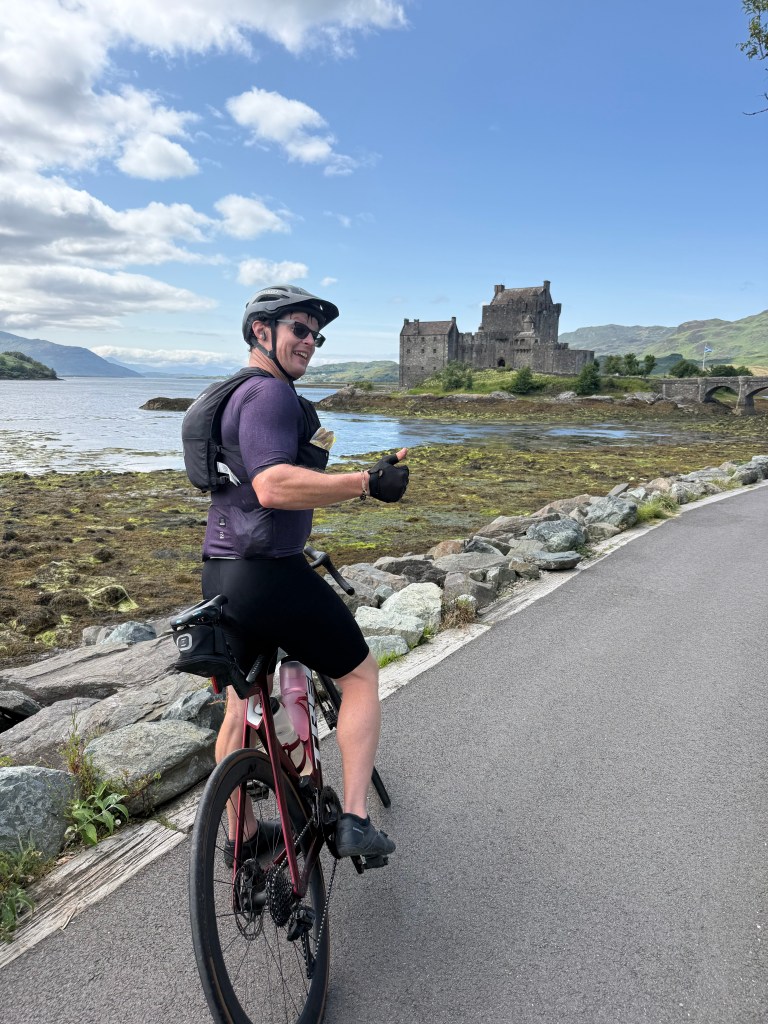
One of my bike routes through Scotland’s small towns.
How Do You Get Around Edinburgh?
You do not need a car. Central Edinburgh is compact enough to walk, and Lothian Buses and Edinburgh Trams cover the rest with contactless daily (£5.70) and weekly (£26.50) fare caps. The airport is 30-35 minutes away by bus or tram, and Waverley station puts the rest of Scotland within easy reach for weekends.
People also ask
Do you really need a car in Edinburgh?
No. The centre is extremely walkable and buses and trams cover the rest of the city well. A car only becomes worth it if you plan to explore the Highlands, rural Scotland or the remote coast. In the city it is mostly an expensive parking problem.
How do you get from Edinburgh Airport to the city centre?
The tram runs from the airport to the city centre in under 35 minutes (£7.90 single, £9.50 open return), and the Airlink 100 bus does it in about 30 minutes 24 hours a day (£6.00 single, £8.50 open return). Both are simpler and cheaper than a taxi. Check current fares before you travel.
Edinburgh is one of the easier UK cities to navigate without a car. The centre is compact enough that I walked a lot of it, and honestly some of those 30 to 40 minute walks up and down Edinburgh’s hills counted as exercise. When you don’t feel like walking, buses and trams cover most of the places a visitor or remote worker is likely to need, and contactless caps mean you never really have to think about ticket types. We did rent a car for the wider Scotland trip, but that was for the Highlands, not for the city.
Walking1
The default in central Edinburgh. The centre is compact and most of what you need is within walking distance, but it is hilly and cobbled, and a cross-town walk can easily take 30 to 40 minutes. Bring shoes you can actually walk in.
Free
Lothian Buses2
The backbone of the city. Adult single £2.40, Adult City DAYticket £6.00, night buses £3.50. Contactless tap-on works via TapTapCap, with a daily cap of £5.70 and a weekly cap of £26.50 shared with the trams. Verify current fares on lothianbuses.com.
£2.40 single
Edinburgh Trams3
One line, but it hits the useful spots: the airport, Haymarket, Princes Street, York Place, Leith and Newhaven. Adult city-zone single £2.40, Adult City Day £6.00. Same contactless caps as the buses. Prices rose in February 2026, so check edinburghtrams.com before you rely on an older figure.
£2.40 single
Airport Transfer4
Two easy options. The tram runs airport to city centre in under 35 minutes, £7.90 single or £9.50 open return. The Airlink 100 bus takes about 30 minutes, £6.00 single or £8.50 open return, and runs 24/7. No need for a taxi.
£6.00–£9.50
Uber, Bolt & Black Cabs5
Uber and Bolt both operate in Edinburgh, and licensed black cabs can be hailed on the street or found at ranks. Handy late at night or when the weather turns, which it will.
app / metered
Trains from Waverley6
Edinburgh Waverley sits right in the middle of the city and connects to the rest of Scotland and the UK. Edinburgh to Glasgow is roughly 50 minutes to an hour depending on the service. Bikes travel free on ScotRail, with a reservation needed on some routes.
city to city
Cycling7
Edinburgh has useful cycling routes and easy access to roads outside the city. This was my main form of exercise on the trip, and I used Strava to find rides, explore segments and turn up local cycling groups. Building your own routes out of the city is straightforward.
your legs
Rental Car & Parking8
You do not need a car to live or work remotely in Edinburgh. A rental only earns its keep for the Highlands, rural Scotland and the remote coast. If you do drive: the UK drives on the LEFT, city parking is expensive, and the signage changes street to street, so read it carefully. Fines are commonly £100, halved to £50 if paid within 14 days.
skip it in the city
Pro Tip: If you do rent a car to get out of the city, a few things caught us out. The UK drives on the LEFT, and the road direction and roundabouts take a minute to click. Out in rural Scotland you get single-track roads where you use passing places and take turns with oncoming traffic, on one of our first countryside drives my sister was still getting the hang of it and clipped a parked car. It sounded worse than it was: mostly the mirror and some scratches. She left her contact details, the owner got in touch the next day, and after about an hour on the phone her rental insurance handled the whole thing with nothing to pay. The lesson: always take the rental car insurance, and if you do have a bump, give accurate details, photograph the scene, and contact the rental company.
Parking in Edinburgh is the other one to watch: it is paid across most of the centre and adds up fast, some streets are free overnight but the rules change street to street, and we once rolled back late to a £50 fine (it climbs toward £100 if you don’t pay quickly). Read the signs and use the local parking apps.
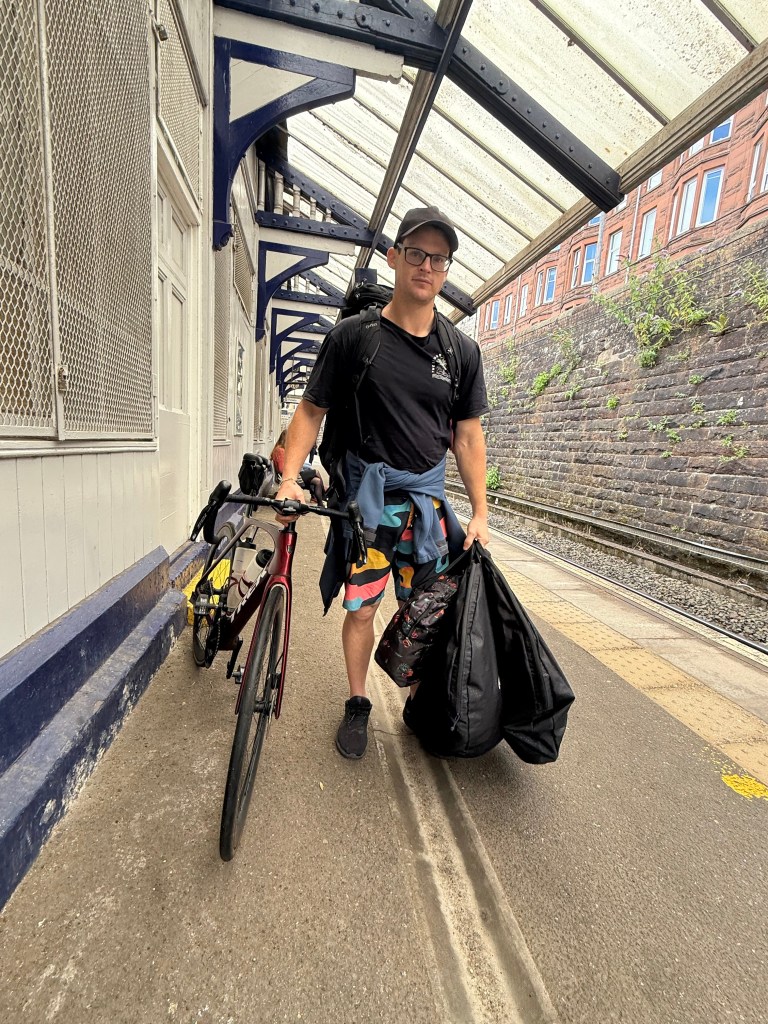
A group walk moment in Scotland… before going back to my real transportation system: the bike.
Best Neighborhoods in Edinburgh for Digital Nomads
New Town, Stockbridge, Leith and Bruntsfield are the nomad favourites for cafés, calm and somewhere to actually get work done. Old Town is the sightseeing choice, unbeatable for location but the busiest and priciest, and the hardest place to hold a quiet working routine.
Edinburgh changes quickly depending on where you stay. Old Town puts you right inside the tourist core, while neighborhoods such as New Town, Stockbridge, Leith and Bruntsfield give you an easier balance of cafés, daily life and somewhere to actually get work done. I stayed in the Old Town myself and worked across several of the others, but I didn’t live in each one, so treat this as a map of options rather than five personal verdicts.
🏰 New Town
Edinburgh
Georgian architecture, wide streets and a grid you can actually navigate. Central but noticeably calmer than the Old Town, packed with cafés and restaurants, easy for buses and trams, and home to the WeWork on George Street if you want a real desk. CODE The Loft is here too.
Best for: a central, walkable remote-work base.
⚓ Leith
Edinburgh
Down by the water, creative and a lot less tourist-dominated. Strong food and café scene, some coworking, and generally better accommodation value than the tourist core. The tram and plenty of buses get you into the centre quickly.
Best for: value, food and a more local atmosphere.
🌳 Stockbridge
Edinburgh
A village inside the city. Independent shops, good cafés, a Sunday market and direct access to the Water of Leith Walkway for walking and running. Quiet, residential and very walkable, and still close enough to the centre to not feel cut off.
Best for: quiet quality of life.
🌿 Bruntsfield & Marchmont
Edinburgh
Leafy, studenty and full of independent cafés, with quiet residential streets and The Meadows right there for running, walking and outdoor training. Roughly a 20-minute walk from parts of central Edinburgh depending on exactly where you land.
Best for: green space, cafés and daily exercise.
🏛️ Old Town
Edinburgh
Unbeatable for sightseeing: the Royal Mile, the castle, the closes, the whole historic atmosphere, and it is as central as it gets. It is also much busier and more tourist-heavy, cafés get packed, and summer accommodation prices can be brutal. Great to stay in for a short trip, harder to build a quiet working routine around. CODE The Court and Edinburgh Backpackers are both here.
Best for: sightseeing and short, very central stays.
Hidden Gems in and Around Edinburgh
Beyond the Royal Mile and the castle, Edinburgh has a surprising amount within reach on a bus or on foot. Here’s a mix of well-known and genuinely quieter places that make sense from an Edinburgh base, each with a note on how long it takes to get there, whether you need a car, and whether it works as a workday break or is better saved for a day off.
Fair warning on the word “hidden”: Dean Village and Portobello are well known and get busy in summer. They’re on the list because they’re easy to reach and genuinely worth your time from an Edinburgh base, not because nobody has heard of them.
Destination
Why It’s Worth It. Access, Car, Timing & Best For
Dean Village
A pocket of 19th-century mill buildings on the Water of Leith, about a 15-minute walk from Princes Street. No car needed. Best for a short walk and photography, and it is close enough to the centre that it works as a lunchtime break on a workday. It is well known rather than secret, so go early if you want it quiet.
Water of Leith Walkway
A roughly 19 km path running from Balerno through Dean Village and Stockbridge down to Leith. Free, no car, and reachable on foot or by bus from most of the city. Best for walking and running away from the tourist centre. Works perfectly as a workday excursion, you can do an hour of it and be back at your laptop.
Portobello Beach
Edinburgh’s actual seaside, about 25 to 35 minutes by bus from the centre. No car needed. Sand, a promenade, cafés and a swimming pool. Best for a long walk, a run, or a genuine change of scene. Fine on a workday afternoon, better on a day off in decent weather.
Cramond & Cramond Island
A village on the Firth of Forth with a causeway you can walk out to the island at low tide. Around 30 to 40 minutes by bus, no car needed. Best for coastal walking and photography. Check tide times carefully before crossing, people get caught out. Save it for a day off, the tide dictates your schedule, not you.
Pentland Hills
Proper hill walking on the southern edge of the city, reachable by bus in around 40 minutes. A car helps for the further trailheads but is not essential. Best for a real hike, big views back over Edinburgh, and getting properly out of the city. A day off, not a workday.
Craigmillar Castle
A dramatic and far less crowded castle ruin about 20 to 30 minutes from the centre by bus. No car needed. Best for history and photography without the Royal Mile crowds. Half a day, easily doable on a slow workday if you have the flexibility.
East Neuk of Fife
Fishing villages such as Anstruther and Crail, with excellent seafood, roughly 1.5 to 2 hours away. A car makes it much easier, buses work but are slow. Best for food and coastal walking. This is a proper day trip, save it for a day off rather than trying to squeeze work around it.
Just a few Edinburgh spots worth checking out.
What’s the Weather Like in Edinburgh?
Cool, temperate, maritime and changeable. Summer highs sit around 66–67°F with very long daylight, winter highs around 45°F with short, dark days. The practical issue isn’t extreme temperature, it’s wind, rain and how fast the weather flips. Pack a waterproof and layers year-round.
People also ask
When is the best time to visit Edinburgh as a digital nomad?
May, June and September are the sweet spot: long daylight, decent weather, and a city that hasn't been overrun. July and August are the busiest and by far the most expensive because of festival season. Winter is cheap and atmospheric, but the days are very short.
Does it rain every day in Edinburgh?
No. Rain falls on roughly 9 to 13 days a month across the year, which is frequent but nowhere near daily. The real characteristic is unpredictability, a bright morning can turn into a downpour and back again, so carry a waterproof rather than checking the forecast and trusting it.
Edinburgh has a cool, temperate, changeable maritime climate. The main practical point for a digital nomad isn’t extreme temperature, it’s the combination of wind, rain, how fast the weather changes, and how dramatically the daylight swings between summer and winter. Even in July, supposedly the height of summer, it’s mild rather than hot, average highs sit around 67°F. The wild part is the light: in July the sun didn’t set until around 10pm, and I’d wake at 3 or 4am with the window looking like morning had already arrived. Winter is the opposite, short days and an early dark, which is worth planning your working hours around.
Late spring and summer are best for walking, cycling, hiking and outdoor events, with July and especially August the high season. Autumn gets cooler, wetter and darker. Winter is cold and damp rather than genuinely extreme, with short daylight hours. Pack a waterproof outer layer, layers underneath, comfortable walking shoes and something that blocks wind. The monthly averages below come from Met Office long-term averages for Edinburgh and are shown in Fahrenheit.
Avg High °FAvg Low °F
Monthly Rainfall (mm) · Met Office Edinburgh averages
Avg Humidity %
☀️
Summer (Best)
May – August
Mild, highs ~59–67°F · the longest daylight of the year, light until ~10pm in July · best for walking, cycling, Arthur’s Seat and outdoor events. August is festival season and by far the priciest month.
🌧️
Winter
November – February
Cold and damp rather than extreme, highs ~45–50°F · short daylight, wind and rain · far fewer crowds and much lower accommodation prices.
COLD (Nov–Mar)
MILD (Apr–Oct)
RAIN ALL YEAR
Bottom line: it can rain in any season, so pack waterproofs year-round. It is not constant heavy rain, it is unpredictable rain. Come in late spring or summer for daylight and warmth, come off-season for lower prices and fewer crowds.
How Do You Meet People and Find Community in Edinburgh?
The fastest way in is a social hostel: CODE The Court runs activities almost daily and is far more sociable than a private flat. Beyond that, Meetup covers language exchanges, networking and hiking, Strava is how I found local cycling groups, running clubs and races fill up early, and the university crowd keeps a steady stream of international events going.
Edinburgh is an easy place to meet people if you put yourself out there. Hostels are the obvious win, and CODE The Court was genuinely social because it runs activities almost every day, which is a completely different experience from renting a quiet flat and never speaking to anyone. Beyond hostels, Facebook groups often funnel into WhatsApp groups full of travellers and local events, and Strava is my favourite way to find active locals, I used it constantly here to find cycling routes and group rides. How social your stay feels really comes down to where you sleep and how long you stay. I go deeper on this in my guide to making friends and building community as a digital nomad.
Here are a few ways I’d build community while working from Edinburgh, from hostel activities and walking tours to cycling and running clubs, coworking events, university-area meetups, pub quizzes, live music, language exchanges and volunteering:
Find Community in Edinburgh
📍 Meetup Events
Browse real networking events, social meetups, coworking sessions, language exchanges, hiking and running groups and professional events happening in Edinburgh.
Become a regular at one café, Triple-Tri or Fauna both work, and you’ll naturally start seeing the same faces.
Join fitness and outdoor communities: cycling groups via Strava, running clubs, and hillwalking meetups in the Pentlands.
Sign up for a race early. Edinburgh has plenty of organized runs and the popular ones fill up well in advance.
Use the university effect. Edinburgh’s large student population keeps a steady flow of international events, lectures, language exchanges and cheap gigs going.
Attend events: coworking meetups, pub quizzes, live music and walking groups.
Consider a social hostel or coliving (CODE The Court, or The Fyfe for longer stays) to meet people instantly.
Give back. Edinburgh has strong local communities and plenty of registered charities (conservation, trails, community groups). Volunteer with a legitimate organization, and make sure it fits within the visitor rules.
Use the Meetup button below to browse live events happening across Edinburgh.
meetup
Discover Events in Edinburgh
Find networking events, social meetups, language exchanges, and digital nomad gatherings happening near you.
Browse Upcoming Events →
I like this photo because I took it in a place where a lot of people had gathered to watch the World Cup, and in that moment, everyone was supporting Spain.
Exercise & Outdoor Activities in Edinburgh
Edinburgh is unusually easy to stay active in. Arthur’s Seat gives you a real hill climb inside the city, The Meadows and the Water of Leith cover running and walking, The Gym Group Edinburgh City is open 24/7 with short passes, and cycling out of the city is straightforward. Long summer daylight means you can work a full day and still get out.
Edinburgh is an unusually easy city to stay active in, because you can combine normal city life with walking, running, cycling and proper hill climbing without ever going far from the centre. Cycling is my main thing, and I used Strava here to find local routes and group rides. City walking alone racks up serious mileage, this is a hilly place and a day of moving around on foot is a legitimate workout. Arthur’s Seat gives you a genuine climb and a view, in Holyrood Park, ten minutes from the Royal Mile. Gyms are everywhere but short-term passes aren’t especially cheap, and there are running clubs and organized races that fill early, so register ahead.
💪 Gym
The Gym Group Edinburgh City
2-4 Waterloo Place, Waverley Gate
Open 24/7 and about as central as a gym gets, right at the east end of Princes Street. Free weights, cardio, functional training kit and classes, and short passes that don’t tie you into a contract. I used a short pass while I was here, and the honest take from the Scotland trip stands: short-term gym access in Edinburgh is genuinely useful, but it isn’t especially cheap.
Hours24 hours, 7 days a week.
Short passes£10.99 for 1 day, £18.99 for 3 days, £23.99 for 5 days at time of writing. Verify current prices before you turn up.
KitFree weights, cardio, functional training area, sled and prowler track, SkiErgs, rowers, kettlebells, battle rope, plus classes.
No contractShort passes need no membership commitment, which is the whole point for a nomad.
An extinct volcano right in the middle of Edinburgh with huge views from the top, and a proper little leg-burner to get up there. It is genuinely the easiest way in any city I know to turn a lunch break into a real workout.
Length~2.5 mi loop
Elevation Gain~820 ft (250 m)
Best ForCity-centre views and a short, hard workout
TipGo early to beat the crowds. And be ready for it, the wind at the top can be extreme.
A big, flat, popular green space just south of the Old Town, criss-crossed with tree-lined paths. This is where a lot of Edinburgh does its running, walking and casual outdoor training, and it is the single best reason to base yourself in Bruntsfield or Marchmont if you like starting the day with a run.
Best ForRunning, walking and casual outdoor workouts
AccessFree, open, and walkable from Bruntsfield, Marchmont and the Old Town
TipFlat and well-lit paths, so it works year-round even when the daylight is short.
A long riverside path that runs roughly 19 km from Balerno through Dean Village and Stockbridge and down to Leith. Wooded, quiet and almost entirely traffic-free, it is the fastest way to get away from the tourist centre without leaving the city. Handy from Stockbridge, Dean Village or Leith.
Best ForWalking, running and quieter outdoor exercise
AccessFree, multiple entry points across the city, no car needed
TipThe Dean Village to Stockbridge stretch is the prettiest and takes under half an hour, ideal as a workday break.
Cycling was my main form of exercise for the whole Scotland trip, Edinburgh included. I used Strava to find local routes, clubs, group rides and segments, and it is also easy to just point yourself out of the city and build your own route. Edinburgh has useful cycling infrastructure and quick access to roads heading out into the countryside.
RoutesCity routes plus easy access to roads out of town
Best ForGroup rides, segments and meeting active locals
TipSearch Strava clubs and segments for Edinburgh specifically, that is how I found rides here.
Edinburgh has plenty of running clubs and organized races, and the popular ones fill up early, so register well ahead if you want a goal for your stay. And do not underestimate plain walking here. Central Edinburgh is hilly enough that a day of moving around the city on foot genuinely counts as a workout, some of those 30 to 40 minute crossings are basically hill training with a laptop bag.
Best ForStructured running, and turning ordinary days into exercise
WhereThe Meadows and the Water of Leith are the two obvious running bases
TipRegister for races early, and pack shoes you can actually walk hills and cobbles in.
Turns out the best workout plan comes with a view like this. Arthur’s Seat, ten minutes from the office.
Personal Experience as a Digital Nomad in Edinburgh
The three of us stayed in Edinburgh together and answered the same eight questions about it afterwards. Same city, three pretty different takes. Tap a name to read the full, unfiltered version.
LorenFounder · 14 years on the roadTap to read ▾
I’m Loren. Fourteen years as a digital nomad, and it all started with a boss pulling me aside to talk about my t-shirt. I decided I’d rather be judged on what I build than on cotton, so I left, and now I run my company from wherever the view is good. In Edinburgh that view was CODE’s coworking room and a gym pass I still think was overpriced.
GiselLoren’s girlfriendTap to read ▾
I’m Gisel. A little over a year into the nomad life, after seven years teaching and a year in Paris working in a restaurant. It looked dreamy on Instagram, paid the bills, and left me no room to actually live. Now I build my own routine and pick my own corner of the world. This month’s corner kept raining on me without warning.
CandaceLoren’s sisterTap to read ▾
I’m Candace. Nine years in hospitality, from server to General Manager, before I handed in my notice at a Panera Bread with my voice cracking. New industry, my brother as my boss, and a lot of figuring it out as I went. Best scary decision I’ve made, even the part where my office was a windowless former prison.
Loren’s Edinburgh StoryFounder · 14 years on the road
What was your first impression of Edinburgh?
How beautiful it is. There’s a lot of Gothic architecture, and running through the middle of it there’s a valley, so you get these layers of beautiful buildings rising on both sides. You can also see green hills butted right up against the edge of the city. It has a vibe that feels genuinely unique, even for someone who has spent a couple of years in Europe. The other thing that struck me was how much it felt like a big town rather than a city. On the way to our hotel we were sitting at an intersection right in the middle of Edinburgh, and the driver waiting on our right rolled down his window and kindly told our taxi driver, “go on ahead, mate.” I can’t imagine that happening too often in Paris or Rome.
What did a typical day look like for you in Edinburgh?
My clients are in the US, so I’d wake up a bit later, usually around 9 or 10. Then I’d go down to the coworking space in CODE hostel and work from there until about noon. At noon I’d head to the gym, we found an expensive but nice one, The Gym Group, which does weekly passes.
How easy was it to work remotely from Edinburgh?
Fairly easy, I’d say. That said, I did go to a couple of cafés that ChatGPT recommended as places to work and they ended up having horrendous WiFi speeds.
What was your favorite area or place in Edinburgh, and why?
The valley area in the central part of Edinburgh. I can’t remember the exact name, but there’s a nice green walkway with flowers and trees and you can feel pretty removed from the city.
What was your favorite food, café, pub or local experience in Edinburgh?
We were strolling through the cobblestone streets and came across a bar that claimed to be the smallest bar in Edinburgh. Walking in, it had the smell of an old basement, you could feel the history in the place. It was tiny, but it connected to a much larger bar, so there was plenty of space. It was the World Cup, and a massive group of jersey-clad Spanish supporters flowed into the small bar. The quiet atmosphere transformed into the roar of a dozen conversations happening at once. We ended up watching the game with them, drinking Guinness and singing along. It was pretty damn cool.
What was the hardest or most frustrating part about staying in Edinburgh?
The prices can be quite shocking if you’re not coming from an expensive country. I know the UK tends to be expensive, so I was prepared, but even then some of the prices can still be a bit shocking.
Who do you think Edinburgh is perfect for, and who might not enjoy it?
If you speak good English you can make friends here pretty easily, people are quite outgoing. There aren’t as many younger tourists, but there are plenty of friendly Scottish people to meet. If you’re a budget traveller you’re going to have a hard time here. It’s not impossible, but it would be quite difficult. Better to head to Spain, Portugal or even Italy.
Would you stay in Edinburgh again for a few weeks or months? Why or why not?
Yes, but only during the summer. The lack of sunlight, the short days and the cold wet weather are the kind of thing that slowly kills my soul.
Gisel’s Edinburgh StoryLoren’s girlfriend
What was your first impression of Edinburgh?
From the very first walk through the main streets in the centre, I had this feeling of wanting to discover the whole country. There was something magical about it.
What did a typical day look like for you in Edinburgh?
For me it was about changing up my routine a bit and wanting to discover the city. The order didn’t really matter, but it was: exercise, then a café or the hostel to work for a few hours, and afterwards a walk around the city to explore a little, or a Scotch tasting.
How easy was it to work remotely from Edinburgh?
Honestly, no problem at all. CODE, where we stayed, has really good internet and a big room where you can work. And in that same area you can find cafés where you can work for a few hours. Sometimes you have to walk a bit to get to the café, but you take advantage of it and see the city on the way.
What was your favorite area or place in Edinburgh, and why?
For me, Arthur’s Seat. It’s one of those places that combines nature inside the city, you can enjoy a good walk and just breathe and feel calm.
What was your favorite food, café, pub or local experience in Edinburgh?
For working, Fauna Coffee Shop is a good spot. It’s quiet, and you get to walk through a bit of the city to reach it, plus it’s close to Dean Village. My favourite food was the Scottish pie we found at a restaurant, served with mashed potato and a sauce.
What was the hardest or most frustrating part about staying in Edinburgh?
For me it was the weather. Sometimes there was sudden rain and it frustrated me a bit, because I couldn’t carry on with my activities normally. And sometimes the prices can be higher because you’re in the most touristy part of the city.
Who do you think Edinburgh is perfect for, and who might not enjoy it?
It’s ideal for people who enjoy a very touristy city, where there are more chances to interact with people, and who speak good English so they can communicate. It won’t work for people who love hot weather, in summer it can be pleasant, but the highest it might get is around 28°C (82°F), and there will be days with rain. And it’s not for people who want to travel in cheap countries, because this one isn’t.
Would you stay in Edinburgh again for a few weeks or months? Why or why not?
Yes, definitely. I could stay one or two months here, building more of a routine. There are so many options for things to do, and in summer the daylight lasts until nearly 11pm, so I love having those extra hours in the day.
Candace’s Edinburgh StoryLoren’s sister
What was your first impression of Edinburgh?
It was a really unique city with a ton of history. I recently got into Harry Potter, since I wasn’t able to watch it as a kid, and there were a ton of really cool things I actually had context on, which was sweet. Beyond that, the architecture was really freaking cool and it’s a super walkable city.
What did a typical day look like for you in Edinburgh?
I was only there for a handful of days, but the mornings were about checking out the city and the afternoons were work. The sun stayed up till about 10 or so, and it was during the World Cup, so lots of pints and football in the evenings.
How easy was it to work remotely from Edinburgh?
Not bad. We were in the middle of the city, and even Starbucks had rules about people working, which was surprising, so I’d assume it would be difficult to find a place to work a full shift.
What was your favorite area or place in Edinburgh, and why?
That’s a tough one, there were a lot of really cool things. Honestly, probably drinking at the wee pub and watching soccer was one of my favourite nights.
What was your favorite food, café, pub or local experience in Edinburgh?
Same answer, the wee pub. That night was the highlight.
What was the hardest or most frustrating part about staying in Edinburgh?
Probably finding a café to work at long term. Our hostel had a working area, but it was an old prison, so there weren’t any windows, haha.
Who do you think Edinburgh is perfect for, and who might not enjoy it?
This city had literally every range of person while I was there. Maybe it wouldn’t be ideal for people who aren’t fans of crowds and a lot of people.
Would you stay in Edinburgh again for a few weeks or months? Why or why not?
Heck yeah. I was bummed I was only there for a couple of days. There are alleys you can wander around for hours and have fun new experiences that I didn’t take advantage of. It’s small enough to walk around, but with enough stuff to do that it isn’t boring.
Stay In The Loop
Join 14 Years Of Lessons Learned
Unsubscribe anytime, no spam, just stuff that works.
Been to Edinburgh? Share Your Experience!
🌍 Stayed here? Share a quick tip to help improve this guide.
Or drop your thoughts in the comments below.
About Me
The Creator Of Digital Nomad Lifestyle
Hi! My name is Loren Ross, after establishing my own business while traveling the world I decided to create this blog for existing and aspiring digital nomads.
Anything you want that you’re not seeing? Please reach out to me on one of the social media channels below, I’d love to see if I can help out. Check out my digital marketing business.










Leave a Comment