

I spent a month working my way across Scotland with my sister and my girlfriend, one rental car, one bike, three cities, way too many single-track roads, and more Scotch tastings than I’ll admit to here. So this is my honest digital nomad guide to Scotland: what it really costs, the visa situation, the best cities and neighborhoods, where the Wi-Fi actually holds up for a client call, and exactly where I’d stay and work in 2026.
Published Date:
Published By:
Digital Nomad Scotland FAQs
Is Scotland a good destination for digital nomads?
For scenery, cycling, hiking and slow travel it's excellent, and Edinburgh in particular makes it easy to build a work routine. The catch: Wi-Fi reliability swings a lot by accommodation, and it isn't cheap, especially Edinburgh in summer. As a short-to-medium base in the cities it works well; deep in the Highlands it's more of a switch-off trip than a deadline-friendly one.
How reliable is Wi-Fi in Scotland?
In the major cities it's generally fine for normal remote work, but reliability varies between accommodations and cafés. Edinburgh had the most workable options, Glasgow has plenty of laptop-friendly cafés, and Oban was the hardest for important client calls. I ended up running Starlink from the car for one big call day. Always test the connection before you count on it for video calls.
Is Scotland expensive for remote workers?
It's not a budget destination. Edinburgh especially spikes in July and August during the festival season, when accommodation prices jump. You can soften it with summer student residences, cooking instead of eating out every day, and leaning toward Glasgow, which tends to be more livable and better value than Edinburgh.
Can visitors legally work remotely while staying in Scotland?
Scotland follows UK immigration rules, and there is no dedicated digital nomad visa. Current UK guidance lets visitors do some remote work for an overseas employer as long as that isn't the main purpose of the trip, but you can't take UK employment or work for a UK business on visitor status. Rules change, so check gov.uk or a qualified immigration adviser for your own case.
What is the best way to travel around Scotland?
For the Highlands and countryside, renting a car gave us the most freedom, just remember you drive on the left and rural roads are often single-track. Between the big cities, trains are quick and frequent (Edinburgh–Glasgow runs roughly every 15 minutes). Buses, island ferries and a bit of cycling fill in the rest.
Which Scottish cities work best as a temporary digital nomad base?
Edinburgh was the easiest for a stable routine, with the most cafés and work-friendly stays. Glasgow felt more local, younger and better value. I honestly liked it more than I expected. Oban is lovely for a short scenic stop but harder for reliable work. For a first base, I'd start in Edinburgh or Glasgow. If it's the first one you're leaning toward, there's a full guide to Edinburgh with the speed tests and prices.
Do You Need a Visa to Work Remotely in Scotland?
Most visitors, including US, EU, Canadian and Australian citizens, can enter the UK for up to six months without a visa, and from 2025 also need an ETA (Electronic Travel Authorisation). Working remotely for a non-UK employer sits in a legal grey area, so confirm your own situation before relying on it.
The visa information below may be out of date and is not official visa advice. Always refer to the official UK Government website, gov.uk, for the latest entry, ETA and visa requirements. At Digital Nomad Lifestyle we believe in following the laws and regulations of every country. In Government We Trust. Digital Nomad Lifestyle
Want to learn more about digital nomad visas around the world? Click here: Digital Nomad Visa Guide: Countries Offering Long-Term Stay Options 2025
Standard Visitor Visa & Entry
Scotland follows UK-wide immigration rules, so entry depends on your nationality. Many travelers, including US, EU, Australian and Canadian citizens, don’t need a visa for short visits, but now need an ETA (below). Visa nationals must apply for a Standard Visitor visa in advance, which usually allows a stay of up to 6 months (fee around £135). Check the gov.uk visa checker for your passport.
Electronic Travel Authorisation (ETA)
If you don’t need a visa, you’ll most likely need an Electronic Travel Authorisation (ETA) before you travel. It costs £20 via the official UK ETA app or gov.uk, is valid 2 years (or until your passport expires), allows multiple visits, and lets you stay up to 6 months at a time. British and Irish citizens don’t need one, and avoid third-party sites that overcharge.
Working Remotely as a Visitor
Here’s the honest part: there is no UK digital nomad visa. Current UK guidance lets a visitor do some remote work for an overseas employer while in the UK, as long as that remote work isn’t the main purpose of the trip. It’s narrow and conditional, not a green light for making “working from Scotland” your reason to visit.
Important limitation: on a visitor status you cannot take UK employment, work for or provide services to a UK business, or fill a role in the UK labour market. If you actually want to base your work in the UK, you’d need a different, sponsored route entirely.
Nomad Pro Tip: Immigration rules change often. Always verify your own situation with official UK Government guidance at gov.uk (or a qualified immigration adviser) before you book. This guide is a starting point, not legal advice.
How Much Does It Cost to Live in Scotland as a Digital Nomad?
Scotland runs pricier than most nomad hubs. Expect around $1,545 a month for a one-bedroom flat, $32–57 a night for a hostel dorm, and $115–255 for a central hotel, and factor in car or campervan rental if you want to explore the Highlands.
Is Glasgow cheaper than Edinburgh?
How much should you budget per month in Scotland?
Let’s be honest: Scotland isn’t a budget destination. The figures in the box are Numbeo’s crowd-sourced averages for Edinburgh (accessed August 2026), not my personal spending, but they line up with what I saw. Edinburgh gets especially pricey in July and August, when the festivals push accommodation way up, so book early or expect to pay for it. You can bring costs down a lot: summer student residences during the university holidays are some of the cheapest beds in the city, cooking at a hostel or flat instead of eating out every day makes a real dent, and Glasgow is generally more livable for the money than Edinburgh. Once you head into the Highlands, add car hire, fuel, parking and rural stays on top.
(Single Adult, excl. rent)
(city center)
(One Way)
How Fast Is the WiFi in Scotland for Remote Work?
Across 18 venues we tested with nPerf, Scotland averaged 54 Mbps download, plenty for HD video calls in Edinburgh and Glasgow. But only half cleared 50 Mbps, and rural cafés and stays can be patchy, so a Starlink Mini or a strong eSIM is smart insurance in the Highlands.
Is there good WiFi in the Scottish Highlands?
Is a Starlink Mini worth it for Scotland?
Which Scottish city has the fastest WiFi?
Digital Nomad Lifestyle · 2026 Scotland WiFi Study
According to Digital Nomad Lifestyle’s 2026 Scotland WiFi study, the average download speed across 18 tested venues was 54 Mbps, fast enough for HD video calls in the cities, but only half of venues cleared 50 Mbps. In the Highlands a Starlink Mini (up to 200 Mbps) was often the difference between a working video call and none.
Full results, all 18 venues we tested (tap to collapse)
| Venue | Type | City | Download | Upload | Latency |
|---|---|---|---|---|---|
| Starlink Mini | Portable | Oban | 200 Mbps | 30 Mbps | 36 ms |
| Triple Tri Cafe | Café | Edinburgh | 90 Mbps | 16 Mbps | 60 ms |
| iCafe | Café | Glasgow | 86 Mbps | 38 Mbps | 34 ms |
| Private Airbnb | Stay | Inverness | 80 Mbps | 70 Mbps | 49 ms |
| Black Croft Coffee | Café | Oban | 69 Mbps | 17 Mbps | 25 ms |
| Grain and Grind | Café | Inverness | 63 Mbps | 17 Mbps | 31 ms |
| Starlink Mini | Portable | Dufftown | 61 Mbps | 13 Mbps | 52 ms |
| Starlink Mini | Portable | Trumpan (Skye) | 56 Mbps | 13 Mbps | 29 ms |
| Fauna Coffee Shop | Café | Edinburgh | 56 Mbps | 18 Mbps | 25 ms |
| Destiny Student | Hotel | Edinburgh | 47 Mbps | 46 Mbps | 46 ms |
| Oban Backpackers | Hotel | Oban | 42 Mbps | 73 Mbps | 18 ms |
| Private Airbnb | Stay | Trumpan (Skye) | 30 Mbps | 19 Mbps | 54 ms |
| Private Airbnb | Stay | Glasgow | 30 Mbps | 9 Mbps | 56 ms |
| CODE | Hotel | Edinburgh | 22 Mbps | 39 Mbps | 24 ms |
| Ember Kafe | Café | Inverness | 20 Mbps | 5 Mbps | 61 ms |
| Private Airbnb | Stay | John O'Groats | 17 Mbps | 3 Mbps | 31 ms |
| Black Sheep Coffee | Café | Glasgow | 4 Mbps | 4 Mbps | 20 ms |
| Black Medicine Coffee Co | Café | Edinburgh | 4 Mbps | 1 Mbps | 28 ms |
Reliable internet is the thing that makes or breaks Scotland as a base, so here’s the honest version. In the big cities it’s generally fine for normal remote work, but it swings a lot between accommodations and cafés. Edinburgh gave me the most workable options, Glasgow had plenty of laptop-friendly cafés, and Oban was the tough one, fine for emails, not for back-to-back client calls. One day near Oban I had three important calls and ended up parking up and running Starlink from the car to get them done. A place having Wi-Fi doesn’t automatically mean it’ll hold a long video call, so I test before I count on it for anything important.
Read my guide to getting fast wifi anywhere in the world here
Get a sneak peek at WiFi speeds you won’t find anywhere else
We’ll email our real speed notes from places we’ve actually stayed.
Which Scottish City Is Best for Digital Nomads. Edinburgh, Glasgow or Oban?
Edinburgh is the easiest place to build a routine, with the most cafés and work-friendly spots. Glasgow surprised us with laptop-friendly cafés and lower prices. Oban is beautiful but tough for back-to-back client calls. For most nomads, start in Edinburgh.
Is Edinburgh or Glasgow better for digital nomads?
I based most of this trip around three cities, and they could not be more different to actually live and work in. Here’s the real rundown before we get into maps, stays and cafés.
Edinburgh, the easiest place to build a routine
I stayed in Edinburgh for over a week, and of the Scottish cities I tried, it’s the easiest one to fall into a proper nomad routine. The centre is heavily geared toward tourists, some of the cafés right in the tourist core are so busy they’re not really built for someone camping out with a laptop, but there are enough good spots that you can always find somewhere to work for a few hours. Plenty of hotels and hostels have Wi-Fi that’s fine for laptop work, too.
For exercise, cycling is my main thing, and I used Strava to find local group rides and routes; it’s also easy to just head out and build your own. There’s hiking and hill walking close to (and inside) the city, and honestly, walking around central Edinburgh is a workout on its own, depending where you’re headed, getting somewhere on foot can eat up 40 minutes. There are loads of gyms, though short passes aren’t cheap: a one-week pass ran me around $30. There are also running groups and organized races that fill up early, so register ahead.
The tourist core can feel big and chaotic, but step outside it and the city calms right down, fewer crowds, more green. For downtime there are endless restaurants, pubs, bars, live music, and my personal favorite, Scotch tastings. Just don’t expect it to be cheap: during the big summer events, especially in August, accommodation prices go through the roof. One workaround, in July and August, student residences rent rooms to travelers at some of the best rates in the city.

Oban, a proper view, but a tricky place to work
Brah, I only put Oban on the itinerary because I asked Reddit which Scottish town was worth visiting and half the thread said this one. It’s small, with a genuinely pretty centre and waterfront, and you’ve got pubs, restaurants, shops, walks, cycling, hiking, gyms and running all right there.
The catch for me was work. Finding Wi-Fi reliable enough for client calls was hard, the hostel connection handled basic tasks but wasn’t dependable for important video calls. One day I had three big client calls stacked up and ended up finding a clear spot to set up Starlink near the car and working from there. It got the job done, but it made the point: Oban was never going to be a long-term work base for me.
The hostel itself had a big, useful kitchen, great for cooking and saving a few pounds, but the dorm beds were open with no real privacy, and light and noise made sleeping rough. Most people were only there a night or two, so the constant turnover made it less social than I expected. Bottom line: Oban is a great short, scenic stop, just not where I’d try to hold down a steady work routine.

Glasgow, the one that surprised me
Glasgow I liked more than I expected. It feels more relaxed and less tourist-dominated than Edinburgh, and you can feel it in the architecture and the vibe, more lived-in, more neighborhood, younger and more student-y. It struck me as a genuinely workable place to set up a routine, with a busy centre full of shops, restaurants and bars, plus parks to walk off the day.
I actually rolled into Glasgow by bike, coming from the Oban direction as part of the bigger trip, and the city and the area around it have real cycling options. I was traveling with my sister and my girlfriend, and the three of us did our final Scotch tasting here, that’s where I worked out I lean toward the stronger, smoky, peaty end of the scale.
Honestly, I wanted more time here, but I had to get back to Edinburgh, and the train between the two is quick and painless. Glasgow Central and the other main stations run frequent connections (check current times rather than trusting a fixed schedule). Quick gut check: Edinburgh is the polished, tourist-heavy one; Glasgow is more local, more relaxed and a bit rougher around the edges. Neither is better across the board, they’re just different. I wrote up my week in Edinburgh in detail, speed tests and all, if you want the longer version.

A Map of Where to Stay & Work in Scotland
Scotland spreads out. The cities are compact and walkable, but the best of the country is scattered around it, so where you base yourself really shapes the trip. Use the map below to see where I actually stayed and worked, plus the spots worth building a route around. I’ve flagged what I tested in person versus what’s a researched recommendation.
Use the colored points to explore cafés, coworking spots, stays and outdoor gems across Scotland. Blue pins are places to stay, the green pin is my top work café, orange pins are cafés, and the Highland pins are researched picks. Anything marked “tested in person” is somewhere I actually stayed or worked.
Where Should Digital Nomads Stay in Scotland?
Base yourself in Edinburgh or Glasgow for the best mix of fast WiFi, cafés and things to do. Aparthotels and student-style colivings suit monthly stays, hostels work for budget trips, and for the Highlands book Airbnbs with confirmed WiFi or bring a Starlink Mini.
Hostel☆
Summer Student Stay☆
Hostel☆
Places to Stay in Scotland. Honorable Mentions
These are places I didn’t stay in myself, but that consistently earn strong reviews from remote workers and independent travelers, reliable Wi-Fi, work-friendly spaces and kitchens, across Edinburgh, Glasgow, Inverness, Oban and the Highlands. Treat them as researched starting points, not personal recommendations.
Hostel☆
Hostel☆
Aparthotel☆
Aparthotel☆
Aparthotel☆
Coliving☆
Where Can You Work From in Scotland. Cafés and Coworking?
Scotland leans more on laptop-friendly cafés than dedicated coworking spaces. Edinburgh and Glasgow have the densest options; Inverness and Oban are thinner. Cafés like Triple Tri and Fauna in Edinburgh and iCafe in Glasgow posted 55–90 Mbps in our tests, fast enough for calls outside peak hours.
Café
☆
A small spot in Edinburgh with good internet and friendly staff, a solid place to knock out a few focused hours. Best for: a couple of focused hours rather than camping at a big table all day.
90 Mbps16 Mbps60 ms
Café
☆
Near Dean Village. Small but good for part of the day, with drinks, sandwiches, pastries and light food, good internet and friendly staff, and usually other people working on laptops. Best for: a few hours, not a full coworking day.
55.97 Mbps18 Mbps25.1 ms
Café
☆
Central Inverness, lively atmosphere. Staff may mention a one-hour laptop guideline, but when it’s calm people (me included, twice) stay longer, just be considerate at busy times. Good coffee and lattes, plus pastries and light food. Best for: an hour or two, more when it’s quiet.
62.78 Mbps17.23 Mbps31 ms
Café
☆
Board games and food, friendly staff, not primarily a laptop café, but the back area has a stable connection and no strict time pressure, so it’s a calm alternative to the busier central spots. Best for: quiet, unpressured work sessions.
20.2 Mbps5.4 Mbps61 ms
Café
☆
Central Oban and busy with tourists, but you can usually find a table, the quieter second floor is comfier for longer sessions. This was the only café in Oban where I found internet good enough for real laptop work. Best for: a longer session upstairs (no guarantee of unlimited laptop use).
69 Mbps17 Mbps25 ms
Café chain
☆
A chain with locations across Scotland. Wi-Fi is generally useful for work, though central branches get very busy and tourist-heavy; seating is usually available depending on timing. A practical fallback rather than a unique local café. Verify which Scottish locations are currently operating.
4.22 Mbps4 Mbps20 ms
Café / Work
☆
One of the strongest work spots I found in Scotland. Spacious and set up for students and remote workers, with a wide range of food and drinks and both shared and more private seating, good internet speeds, and a community noticeboard advertising local events. Best for: several hours of real work.
86 Mbps38 Mbps34 ms
more accurately, the daily views from my “offices.” Very professional, very stable, very hard life.
Is Scotland Safe for Digital Nomads?
Yes. Scotland is one of the safer places to work remotely. Violent crime is low, cities feel calm even at night, and tap water is safe to drink. Take normal precautions in nightlife areas, but most nomads find it very relaxed.
Is the tap water safe to drink in Scotland?
Scotland felt safe the whole trip. The one city where I was a little more alert was Glasgow, though honestly nothing ever happened, just normal city awareness. Out in the countryside it’s the opposite: so calm and quiet that safety almost takes care of itself. At some of the rural places we stayed we didn’t even lock the door when we left and never had a problem, but I’d still tell you to lock up and mind your valuables, because that was us being lucky, not advice. The real risks here are less about crime and more about the weather, the outdoors, and the occasional bit of city pickpocketing.
🛡️ Safety Ranking
Global Peace Index: the United Kingdom consistently ranks among the more peaceful countries in the world, and Scotland is one of its safer parts. Crime: violent crime against travelers is rare, the realistic risks are opportunistic, like phone or bag snatching in crowded tourist areas (the Royal Mile, festivals, train stations) and alcohol-related rowdiness in city centres late at night. Tap water: safe to drink everywhere. Emergency number: 999 (or 112); non-emergency police is 101. Outdoors: the weather changes fast, so carry waterproofs and layers, tell someone your route before a big hike, and expect patchy or no phone signal in the remote Highlands and islands (download offline maps). In summer, watch for midges, tiny biting insects, worst at dusk and dawn near still water on the west coast, and check yourself for ticks after walking through grass or moorland, since they can carry Lyme disease.
Nomad Tip: In Edinburgh and Glasgow you’ve got Uber and Bolt plus licensed black cabs; in remote areas those apps vanish, so save a local taxi number before you head out. Keep your phone off the table edge in busy tourist spots, and if you’re driving, never drive after drinking. Scotland’s alcohol limit is lower than the rest of the UK.

Food & Water Safety
Tap Water. Safe to Drink: Scotland’s tap water is clean and drinkable everywhere I went. I drank it the whole trip with zero issues, so skip the bottled stuff and just refill.

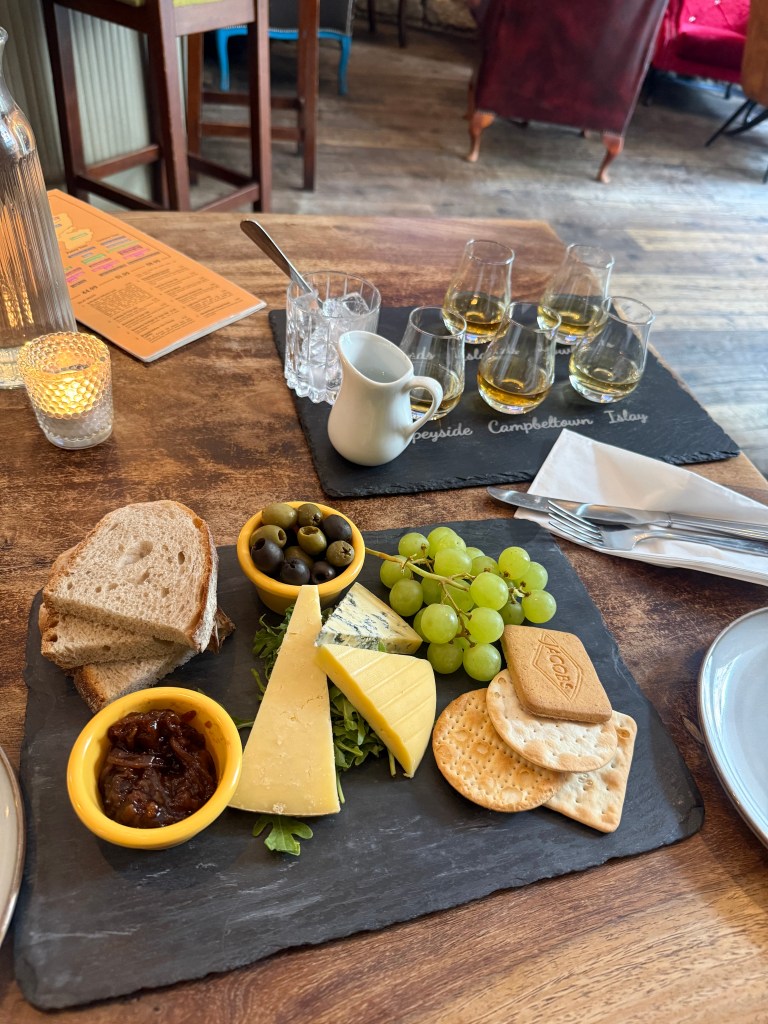
The food surprised me. Haggis is the one people are scared of, but with the right combination it’s genuinely good. I liked it. Fish and chips is a classic and hard to beat, though it’s calorie-dense enough that I saved it for my longer cycling days. And my favorite food-and-drink thing in Scotland by a mile was the Scotch tastings, after doing a few around the country, I figured out I lean toward the stronger, smoky, peaty drams. A few practical notes: allergy labeling is good and staff are used to allergy questions, restaurant hygiene is high, drink responsibly (and never drive after), and stay properly hydrated on long hikes and rides.
🏥 Healthcare System
Healthcare Quality. High: Scotland runs on NHS Scotland, the public health system. Emergency care (A&E) is available to anyone via 999, and there’s a non-emergency line, NHS 24, on 111 for urgent-but-not-emergency issues, especially out of hours. Community pharmacies (like Boots) can handle a lot of minor ailments without a GP. Important for visitors: emergency treatment is provided, but non-residents can be charged for some NHS hospital treatment depending on nationality and reciprocal agreements, so it’s not “free healthcare for tourists.” Short-stay visitors can be seen at a GP as a temporary patient, and private clinics exist in the cities for faster paid access.
Travel Insurance for Nomads:
Don’t travel without proper health coverage. Scotland’s NHS will treat a genuine emergency, but you can be charged for hospital care as a non-resident, and insurance covers what the NHS won’t: private care, trip problems, and getting you home. I use Genki for exactly this reason.
I didn’t need any medical care in Scotland, thankfully, but I’d never travel without insurance, and that’s not a throwaway line. I use Genki. The last time it actually mattered was when I sprained my foot in Colombia: I contacted them, and the response and the way they handled the costs were fast and genuinely practical. I can’t promise every future claim goes the same way, but that experience is why I keep it. If you’re working remotely and relying on your body to get around, cycling, hiking, single-track roads, having something that responds quickly is worth every penny.
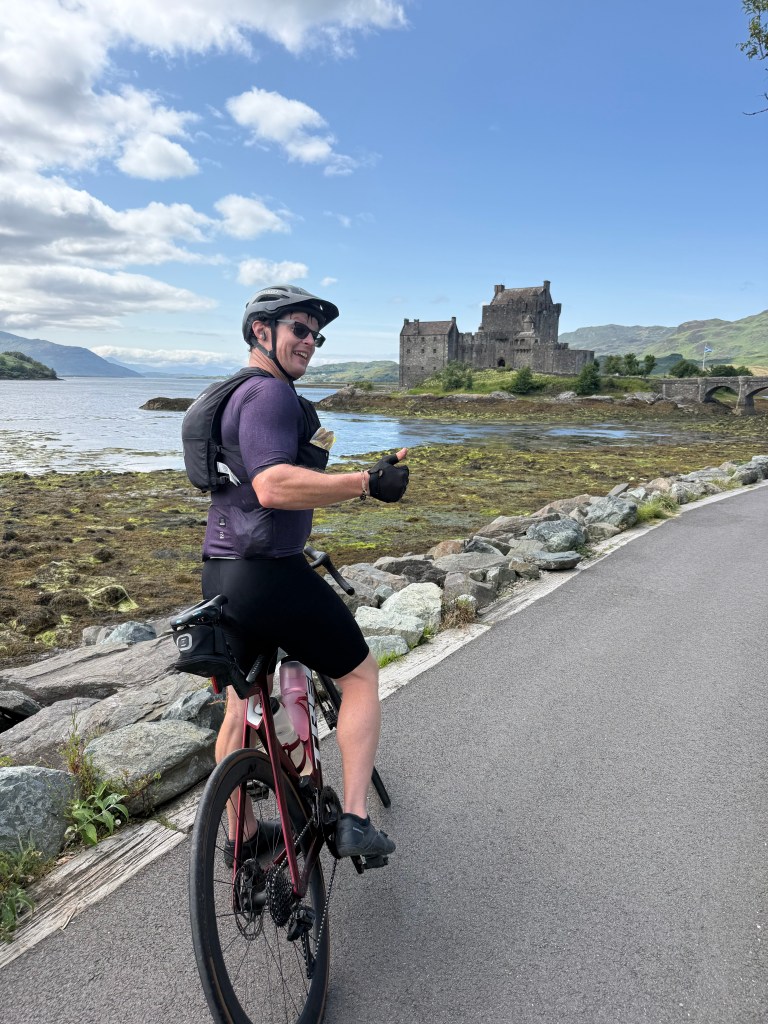
One of my bike routes through Scotland’s small towns.
How Do You Get Around Scotland?
Trains and buses connect the main cities well. Edinburgh to Glasgow takes about an hour. But the Highlands and islands are spread out with sparse public transport, so most nomads rent a car or campervan to explore beyond the cities.
Do you really need a car in Scotland?
Transportation is where a Scotland trip really takes shape. We rented a car so my sister and girlfriend could drive while I rode long stretches by bike, and honestly, if you want a trip that isn’t tied to fixed schedules or limited rural routes, having your own wheels is the move. It gives you the freedom to reach the Highlands and countryside on your own terms, then lean on trains between the big cities.
Pro Tip: A few things caught us out. Scotland drives on the LEFT, and the road direction and roundabouts take a minute to click. On single-track roads you use passing places and take turns with oncoming traffic, on one of our first countryside drives my sister was still getting the hang of it and clipped a parked car. It sounded worse than it was: mostly the mirror and some scratches. She left her contact details, the owner got in touch the next day, and after about an hour on the phone her rental insurance handled the whole thing with nothing to pay. The lesson: always take the rental car insurance, and if you do have a bump, give accurate details, photograph the scene, and contact the rental company. Also watch parking: it’s paid in most cities and adds up, some streets are free overnight but the rules change street to street, and we once rolled back late to a £50 fine (it climbs toward £100 if you don’t pay quickly). Read the signs and use the local parking apps.

Which Neighborhoods Are Best for Digital Nomads in Scotland?
In Edinburgh, New Town, Stockbridge, Leith and Bruntsfield are the nomad favourites for cafés and calm. In Glasgow, the West End (Hillhead), Finnieston and Southside offer the best mix of laptop-friendly cafés, food and walkability.
Scotland isn’t one single nomad experience, it changes city by city, and even neighborhood by neighborhood. Since this is a whole country and not a single city, here’s how the areas break down across the three cities I spent real time in. I didn’t personally stay in every one of these, so treat the researched ones as a map of options. Badge colors: green = Edinburgh, blue = Glasgow, yellow = Oban. The Edinburgh neighborhoods get a closer look in the Edinburgh guide.
🏰 New Town
Georgian elegance, super walkable, packed with cafés and even a WeWork on George Street, central but calmer than the Old Town.
Best for: a central, walkable work base.
⚓ Leith
Waterfront, creative and a bit hip, with coworking, a strong food and café scene and better accommodation value; a short tram/bus ride from the centre.
Best for: value and vibe, away from the tourist crush.
🌳 Stockbridge
A “village in the city”, indie shops, a Sunday market and the Water of Leith walkway; quiet, safe and walkable.
Best for: calm quality-of-life with good cafés.
🌿 Bruntsfield & Marchmont
Leafy and studenty, with the Meadows for exercise, independent cafés and quiet residential streets about 20 minutes from the centre.
Best for: a calm, café-rich balance.
🎨 West End (Hillhead)
Leafy and cultured, Kelvingrove, the Botanic Gardens, the university, café and bar heaven, subway-connected. The classic nomad favourite. This was the corner of Glasgow that clicked most for me, being right by the university means cafés, restaurants and everyday essentials are all easy to find, and the area has a real buzz to it. Worth flagging, though: it's one of the pricier parts of the city.
Best for: Best all-round Glasgow work base.
🍸 Finnieston
Glasgow’s trendy strip of restaurants, bars and coffee, walkable to the centre and the river; buzzy and a bit noisy at weekends.
Best for: food and nightlife on your doorstep.
🌳 Southside
Residential and greener (Queen’s and Pollok Parks), cheaper, with the Shawlands café scene; less central and rail/bus dependent.
Best for: Best value and local feel for longer stays.
⛴️ Town Centre & Waterfront
Everything walkable, supermarkets, cafés, the distillery, restaurants and bay views; busiest with summer ferry traffic.
Best for: car-free stays and island day-trips.
🏞️ Quieter Residential Edges
Up the hill or toward Ganavan: cheaper, more parking and residential calm, with Ganavan Sands for exercise; a 10–20 minute walk in.
Best for: quiet and value, if you don’t mind the walk.
Hidden Gems in Scotland
Beyond the big-name cities, Scotland’s best moments are scattered across the Highlands, islands and coast. Here’s a mix of famous and less-obvious places worth building a route around, each with a quick note on how hard it is to reach, whether you’ll want a car, and whether the Wi-Fi holds up if you’re still working.
Fair warning: the further and more remote you go, the more this becomes a switch-off trip than a work trip. A lot of these spots have little to no signal, so if you’ve got deadlines, base yourself in a city and treat these as weekend escapes.
| Destination | Why It’s Worth It. Access, Car, Timing, Wi-Fi & Best For |
|---|---|
| Isle of Skye | Iconic Highland scenery (Old Man of Storr, Quiraing, Fairy Pools). Car near-essential; 2–3 nights minimum; signal patchy off the main towns. Best for photographers and hikers, not a reliable work base. |
| Glen Coe | Scotland’s most dramatic mountain pass, grandeur right off the A82. Easy by car or tour; day-trip or brief overnight; signal patchy in the glen. Best for photographers and switch-off drivers. |
| Cairngorms National Park | The UK’s largest national park. Aviemore hub, forests, wildlife, distilleries. On the Highland rail line; a genuine multi-day base with decent Wi-Fi. Best for hikers, wildlife and workable nomads. |
| North Coast 500 (NC500) | 516-mile driving loop from Inverness, empty beaches and single-track drama. Car essential; a 5–7 day road trip, not a day-trip; very patchy signal. Best for road-trippers. Book far ahead in August. |
| Dunnottar Castle | Cinematic clifftop ruin near Stonehaven, arguably Scotland’s most photogenic castle. Easy (train to Stonehaven + a walk); day-trip; good signal. Best for photographers and history. |
| Isle of Mull | Wildlife-rich (eagles, otters, whales), colourful Tobermory, gateway to Staffa and Iona. Ferry from Oban ~45 min, car helpful; 2+ nights; patchy rurally. Best for wildlife and slow travel. |
| Staffa (Fingal’s Cave) | Surreal hexagonal basalt sea cave, boat-only and weather-dependent. Boat tour from Mull/Oban/Iona; half-day; no signal. Best for geology and nature bucket-listers. |
| Orkney | Neolithic wonders older than Stonehenge (Skara Brae, Ring of Brodgar). Ferry or short flight; 2–3 nights; surprisingly good fibre in the towns. Best for history and archaeology. |
| Outer Hebrides (Lewis & Harris) | Caribbean-white beaches (Luskentyre), standing stones, deep quiet. Ferry or flight + car; 3+ nights; genuinely patchy. Best for switch-off and beaches, poor for deadlines. |
| Glenfinnan Viaduct | The “Harry Potter” viaduct with the Jacobite steam train crossing it. On the Fort William–Mallaig road/rail; day-trip; patchy at the viewpoint. Best for photographers and film/rail fans. |
| East Neuk of Fife | Pretty fishing villages (Anstruther, Crail) and top seafood, ~1.5 hrs from Edinburgh. Car or bus; day-trip or short stay; good connectivity, a workable mini-base. Best for foodies and coastal walkers. |
| Loch Lomond & the Trossachs | The most accessible national park from Glasgow (~45 min). Car or train; day-trip or overnight; decent signal near the towns. Best for an easy nature fix without going fully remote. |
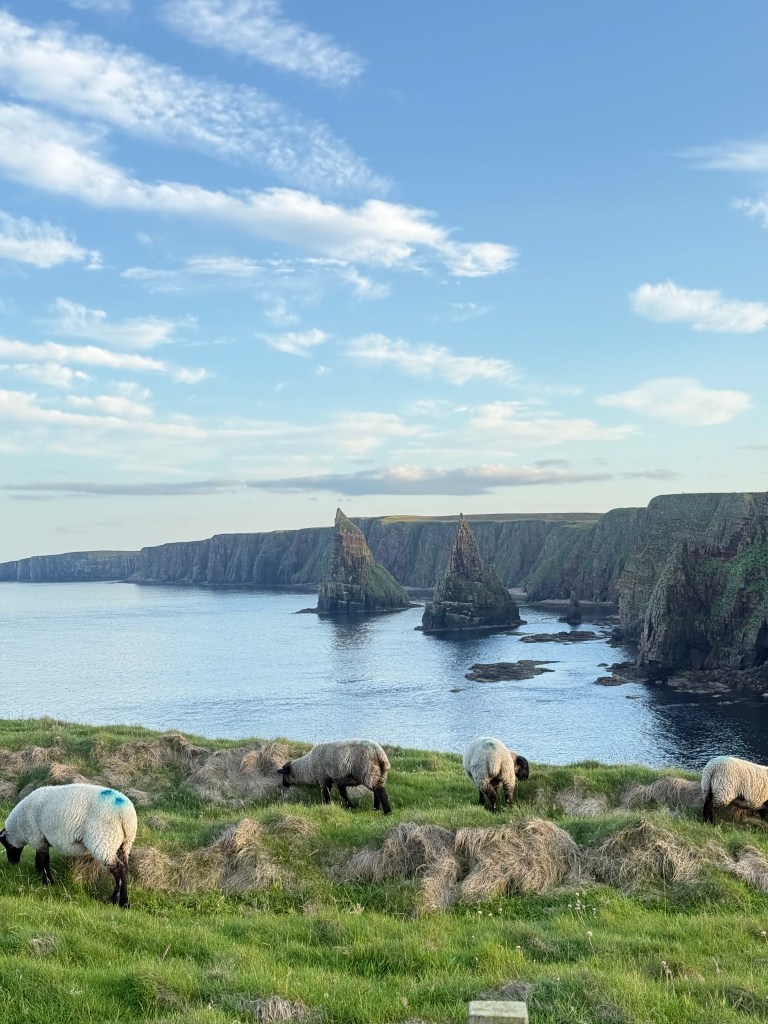


Just another casual Scotland countryside day: a little hiking, a few animals, random castles, and pretending this is normal.
What’s the Weather Like in Scotland?
Mild but wet and changeable, pack layers and a waterproof year-round. Summers are cool, around 15–20°C, with very long daylight that can last until nearly 11pm. Winters are dark and damp rather than bitterly cold. “Four seasons in one day” is real.
When is the best time to visit Scotland as a digital nomad?
Quick reality check on Scottish weather: even in July, supposedly the height of summer, it’s mild rather than hot. A genuinely warm day can push toward 82°F, but that’s the exception; out in the countryside I got plenty of cloudy, rainy days. So pack for rain, a bit of warmth, and a jacket for when the temperature drops at night, layering is essential. The wild part is the daylight: in July the sun didn’t set until around 10pm, and up at John O’Groats it stayed light so late that around midnight it still wasn’t properly dark. I’d wake up at 3 or 4am and the light through the window made it look like morning had already arrived. That’s northern-latitude summer, extremely long days, not true darkness. The monthly averages below are in Fahrenheit.


Dufftown: where the rain won. We managed one hike in the rain, then spent the next few days hiding in the camper we rented to live in for a bit. So yes, it became more of a work stop than an exploring stop.
How Do You Meet People and Find Community in Scotland?
The easiest way in is through cafés, hostels and the outdoors. Scots are famously chatty, especially in the Highlands. Look for nomad and expat meetups in Edinburgh and Glasgow, join a hiking or run group, or volunteer to connect beyond other travellers.
Scotland is an easy place to meet people if you put yourself out there. Hostels are the obvious win, The Court in Edinburgh was genuinely social because it runs activities almost every day, whereas somewhere like Oban Backpackers had so much one-or-two-night turnover that it felt quieter. Beyond hostels, Facebook groups often funnel into WhatsApp groups full of travelers and local events, and Strava is my favorite way to find active locals. I used it constantly to find cycling groups. How social your trip feels really comes down to where you stay and how long you’re there. The Edinburgh guide goes into which stays actually put you around other people.
Here are a few ways I’d build community while working from Scotland, from hostel activities, walking tours, cycling and running clubs to coworking events, university-area meetups, pub quizzes, live music, language exchanges, volunteering, and (if you time it right) the Highland Games:
Find Community in Scotland
💡 Other ways to build community
- Work regularly from the same café or coworking spot (like iCafe Kelvingrove in Glasgow), you’ll start recognizing the regulars.
- Become a regular at a café, you’ll naturally start seeing the same faces.
- Join fitness and outdoor communities, cycling groups via Strava, running clubs and hillwalking meetups.
- Attend events, coworking meetups, pub quizzes, live music, university-area gigs and, in season, the Highland Games.
- Consider a social hostel or shared stay (like The Court in Edinburgh) to meet people instantly.
- Give back. Scotland has strong local communities and plenty of registered charities (conservation, trails, community groups). Volunteer with a legitimate organization, and make sure it fits within the visitor rules.
Use the Meetup button below to browse live events happening across Scotland.
What Are the Best Outdoor Activities in Scotland?
Scotland is a hiker’s dream. Climb Arthur’s Seat in Edinburgh, walk the dramatic Quiraing on the Isle of Skye, cycle along the Clyde in Glasgow, or drive up to Dunnet Head. Long summer daylight means you can work a full day and still get outside.
Scotland is a brilliant place to stay active. Cycling is my main thing, and I found both organized group rides (via Strava) and endless independent routes. I rode big chunks of the trip. City walking alone racks up serious mileage, especially in hilly Edinburgh, and the country is stacked with hiking, from an easy climb up Arthur’s Seat to full Highland days. Glasgow has parks, gyms, running routes and cycling; Oban has walking, hiking, cycling and coastal scenery on the doorstep. Gyms are everywhere, though short-term passes can be pricey, and there are running clubs and organized races (which fill early, so register ahead). And if your timing lines up, don’t miss the Highland Games.
🌿 Hike
🚲 Cycling
🌿 Hike
🌿 Hike
🌿 Hike
🌿 Hike
🚲 Active
💪 Exercise
Turns out the best workout plan comes with a view like this.
Personal Experience as a Digital Nomad in Scotland
The three of us answered the same eight questions after a month on the road together. Tap a name to read their full take, the honest, unfiltered version.
LorenFounder · 14 years on the roadTap to read ▾
GiselLoren’s girlfriendTap to read ▾
CandaceLoren’s sisterTap to read ▾
Traveling Through Scotland With My Sister & My Girlfriend
We did this trip as a trio, my sister, my girlfriend and I. We’ve done a few trips together now: Portugal (check out the Lisbon guide here), Thailand, Santa Marta, Colombia and the Philippines. It’s not the easiest thing to do, easier than having my Mom in the mix, sure, but still quite challenging. We all work together too, so it could’ve been a recipe for disaster; instead, we’ve figured out how to make it work. I’d honestly argue this was one of the smoothest trips we’ve done together.
A big part of that is recognizing when we each need a break. There were times my sister needed a break from me, times Gisel needed a break from my sister, times Gisel and I just needed some time alone. Spotting those moments and giving each other that space really helped. Or, as we’d put it: “I love you, but right now you’re driving me nuts.”
Stay In The Loop
Join 14 Years Of Lessons Learned
Unsubscribe anytime, no spam, just stuff that works.
Been to Scotland? Share Your Experience!
About Me

The Creator Of Digital Nomad Lifestyle
Hi! My name is Loren Ross, after establishing my own business while traveling the world I decided to create this blog for existing and aspiring digital nomads.
See My Full Journey To Being A Digital Nomad Here
Anything you want that you’re not seeing? Please reach out to me on one of the social media channels below, I’d love to see if I can help out. Check out my digital marketing business.
searchmarketingconsultingdenver.com
Leave a Comment