
This is a big topic these days in the world
Nationalism, immigration, and the like
Who Am I To Talk About It?
I am someone who has spent many years living outside of my own society
So I think I have a unique perspective
A perspective different from people who swim every day in their societal problems and narratives
I will be mostly speaking on nationalism and immigration in the United States
Because that’s where I’m from, and it’s the culture I most deeply understand.
However
Whether it’s Northern Africans in France, Venezuelans in Colombia, or Latinos in the US
The groups change, but the story is generally the same
We had a country with cohesion, safety and clear identity and now that is being lost. It’s being lost due to immigration and a lack of respect for our history and culture.
It’s funny, the longer I travel, the more I realize that the “unique problems” of each country, aren’t unique at all
They’re quite common
The manifestations may vary, but the core is usually the same
For this reason, I’ll speak mostly about the United States
But many of the themes apply regardless of which country you’re speaking about.
What Is Nationalism & Where Did It Come From?
This is the definition Google gave
“Nationalism is identification with one’s own nation and support for its interests, especially to the exclusion or detriment of the interests of other nations.”
However, I find that the modern narrative encompasses far more than this, so I’ll elaborate on this a bit
Historians argue that it wasn’t until the 18th / 19th century that we started building our current nations as we know them now
Before that, there were empires, dynasties, ethnic groups etc. that had ever-changing “borders” or limits of control
Nowadays, there is generally a consensus on where the borders are for each state, and who has control of what
To keep cohesion, these states patched together a national narrative of what it meant to be a member of X country
Curated stories, practices, and identity
Identity is a key term here that we will talk about later
This creates a narrative, a narrative that a group of people can hold dear
A narrative that keeps a group of hairless monkeys working together toward an ideal
And most importantly, it stops us from fighting and throwing s*** at one another
This narrative is the backbone of nationalism
It’s what people on the right fight to keep intact

Leo Tolstoy – 19th-century Russian writer – the writer of “War And Peace” who was against nationalism
Should We Even Have nationalism?
In the definition outlined above, it certainly seems so
In theory, it’s what keeps us all moving toward the same goal
Nationality offers a shared identity and story.
It offers you a story you can look back on with pride
A shared story that connects you to your neighbors.
A story that keeps our society moving forward, and not caught up in infighting
The pride Americans feel about D-Day
The pride my girlfriend has in her Mexican heritage
The pride that the Kabyle people feel in Algeria
It’s an intoxicating thing
It also gives a base level of pride and confidence to construct your identity

My Mom with a couple of Hmong people during the Hmong new year in Laos. A country with a lot of different ethnic groups throughout it’s mountains. Check out my guide to Luang Prabang, Loas here.
What About People Who Feel Left Out?
As I spoke about earlier, identity is a key aspect of this nationalism
So what is the identity of the US narrative then?
If I were an African American with more than a generation or two in the US I don’t know if I’d feel part of the club
I don’t know if I’d feel part of the identity of the US nationalistic ideal
These shared stories aren’t always so universally shared
Or if you’re a Native American, the American narrative may not be super palpable to you either.
Then add on top of that more and more immigration into the United States
Immigration from people who have their own story, and you can see how things get tricky.
Add to this that assimilation is viewed more and more negatively
There’s a rising call for people to stay true to their roots
To continue their cultural practices, speak their languages, and to remain true to their identity.
The obligatory boarding schools for native Americans in the 19th century would never fly in today’s age.

This is a “before and after” portrait of Tom Torlino, a Navajo student at the Carlisle Indian Industrial School in Carlisle, Pennsylvania.
The left photo shows Torlino as he entered the school in 1882; the right shows him three years later, after the school’s forced-assimilation program had cut his hair and put him in Euro-American dress.
The difference here is incredible.
These boarding schools would do their best to get native Americans to stop speaking their own languages, and essentially attempt to recreate them into ideal “American” citizens.
If you are trying to run a modern nation, this approach does make sense
To keep the society from splitting apart, it’s easier if everyone is bought in on the narrative
I don’t think this is some grand, hidden conspiracy
The more you can get everyone to adopt the same national narrative, the more smoothly the state will run.
Then once you get a majority bought in on the idea, they will start policing others themselves
So Can modern nations Exist In Todays multi-culturalism?
I recall talking to a Colombian dude in a bar in Medellin
A city that has experienced huge amounts of immigrants, both from the US and Venezuela
I asked him what he thought about all of the people coming into the country
Generally, Colombians in Medellin are either concerned about American immigrants, Venezuelan immigrants, or both
He said that if you want to live in a free society, you need to accept that the society is going to change
If you want a controlled society, then go to a totalitarian nationalist state.
I found this quite interesting, and I think he had a good point.
For those of us who live in societies with a larger focus on individual rights, societies are going to morph and evolve
This morphing and evolving is part of the process
It likely won’t morph and evolve exactly how you’d prefer, either
You can try to freeze your society in a certain period – like Japan did during the Edo period
But even then, your Meiji Restoration will come.
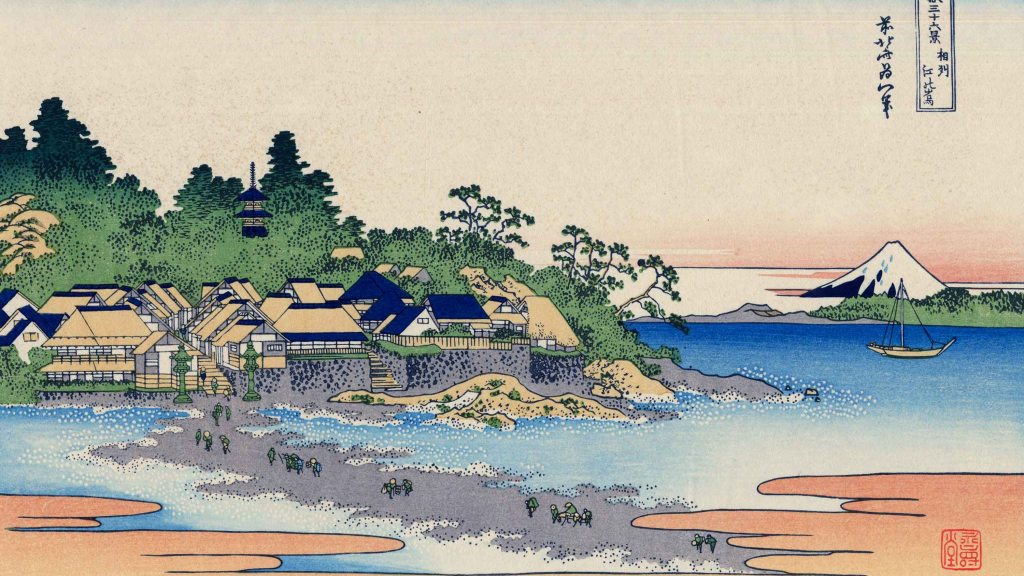
The Edo period is by far my favorite period for Japanese art. Admittedly, I didn’t know anything about the Edo period or Japanese art, before my visit to Tokyo – check out my guide here
So, What Does This Mean For The National narrative?
This narrative is then necessarily being challenged, evolving, and changing
That is part of a free society
So why Not Just Scrap The Nationalism?
That seems like it would fix our problems
I used to think so
The University I went to had me believing that there’s an answer
That our nationalistic fervor arises from racism
and that this racism is the root of our divisions
That nationalism = racism and that racism is the ultimate reason for our divisions
That if we can just get past racism, we can break free from the nationalistic narrative, and live in harmony
Then I went to South Africa
I would hear all of these things about the different ethnicities within the country
- How the Zulu are like X
- The Xhosa are like Y
The stories would change, of course depending on which group the individual happened to be a part of.
Then I finally started asking the South Africans “but how can you tell one group from another?”
And I never got a real reply
Most South Africans can’t tell the difference between people of different cultural groups.
But that didn’t stop prejudices, generalizations, etc. toward that group
You can see this with the historical fighting and wars between Catholics and protestants in Europe.
Or the tension toward Italians and Irish immigrants back in the day – groups that we generally lump together as white in the US now
The end of nationalism does not mean the end of racism, patriarchy, [insert today’s trending movement]
Nationalism is simply one of many ways we categorize (or divide) ourselves
We will just find a new way to divide ourselves.

A waterfall from Mpumalanga South Africa – beautiful part of SA, see my guide to Cape Town here
Jane Elliott’s Blue Eyes Brown Eyes Experiment
In 1968, teacher Jane Elliott divided her third-grade class by eye color. One group was told they were superior and given privileges; the other was treated as inferior.
The children quickly adopted these prejudices and started coming up with stories about the other group.
Within a day the class had been divided along rigid lines based on eye color
Incredible experiment
But of course this was done on children
But surely us fully developed adults, are not subject to the same influences
“So strong is this propensity of mankind to fall into mutual animosities, that where no substantial occasion presents itself, the most frivolous and fanciful distinctions have been sufficient to kindle their unfriendly passions, and excite their most violent conflicts.”
James Madison – President, Founder of a nation, ‘Merican…
Or in layman’s terms
We will always find some way to divide, fight, and argue over something
It’s part of our nature
An anecdote from Vietnam
I lived in Southern Vietnam, and would hear the way southerners would talk about northerners, and vice versa.
As an outsider, I found it absurd
What silly prejudices
Then I Got Back to The US
And I was hanging out with a group of friends
These are people who deeply studied the causes and effects of racism, sexism, gentrification, etc.
People well versed on these subjects.
When they spoke about any group of people, they were all very understanding
They didn’t jump to conclusions
They didn’t allow themselves to blindly parrot stereotypes
I arrived at one of the guys’ new apartments
He lived in a newly gentrified part of Denver
He showed the view he had of the Rocky Mountains to the west
But when I looked out his massive bay windows, my eyes were drawn to something other than the mountains
My eyes were drawn to the patchwork of colors 700 – 800 meters away
A large group of tents, a makeshift living space
An encampment of homeless people
I still remember him saying
“Ya, it’s a beautiful view, and management promised that they’d remove all of the people living in the tents here soon”
We went back to the living room to talk
One of the others worked for an institute working to reverse the effects of racism
She was the new girlfriend of one of the guys
A new member of the group I hadn’t met before
We began to talk about her story and where she came from
She told me she came from Arkansas
And all of a sudden, the group erupted in commentary
All of their nuance and understanding went completely out of the window
“Man the racist hicks that live down there.”
“Jesus what a hellhole – thank God you got out of there.”
Etc. Etc.
This hypocrisy Really Frustrated Me
And it still does if I’m honest
If I’m not careful, I find myself creating a narrative of everyone on the far left
And turning them into caricatures
Caricatures that I can judge and be angry at
Angry that they’re ruining society
And voila
Here’s another way to divide me from others
One that seeds hatred and helps grow the gaps between me and others in my society
Ultimately, I’m just as big a hypocrite as they are
Just in different ways
It’s Part Of Who We Are
You, me and everyone you know has these divisions in their minds
I believe this is a function of being a human
It doesn’t really matter who created them or where they came from
They’re here, and if we’re not vigilant every single day
They’ll continue tearing us apart
Don’t Cling So Tightly
Not taking the personality so seriously, of not taking the dramas of life so seriously, not getting so trapped in them, not pulling back but not being trapped — passionate involvement and emptiness, a joy that doesn’t deny what is in the world and isn’t trapped by it.
Ram Dass – Experiments In Truth
I think this is where a solution could be found.
Yes your personality, your identity, your nationality, your cultural heritage, all of it is important
And yes there are differences between us
To pretend that there aren’t differences between us is ignorant
Maybe even some of the generalizations we make about the other group have some truth to them
The key is not to be trapped by your identity and perspective
Whether
- You’re an immigrant in a new country, not wanting to lose your identity
- Or someone who feels like they’re losing their country, and its ideals. A country and ideals that have been held in your family for generations.
- Or someone fighting to end racism and xenophobia
- Or some pompous, ‘enlightened’ world traveler who writes ‘objective’ theses on the roots of societal tensions
The ways we identify ourselves and divide our world are both precious and empty at the same time.
I don’t know if a nation can exist without a uniting story / narrative
I don’t know if we can find a new one that everyone can more or less agree on
I guess we’ll find out
But I know it’s a nightmare living in it when I’m too tied to my identity
These societal tensions are not the fault of the politicians
It’s our responsibility to remain conscious of our tendency to cling to identities and to widen divides.
“And if you see the way in which people get encrusted in their personalities, you can look at somebody and the way they stand, the way they dress, the muscles of their face — the redundancy is staggering — of a person saying, ‘This is who I think am. This is who I think I am. This is who I think I am. This is who I think I am.’
Ram Dass
So you see helpless people going down: ‘This is who I think I am. This is who I think I am.’ Then you see bankers: ‘This is who I think I am. This is who I think I am.’ You see car salesmen: ‘This is who I am.’ You see just a laid-back hippie: ‘Hey man, this is who I think I am. Hey baby, this is who I am.’
And everybody gives you a little matrix they’re walking down the street with, out of the Doctor Strange comics — these huge mind nets. And the net goes out and it catches you, and you immediately go into the: ‘I’ll make believe you are who you think you are, if you’ll make believe I am who I think I am.’
So you don’t even look to see who it is. You don’t see God as your only friend. You don’t see that could be God in drag. You see who they think they are, and you respond to it.”