
Published Date:
Published By:
Chiang Mai is one of the most popular cities in the world for digital nomads. With great cafes, coworking spaces, affordable living, and a strong remote work community, it has become a favorite base for people working online while exploring Thailand.
Digital Nomad FAQ’s
Is the Philippines a good country for digital nomads?
How is the internet connectivity and speed in the Philippines?
Internet in the Philippines has improved significantly in recent years, especially in cities like Manila, Cebu, and parts of Siargao. Fiber connections are common in urban areas, with speeds ranging from 50–300 Mbps in apartments and coworking spaces. However, island destinations like El Nido or Coron can be less consistent, so having a backup option like a local SIM, eSIM, or portable hotspot is highly recommended. See a full breakdown of internet reliability in the Philippines here.
Is it easy to meet people and make friends in the Philippines?
Yes — Filipinos are known for being friendly, welcoming, and English-speaking, which makes integration much easier compared to many Asian countries. Popular digital nomad hubs like Siargao, Cebu, and Makati (Manila) have active communities, coworking spaces, and regular social events. It’s generally easy to meet both locals and other remote workers, especially in beach towns and expat-heavy neighborhoods. Here’s where most nomads connect in the Philippines.
How much should I budget for a month in the Philippines?
Your budget depends on location and lifestyle. In smaller cities or provincial areas, you could live on around $1,000–$1,500 per month. In more developed areas like Makati, BGC, Cebu IT Park, or Siargao, a comfortable lifestyle typically ranges from $2,000–$3,000 per month. Island living can become more expensive due to imported goods and tourism pricing. See a detailed cost of living breakdown here.
Are there plenty of places to work from in the Philippines?
Yes, especially in Manila (Makati and BGC), Cebu IT Park, and Siargao. Coworking spaces are expanding, and many cafés welcome remote workers. That said, not every island destination is ideal for deep work, so choosing the right neighborhood matters. Major cities offer reliable infrastructure, while beach towns offer lifestyle balance but sometimes slower speeds. Explore the best areas to work remotely in the Philippines here.
philippines for Digital Nomads
The Philippines doesn’t always show up at the top of digital nomad rankings — but it probably should.
It’s one of the few places where you can still live relatively well on a modest budget, especially outside Manila. English is everywhere, the visa system is flexible, and the natural scenery is on another level.
I worked remotely from El Nido and Coron — two places that feel more like postcards than work destinations. Turquoise water, limestone cliffs, small-town energy. Not exactly the typical “startup city” vibe.
And that’s where the reality kicks in.
The lifestyle is incredible. The cost of living can be affordable. But internet and infrastructure require strategy. Some cafés work perfectly. Some don’t. Having a backup connection isn’t optional — it’s smart.
The Philippines isn’t a plug-and-play nomad hub. But if you choose your base carefully, it offers something rare:
In this guide, I’ll break down the visa options, realistic monthly budgets, internet reliability, safety, and which areas actually make sense depending on how you work.
It’s not the most polished destination in Southeast Asia.
But for the right kind of nomad — it can be one of the most memorable.
Let’s get into it.

Morning work session in El Nido. Ocean views, steady Wi-Fi, and a reminder that productivity doesn’t always have to happen inside four walls.
🇵🇭 philippines Visa Guide for Digital Nomads
The visa information below may not be up to date information, nor should be used as visa advice for people working while abroad. We do not claim that you can work legally with a visitor visa or any other visa in this country or any other country in the world. As always, you will need to refer to your embassy for the latest information. We at Digital Nomad Lifestyle believe in the heavenly mandate granted to each government of every modern nation, and thus the laws and regulations therein. Therefore rules outlined by the almighty state should be followed unwaveringly and without question. In Government We Trust – Digital Nomad Lifestyle
‼️ The Philippines does not currently operate a fully active digital nomad visa program. Most digital nomads stay using tourist visa extensions. ‼️
1. Visa-Free Entry (What Most Nomads Use)
Most Western passport holders (US, Canada, UK, EU, Australia, etc.) can enter the Philippines visa-free for 30 days.
What you need:
- Passport valid for at least 6 months
- Proof of onward travel (a flight leaving the country)
- Occasionally: proof of funds
In most cases, the process is straightforward if your documents are ready.
You land. You get 30 days. That’s it.
2.Tourist Visa Extensions (How Digital Nomads Stay Long-Term)
This This is how most digital nomads stay in the Philippines long-term.
You enter visa-free for 30 days. Before those 30 days expire, you visit a Bureau of Immigration office and apply for an extension. You do not need to leave the country.
The extension system typically works like this:
| Stage | Duration Granted | What It Means for You |
|---|---|---|
| Initial Entry | 30 days | Visa-free for many nationalities |
| First Extension | +29 days | Applied inside the country |
| Further Extensions | 1–2 months at a time | Renewable repeatedly |
| Maximum Stay (many passports) | Up to 36 months | With continuous legal extensions |
In practical terms, this means you can legally stay in the Philippines for months — and in many cases up to three years — without doing visa runs.
Extensions are processed at immigration offices in major cities like Manila, Cebu, Puerto Princesa, and Dumaguete. If you’re staying in smaller islands such as Coron or El Nido, you may need to extend in the nearest larger city.
Processing time is often same-day or a few business days, and costs generally range between $50–$100+ per extension depending on the duration and accumulated stay.
It’s not the cheapest visa system in Southeast Asia, but it’s flexible and straightforward — which is why many nomads choose it.
3. Other Visa Options & Important Considerations
Beyond tourist extensions, here are the key things digital nomads should know:
| Topic | What You Should Know |
|---|---|
| Digital Nomad Visa | The Philippines has announced plans for a Digital Nomad Visa, but most remote workers currently use tourist extensions. Always verify official sources before planning long-term stays. |
| Visa Runs | Not required if you extend legally. Some nomads still exit to nearby countries and re-enter, but this is optional. |
| Overstaying | Results in fines. Always extend before your visa expires. |
| Compliance | Keep extension receipts and stay updated, as immigration rules can change. |
The system is generally welcoming to long-term visitors, but staying organized is essential.
Official Sources
Immigration rules can change. For the most up-to-date requirements, always verify through official government channels:
Bureau of Immigration (Philippines)
https://immigration.gov.ph
Department of Foreign Affairs (Philippines)
https://dfa.gov.ph
Before planning long-term stays, confirm current visa policies directly through these sources.

🇵🇭 Cost of Living in philippines
The Philippines offers one of the most flexible cost structures in Southeast Asia. Whether you prefer island life, a city apartment, or something more premium, your monthly expenses can vary significantly depending on lifestyle and location.
Below is a realistic breakdown of what digital nomads typically spend per month in USD.
Cost of Living for Digital Nomads in the Philippines
Monthly estimates in USD — ranges vary by city/island (Numbeo-based)
| Category | 💚 Low Budget | ⚖️ Mid-Range | ✦ Premium |
|---|---|---|---|
| Accommodation | $350 – $650 | $700 – $1,300 | $1,500 – $2,500+ |
| Food | $200 – $350 | $350 – $550 | $600 – $900 |
| Transport | $40 – $90 | $100 – $200 | $250 – $400 |
| Coworking / Internet | $50 – $120 | $120 – $220 | $250 – $400 |
| Lifestyle | $150 – $300 | $300 – $600 | $700 – $1,400 |
| Total Monthly Cost | $790 – $1,460 | $1,570 – $2,870 | $3,300 – $5,600+ |
💡 Extra Costs to Consider
Beyond rent and food, most digital nomads in the Philippines also budget for a few practical essentials.
If you’re staying long-term, international health insurance is a common choice among remote workers.
For internet reliability — especially on smaller islands — many nomads carry a portable hotspot as a backup. In more remote areas, some even rely on satellite internet for stable connectivity.
They’re not mandatory — but they’re tools many digital nomads use for flexibility and peace of mind.
🇵🇭 Climate & Best Time to Live in the Philippines as a Digital Nomad
| 🌞 Dry Season (November – May) The most popular and stable period. Mostly sunny days Lower humidity (especially Dec–Feb) Ideal for island life and outdoor activities Higher accommodation prices during peak months Best overall months: December to April. | 🌧️ Rainy Season (June – October) More unpredictable but still livable. Higher humidity Frequent heavy showers (often short bursts) Possible typhoons (mainly Aug–Oct) Lower prices and fewer tourists Good option if you prefer fewer crowds and don’t mind occasional weather disruptions. |
| 🌡️ Temperatures Average temperatures stay between: 77°F – 90°F (25°C – 32°C) It’s consistently warm, even at night. Air conditioning is common in apartments and coworking spaces. | 🏝️ Best Time for Digital Nomads If you prioritize: Stable internet + easy transport → November to April Lower costs + fewer crowds → June to early July Avoiding typhoon risk → December to March For most remote workers, the sweet spot is between December and April. |
The Philippines isn’t a traditional “big city nomad” country like Thailand or Vietnam.
It’s more about island bases, slower living, and building your routine somewhere scenic.
If you’re looking for a balance between productivity and tropical lifestyle, these two destinations stand out.

El Nido is more developed than Coron and has become one of the most recognizable island bases in the Philippines.
Why nomads choose El Nido:
- Larger selection of cafés
- More accommodation options
- More social energy
- Beautiful beaches within walking distance
- Easier access to tours and activities
It’s still a small town — but it offers more variety in daily routine compared to Coron.
For many digital nomads, El Nido offers a better balance between infrastructure and island life.
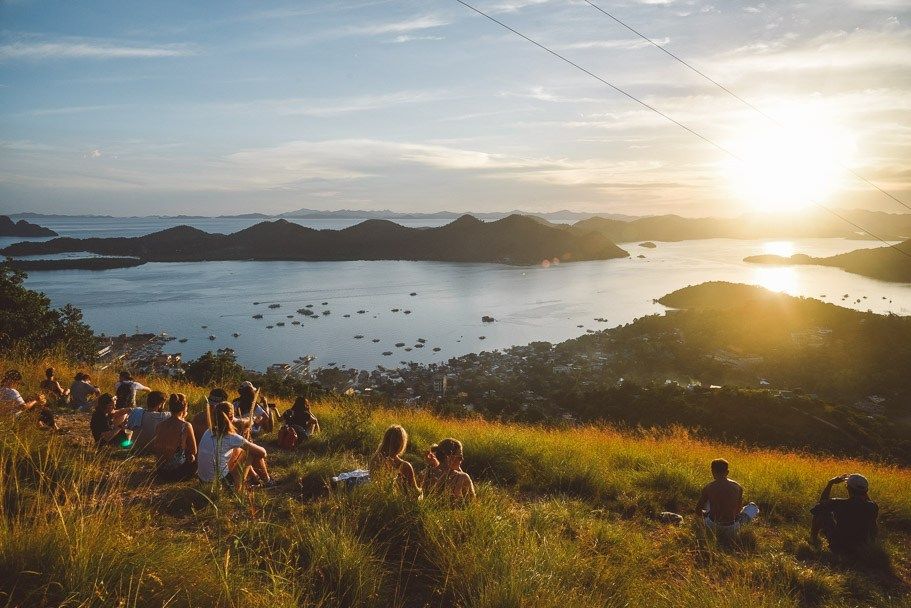
Coron is ideal for digital nomads who want a quiet island base with dramatic scenery and a slower pace of life.
Why nomads choose Coron:
- Smaller town feel
- Strong sense of community
- Incredible island-hopping and diving
- Lower overall cost compared to major hubs
- Growing café and remote-work culture
Internet can be workable but inconsistent, which makes having a backup solution helpful during longer stays.
Coron is best for remote workers who value lifestyle and nature over fast-paced networking scenes.
hidden gems 💎
Beyond Coron and El Nido, there are other destinations worth exploring if you’re planning a longer stay:
| Destination | Why Digital Nomads Like It |
|---|---|
| 🌴 Siargao | Surf culture, strong nomad community, and a growing coworking scene. |
| 🌅 Dumaguete | University town vibe, affordable rent, and easy access to diving. |
| 🏖️ Bohol | More relaxed than major hubs, with solid infrastructure and fewer crowds. |
| 🌆 Cebu | A stronger city base with better internet reliability and international connections. |
🇵🇭 Internet in philippines
Not every café has perfect speeds, so having backup tools matters. I share the exact tools I use in Tools to Speed Up Internet.
Internet in the Philippines has improved a lot in recent years, but reliability still depends heavily on where you are. In bigger hubs like Manila and Cebu, fiber connections are common and usually stable. On smaller islands, speeds can vary by neighborhood, time of day, and even weather — which is why experienced digital nomads rarely rely on a single connection.
Many remote workers travel with a backup option like Solis (portable hotspot) for day-to-day reliability, and some use Starlink Mini when they’re based in more remote areas where infrastructure can be inconsistent.
Link if you want more info:
👉 STARLINK
Wifi speed tests
Philippines Internet Speed Tests (2026)
Real-world results from El Nido and Coron across cafés, coworks, and hotels — shown as ranges so you can quickly see best vs. worst-case performance.
Cafés / Coworks
Range from your tests (n = 9)
Hotels / Colivings
Range from your tests (n = 5)
Backup Options (Tested)
When you can’t risk a dropped call
If you’re working from smaller islands, the biggest upgrade isn’t “faster WiFi” — it’s having a second connection ready when the main one slows down.
| Option | Download | Upload | Latency |
|---|---|---|---|
| Starlink Mini | ~205 Mbps | ~33 Mbps | ~48 ms |
| Portable Hotspot (Mobile) | ~61 Mbps | ~13 Mbps | ~102 ms |
Working from Nacpan Beach in El Nido — using Starlink for reliable coverage.
If you’re building your remote setup, these are some of the most useful tools digital nomads use while traveling.
🇵🇭 Where to Stay as a Digital Nomad
The Philippines doesn’t have a huge “formal” coliving scene like Bali or Chiang Mai — especially on smaller islands.
Instead, most digital nomads stay in:
- Social hostels
- Boutique hotels
- Small locally-run guesthouses
- Longer-term Airbnb-style rentals
In destinations like Coron and El Nido, community often forms naturally in hostels and hybrid hotel setups.
Here are a few places that stand out for remote workers:
📶 Internet: Generally stable for calls and remote work.
📶 Internet: Basic but workable for light remote tasks.
📶 Internet: Reliable for video calls and daily remote work.
📶 Internet: Decent connectivity, better for social-focused stays.
Use this map to explore the best places to stay in the area. You can book everything directly through Booking — my go-to app for accommodation when I travel.
A beachfront hostel, a great place to meet people — and where I often use my Starlink for better internet.
🇵🇭 Best Cafés for Digital Nomads
While coworking spaces are still limited in many Philippine islands, cafés often become the main workspaces for digital nomads.
In places like El Nido and Coron, you’ll find a mix of cafés, restaurants, and hybrid coworking cafés where remote workers spend a few hours working between island hopping trips.
Here are some of the most practical places to work remotely.
Neighbors & Nomads
El Nido
Hama Coffee
El Nido
Cafe Athena
El Nido
Jinjer Restaurant
El Nido
Hayahay Cafe
El Nido
Epic Cafe
Coron
Itadhana Café
Coron
Coffee Kong
Coron
Dayō Cafe
Coron
One of the cafés with the best views in Coron — a great place to work with a view
🇵🇭 Transport Within philippines
Because the Philippines is made up of more than 7,000 islands, transportation works a little differently compared to most countries.
Instead of relying mainly on trains or long-distance buses, travel between destinations usually involves a combination of flights, ferries, vans, and local transport.
The good news is that getting around is relatively affordable, and most digital nomads quickly learn how to combine different options depending on the distance and the island they are visiting.
Here are the most common ways to move around the Philippines.
The fastest way to move between major islands and hubs. If you’re working remotely, flights save time and reduce travel fatigue.
- Approx. cost: $40–$120 (varies by route + booking timing)
- Best for: Manila ↔ Cebu, Cebu ↔ Coron, Manila ↔ Palawan routes
- How to use: Book directly with airlines (Cebu Pacific, Philippine Airlines, AirAsia) and plan ahead for lower fares.
Ideal for shorter island-to-island routes. Ferries are common in tourist areas and can be a scenic, affordable option.
- Approx. cost: $20–$60
- Best for: El Nido ↔ Coron, Cebu ↔ Bohol, inter-island travel in the Visayas
- How to use: Buy tickets online when possible, and avoid scheduling critical calls on ferry days (weather delays happen).
- Personal tip: I tried booking ferry tickets through travel agencies and kept hearing the classic “tomorrow, tomorrow”… which apparently means “maybe never.” After waiting longer than necessary, I finally walked straight to the official ticket office at the dock and got my ticket in minutes. Moral of the story: if you want a ticket, going directly to the port is usually the safest bet — relying on agencies can sometimes turn into a small adventure of its own.
The most common way to move within an island—especially between airports, ports, and towns. Affordable but sometimes a bit chaotic.
- Approx. cost: $10–$25 per person
- Best for: Puerto Princesa ↔ El Nido, town ↔ airport/port transfers
- How to use: Reserve through your accommodation, local operators, or transport desks in town.
- Personal tip: Shared vans can be a bit uncomfortable when they’re completely full, and drivers sometimes seem to be in a hurry to get everyone to the destination. If you’re traveling with a few people, renting a private van can be a much more relaxed experience — it costs a bit more, but the extra space and flexibility are often worth it.
One of the best ways to explore beaches and hidden spots on your own schedule—perfect for nomads who like flexibility.
- Approx. cost: $6–$12 per day
- Best for: Exploring islands (Palawan, Siargao, Bohol) beyond the town center
- How to use: Rent from local shops or your hotel; always wear a helmet and drive carefully (road quality varies).
The go-to short-distance transport in many towns like El Nido and Coron—quick, easy, and everywhere.
- Approx. cost: $1–$3 per ride (distance-dependent)
- Best for: Town rides, hotel ↔ port, short beach transfers
- Watch out: Prices can jump for tourists—ask the price first and confirm before you get in.
Many town centers are walkable. If you stay centrally, you can often reach cafés, restaurants, and essentials in minutes.
- Approx. cost: Free
- Best for: El Nido town center, Coron town center, short daily errands
- How to use: Choose accommodation near the center if you want a simple “walk everywhere” routine.
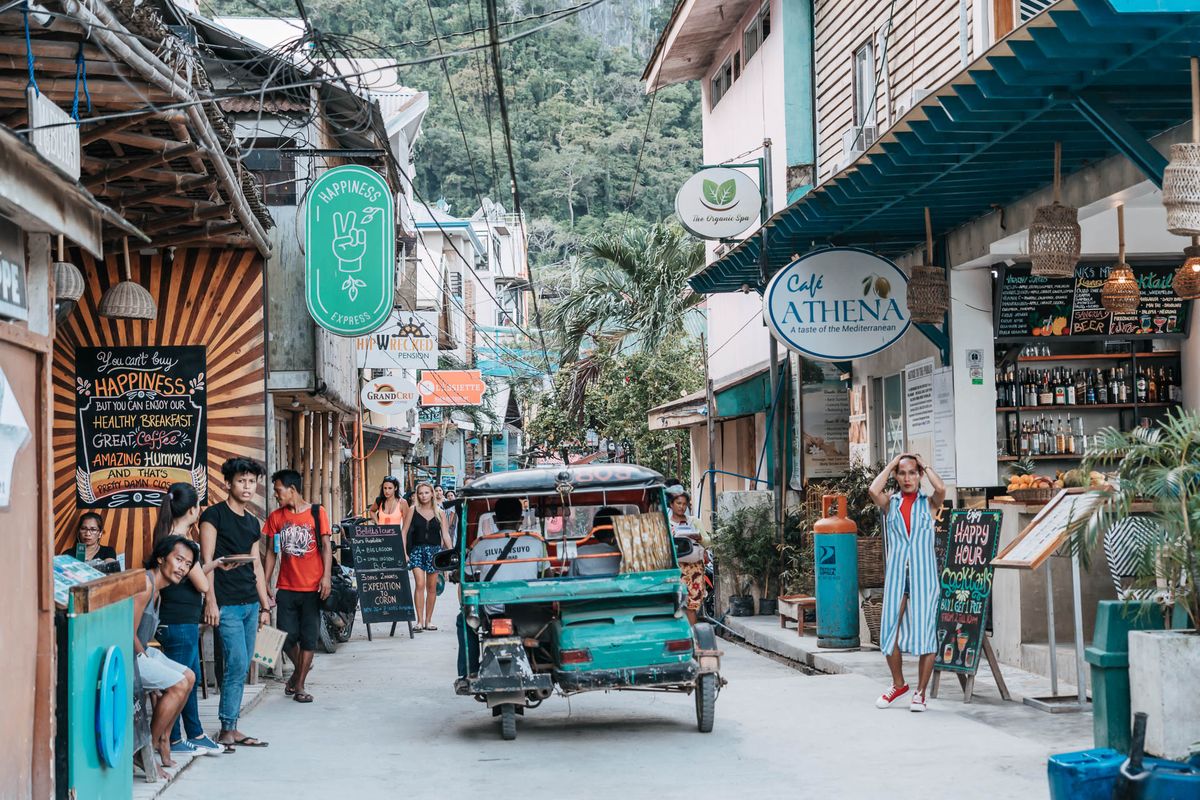
One of the streets in El Nido where tricycles are basically the local traffic jam.
🇵🇭 Speaking & Communicating
One thing that makes the Philippines surprisingly easy for digital nomads is communication.
The main local language is Tagalog (Filipino), and because of the country’s history, you’ll sometimes notice words that sound a little similar to Spanish. It’s a small detail, but for Spanish speakers it can feel oddly familiar.
But the real advantage is that English is widely spoken across the country.
In fact, the Philippines is one of the most English-proficient countries in Asia, and you’ll find that most people — especially in tourist areas, cafés, and hotels — speak English very comfortably.
For digital nomads, that means:
• Ordering food is easy
• Asking for directions is simple
• Working remotely or handling logistics rarely becomes a language barrier
Still, learning a few basic words in Tagalog goes a long way.
Even simple phrases like thank you or please often get a smile from locals. People genuinely appreciate the effort, even if you only know a couple of words.
It’s one of those small cultural gestures that makes everyday interactions warmer and more friendly.
| Tagalog | English Meaning |
|---|---|
| Salamat | Thank you |
| Salamat po | Thank you (more polite) |
| Po | Polite word used in conversation |
| Oo | Yes |
| Hindi | No |
| Magkano? | How much? |
| Paumanhin | Excuse me / Sorry |
| Kumusta? | How are you? |
🇵🇭 Staying Active in philippines as a Digital Nomad
One of the best parts about living in the Philippines as a digital nomad is that staying active doesn’t always mean going to a gym.
In many places, especially islands like El Nido or Coron, your daily routine naturally includes movement.
Instead of structured workouts, you’ll often find yourself staying active through the environment around you.
Some days it might be:
• swimming between beaches
• hiking to viewpoints
• kayaking through limestone lagoons
• island hopping for the day
And honestly, that already keeps you moving more than you might expect.
That said, if you enjoy more structured workouts, there are still options depending on where you stay.
The easiest “workout” in the Philippines—swimming, snorkeling, kayaking, and island hopping keep you moving naturally.
- Best for: El Nido, Coron, beach destinations
- How to use: Plan a short swim after work or schedule active tours on non-call days.
Short, steep climbs that feel like a workout—perfect if you want movement without needing a gym.
- Examples: Mount Tapyas (Coron), viewpoints around El Nido
- How to use: Go early morning or late afternoon to avoid peak heat.
Yoga classes and beach sessions are common in tourist hubs—great for recovery, mobility, and stress balance.
- Best for: Siargao, Cebu, popular beach towns
- How to use: Search “yoga near me” on Google Maps or ask your accommodation.
Smaller island gyms are basic but functional—good for quick strength sessions when you want structure.
- Approx. cost: $2–$5 per session
- How to use: Ask locals or your hotel for the nearest gym—most are walk-in friendly.

After the hike in Coron, the real reward is the sunset waiting at the top.
💡 Nomad Reality
Many digital nomads arrive thinking they’ll keep a strict gym routine…
…and end up staying active simply by exploring the islands, swimming, and walking everywhere.
And honestly, that’s part of the magic of living here.
🇵🇭 Finding Community / Making Friends
One thing that surprises many digital nomads about the Philippines is how easy it is to meet people.
In places like El Nido, Coron, Siargao, and Cebu, the community tends to form naturally because many travelers and remote workers are passing through the same cafés, coworking spaces, and island tours.
Often, friendships start very simply — working from the same café, joining an island hopping tour, or running into the same people around town.
Online Communities
Facebook groups are one of the easiest ways to connect with other digital nomads before or during your stay.
People use them to share tips, organize meetups, and find coworking buddies.
| Community | Link |
|---|---|
| Digital Nomads Philippines | https://www.facebook.com/groups/4178638039123645 |
| Nomadhood Community | https://www.facebook.com/groups/nomadhood.co |
| Digital Nomads Asia | https://www.facebook.com/groups/738116403996474 |
Where Most Nomads Meet
Community often forms around simple daily routines:
• cowork-friendly cafés
• coworking spaces like Neighbors & Nomads in El Nido
• hostels and coliving-style stays
• island hopping tours and diving trips
Because destinations are smaller, you’ll often start recognizing the same people after just a few days.
And that’s usually how the community begins.
One of the easiest places in town to meet people — the social events help.
Building community is one of the most important parts of long-term travel. If you’re new to the lifestyle, this guide on Top 10 Digital Nomad Communities in 2025: How to Connect and Thrive can help.
🇵🇭 Safety for Digital Nomads
If you want a deeper breakdown of how I think about safety and long-term stability abroad, I wrote more about that in Reducing Risk While Nomading.
Overall, the Philippines is considered a safe destination for digital nomads, especially in popular areas like El Nido, Coron, Cebu, and Siargao.
Locals are known for being friendly and welcoming, and most tourist destinations are very used to international visitors. During my time working remotely in the Philippines, daily life generally felt relaxed and easy.
As with any travel destination, basic awareness goes a long way.
Basic Safety Tips
• Keep your belongings secure in crowded areas
• Avoid unfamiliar streets late at night
• Use trusted transportation when possible
• Keep digital copies of important documents
Weather & Health Considerations
The Philippines has a rainy season from June to November, when typhoons can occasionally affect flights and ferries. For digital nomads, it’s best to avoid scheduling important meetings on travel days when moving between islands.
Medical care in major cities like Manila and Cebu is modern and reliable, while smaller islands usually have basic clinics. Because of this, many digital nomads choose to travel with international health insurance during longer stays, with providers like Genki being a popular option among remote workers.
💡 Nomad Tip
If you ever need help, locals are usually very willing to assist — a quick “Salamat” (thank you) always goes a long way.
🇵🇭 Pros & Cons of Living in the Philippines as a Digital Nomad
Living in the Philippines as a digital nomad can be an incredible experience, but like any destination, it comes with both advantages and challenges. The country offers stunning nature, friendly locals, and a relaxed island lifestyle — though things like internet reliability and island logistics are worth considering before settling in.
Here’s a quick overview of the main pros and cons.
Pros
✅ Why nomads love it- Incredible islands, beaches, and nature — perfect for a slower lifestyle.
- English is widely spoken, so day-to-day life is easy.
- Affordable cost of living compared to many Western countries.
- Friendly locals and a welcoming culture.
- Endless adventure options: island hopping, diving, snorkeling, hikes.
Cons
⚠️ What to plan for- Internet reliability can vary a lot on smaller islands.
- Rainy season (June–November) can disrupt ferries and flights.
- Island travel takes time — expect transfers (boats/vans) between destinations.
- Medical care is strongest in big cities; smaller islands have basic clinics.
- Some places feel quiet off-season, depending on the island.
If you’re new to remote work while traveling, you might also want to read this deeper breakdown of the digital nomad lifestyle after 14, 50 + countries of real talk
One of my personal pros of visiting any new place: responsibly sampling the local alcohol… purely for cultural research, of course.
Closing Thoughts
The Philippines isn’t the most obvious digital nomad destination — and that’s exactly part of its charm.
It’s a place where your workdays might start in a small café, continue with a view of turquoise water, and end watching one of the most beautiful sunsets you’ve ever seen.
Of course, life here isn’t always perfectly predictable. Internet can vary depending on the island, travel between destinations sometimes takes patience, and the rainy season can change plans.
But for many digital nomads, that’s part of the experience.
What the Philippines offers in return is something harder to measure — incredible nature, genuinely kind people, and a lifestyle that feels slower and more human than many of the typical nomad hubs.
If you’re someone who enjoys working remotely while exploring beautiful places, the Philippines can easily become one of those destinations that stays with you long after you leave.
Here are the tools and services I personally use while traveling — from staying connected to booking accommodations, insurance, and remote-work gear.
Categories:
Leave a Comment