
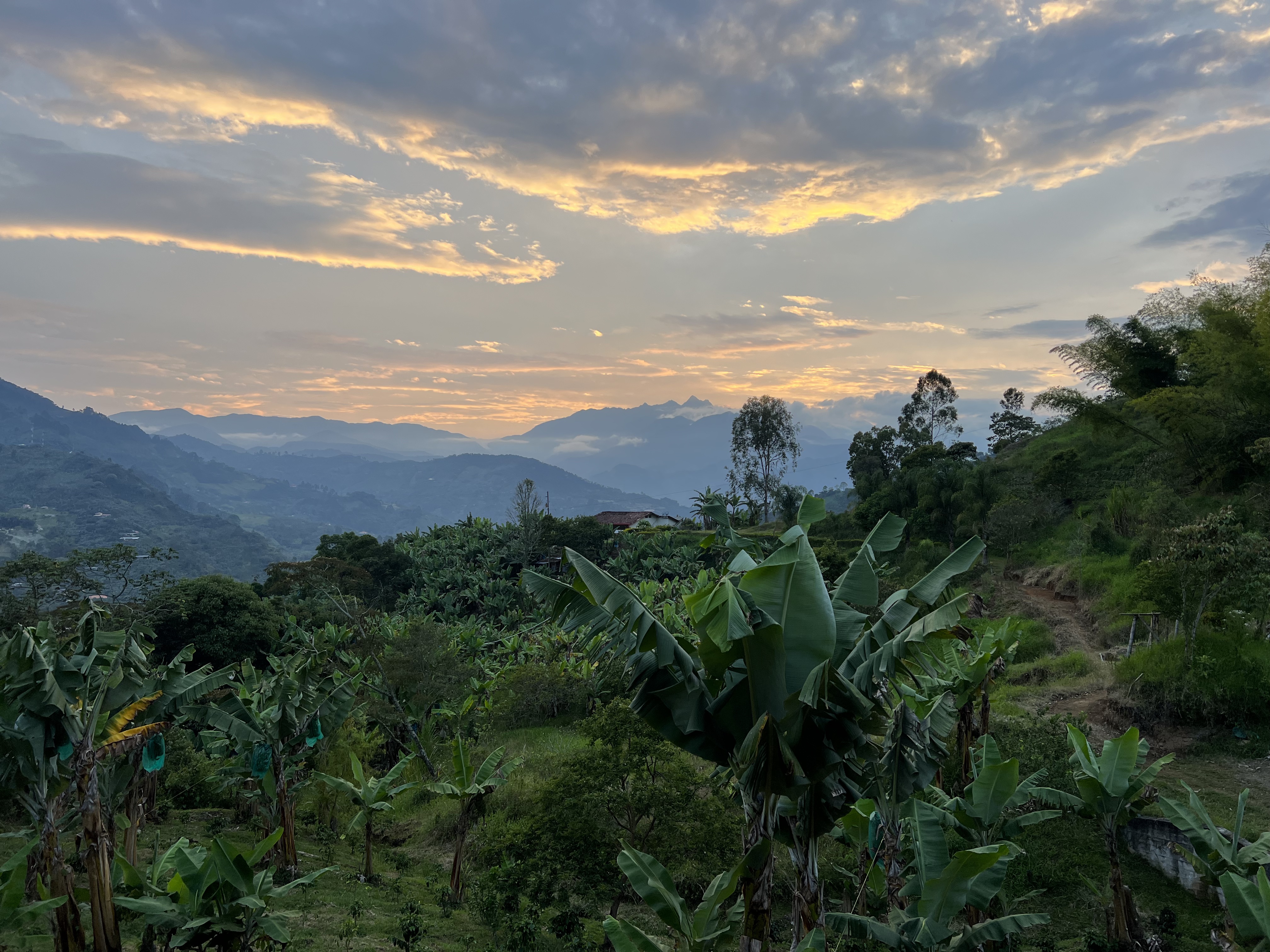
What Do I know about medellin?
I have spent over 2 years in Medellin total as a digital nomad
My mother lives in Laureles, she followed me to Medellin in 2022 planning on staying for 2 weeks and hasn’t left since.
Medellin has that effect on people, it’s an incredible city
I currently spend about 4 months a year there, and I absolutely love it
The Pros
- Super Digital Nomad Friendly
- Colombians are extroverted so easy to make local friends – you can really bounce back and forth between feeling like you could be in the US and also having an experience uniquely South American
- The weather is perfect year round between 15 – 30 degrees celsius year round (60 – 85 farenhiet)
Cons
- It’s not super safe, don’t walk around with your phone out, don’t pull money out unless you need to, and stay off Tinder if you’re a man check out my tips here on how to mitigate risk as a digital nomad
- Digital Nomadism has increased A TON in the last 10 years, so while you may not feel the tension, there are some locals who are tired of the gentrification, check out my artilce here on if digital nomadism is the new form of colonialism
Is Medellín Good For Digital Nomads?
Short answer: yes — genuinely one of the best cities in the world for remote workers right now. Medellín has a low cost of living, solid infrastructure, fast and reliable internet, and a thriving community of remote workers from all over the world. The climate is pleasant year-round (they don’t call it the City of Eternal Spring for nothing), and there’s no shortage of cafes, co-working spaces, and things to do when you close the laptop.
The internet speed is generally fast enough for video calls and remote work without much stress. Average download speeds are around 20–50 Mbps depending on where you are in the city, with fiber optic connections available in most neighborhoods. And while costs are creeping up as the city becomes more popular, you can still live comfortably on $1,200–$1,800 per month as a single adult — covering a furnished apartment, food, transport, and some entertainment. Go outside the main neighborhoods and it gets even more affordable.
As for meeting people — this is honestly one of Medellín’s biggest selling points. The city has a lively, social culture with Meetups, language exchanges, entrepreneurial groups, co-working events, and a very active nightlife scene. Locals are genuinely friendly to foreigners, and the international nomad community is large enough that you’ll find your people pretty quickly.
Cost of Living Snapshot
To give you a quick sense of what things cost on the ground:
A hotel room near the city center will run you roughly $50–$80 per night (I use Booking.com for almost all hotel accommodations), while hostel dorm beds go for $10–$20. If you want a co-live specifically, here’s a full list of Medellín colivings you can book right now. A one-bedroom apartment in a central neighborhood typically runs $500–$800 per month. A latte will set you back $2–$3, a half-liter beer the same. A monthly gym membership is $20–$40, a one-way metro ticket is about $1, and a sit-down dinner averages $5–$10. A co-working space in the center runs roughly $100–$200 per month, and a local SIM data plan is around $15 for 5GB — Airalo is the only eSIM company I use.
Quick Scores
Internet Speed – 4/5. I ran about 30 Wi-Fi speed tests across the city during my time here. The averages came in at 137 Mbps download, 93 Mbps upload, and 27 ms latency. The fastest connection I found was at Indie Universe. Overall, solid marks — more than enough for a day of video calls and deep work. Worried about a backup plan? My go-to is the Solis Hotspot.
Ease of Connecting & Making Friends – 5/5. This is where Medellín really shines. It’s one of the easiest places I’ve ever been to meet both other nomads and locals. More on how to actually plug in below.
Nightlife – 4/5. There’s a lot going on after dark. Just be aware that a couple of common crimes — drink spiking and scopolamine — tend to happen more in clubs and late at night. Stay alert, go with people you trust, and you’ll have plenty of fun.
Places to Work From – 4.5/5. There’s an abundance of great options — cafes, co-works, hotel lobbies. Check out my full Top 10 Coworks & Cafes list for the detailed breakdown.
Affordability – 4/5. Compared to the US or Western Europe, Medellín is still very affordable. Prices are rising and the city is changing fast, but for now it remains excellent value.
Visas: How Long Can You Stay?
A quick word of warning: visa rules in Colombia are vague and tend to change. The best approach is to go directly to a migration office — ideally one outside Medellín — and ask them what you’ll need. Bring patience. The workers there can be pretty apathetic.
That said, I’d recommend doing it yourself rather than going through a visa company. In my experience, those companies charge outrageous prices and have no real ability to expedite things.
For most nationalities, a tourist visa gets you 90 days in Colombia, extendable up to 180 days total in a calendar year — enough to cover most shorter digital nomad stints. If you arrive in November, for example, you could stay through the end of the year, then pick up another six months after the calendar flips.
For longer stays, the M Visa is the most common path for digital nomads. It allows you to stay in Colombia for a year, work remotely for foreign clients (though not for Colombian companies or get paid locally), and even get a Colombian ID. To qualify, you’ll need to show proof of minimum monthly income of around $700, plus health insurance and supporting documents. The application process typically takes two to four weeks. One important restriction: you can’t spend more than 180 days per year in Colombia on the M Visa, so you’ll need to plan one or two international trips per year.
There’s also a Student Visa option if you enroll in an approved Spanish language program — which gets you up to a year in the country. Colombia has reportedly started cracking down on people who sign up for programs and never actually attend, so keep that in mind.
A Digital Nomad Visa does technically exist and allows a two-year stay, including the ability to open a Colombian bank account.
My Favorite Neighborhoods
Laureles is where I’d point most new arrivals. It has more Colombian character than El Poblado (the main tourist bubble) while still being very easy to navigate even if your Spanish is a work in progress. Walking around Laureles, I kept thinking of Condesa and Roma in Mexico City — that same mix of tree-lined streets, good cafes, and a livable, residential feel. Check out my digital nomad guide to Mexico City if you’re considering that one too.
Belén sits right next to Laureles and spans a wider range of income levels. You’ll hear much less English here and it feels less curated — more like a real city neighborhood. Whether that reads as “authentic” or not is kind of in the eye of the beholder, but it’s worth exploring. I wrote some thoughts on the whole “authentic travel” thing here if you’re curious.
El Poblado is the most popular neighborhood for foreigners and tourists, and the most expensive. Provenza and the Parque Poblado area are the main social hubs. Worth knowing about, but I’d recommend against making it your base unless you specifically want that environment.
Wi-Fi Speed Tests
I ran speed tests at virtually every place I worked from, so here’s what I actually found across the main spots:
- At Nomadico colive (Laureles), I got 225 Mbps down, 427 Mbps up, and 36 ms latency — some of the fastest Wi-Fi I found in the whole city.
- At Casa Santa Fe, speeds averaged 88 Mbps down, 48 Mbps up, 16 ms latency — fast and stable enough for video calls anywhere in the building.
- At The Harbour Hotel, 88 Mbps down, 73 Mbps up, 10 ms latency — solid.
- At Semilla Cafe & Coworking, I got 41 Mbps down, 47 Mbps up, 41 ms latency — perfectly sufficient for a full day of work.
- Bloom Eco Coworking came in strong at 185 Mbps down, 179 Mbps up, 54 ms latency.
- Santa Leña hit 144 Mbps down, 55 Mbps up, 8 ms latency.
- And Pergamino Cafe was the slowest of the bunch at 23 Mbps down, 22 Mbps up, 10 ms latency — but still totally usable.
If you want a backup plan regardless of where you’re working, my go-to is the Solis Hotspot. Not sure what any of these metrics mean? Read my guide to getting fast Wi-Fi anywhere in the world.
Co-Lives & Where I Stayed
Nomadico – Laureles
Overall: 4.75/5
Nomadico is one of my favorite places I’ve stayed anywhere. The decor is genuinely inspiring, the co-working space inside is excellent, the location is great, and there’s a community manager who lives on-site and is constantly organizing events and dinners. You get the social energy of a hostel dorm with the privacy of your own room and a proper workspace. At around $900 per month, the price-to-value ratio is hard to beat. Wi-Fi is excellent (225 Mbps down), the place is immaculate, and the community feel is a legitimate 5/5 — I’d stay here again without hesitation.
Casa Santa Fe
Overall: 4.5/5
I’m writing parts of this guide from Europe, and I’ll be meeting up with two to four people I met at Casa Santa Fe next week. That should tell you something. It’s a smaller, more intimate place than Nomadico — which actually works in its favor. At roughly $30–$45 per night or around $860 per month, it’s super affordable, centrally located in Laureles, and well-maintained. The kitchen is on the smaller side and shared spaces can get a bit cramped, but the community and friendships you can build here more than make up for it.
88 Mbps down, 48 Mbps up, 16 ms latency
The Harbour Hotel
Overall: 3.75/5
Not my favorite hotel in the world, but for the price it delivers. The location in the heart of Laureles is excellent and the rooftop view is legitimately beautiful. Wi-Fi is solid and available in rooms. The communal vibe isn’t super strong — there aren’t many organized events and the common areas don’t invite lingering the way a co-live does. Starting at around $55 per night or ~$1,500 per month, it’s better suited if you want hotel convenience without full co-living integration.
Honorable mention: Indie Universe — a pretty new hotel that was still under construction when I was around, but it looks great now and may even have a better rooftop than The Harbour.
Still not seeing what you want? Check out the full list of Medellín colivings here.
Co-Works & My Favorite Places to Work From
See my full Top 10 Coworks & Cafes in Medellín here.
Semilla Cafe & Coworking
Overall: 4/5
Semilla was my daily office for about a month, and I have zero regrets about that. The ground floor is a lush, plant-filled cafe and the upper floor is a proper co-working space with small private booths for calls. Staff is exceptionally friendly and totally fine with you camping out — though I’d recommend working inside rather than holding an outdoor table if the place is busy. Great ambiance, great location in Laureles, and Wi-Fi that handled everything I threw at it.
41.39 Download Speed, 47.576 Upload, 41 Latency
Bloom Eco Coworking
Overall: 4/5
If you want to work somewhere that doesn’t feel like a city, Bloom is it. It’s an open-air space up in the hills surrounded by trees — genuinely beautiful setting. Internet is fast and reliable, staff is great, and the pricing is fair. Getting there requires a bit of a trip, but on the days when you want to feel like you’re working in nature, it’s hard to beat.
186 Download Speed, 179 Upload, 54 Latency
Santa Leña – Laureles
Overall: 4/5
Santa Leña is a cafe first, not a co-work, but they’ve got a solid upstairs area for remote workers and are totally welcoming about it. Great selection of coffees, teas, and food. Wi-Fi was fast and stable. Service can be slow — pretty standard for Colombia, so just factor that in. It’s not the most ergonomically dialed workspace, but it’s a pleasant place to spend a few hours.
144 Download Speed, 55 Upload, 8 Latency
Pergamino Cafe – Laureles
Overall: 4/5
One of my favorite cafes in all of Colombia. Open air, beautiful space, genuinely excellent coffee. Wi-Fi was on the slower end of what I tested (23 Mbps down) but still perfectly workable. No private booths or call-friendly nooks — like Santa Leña, this is a cafe with good remote work tolerance, not a co-work. The ambiance makes it worth the trade-off.
23 Download Speed, 22 Upload, 10 Latency
Honorable mentions: Cafe Revolución (good spot to meet other foreigners, a bit small but I worked there a lot), La Parcería (great vibe, Wi-Fi had some hiccups on video calls but one of my new favorites), and WeWork (didn’t personally use it, but friends with global memberships use it here — memberships start around $250/month).
Finding Community & Making Friends
Interested in building community as a nomad? I interviewed 9 other digital nomads to put together a complete guide to building community on the road — check it out.
Medellín is one of the easiest cities in the world to build a social life in, both with other nomads and with locals. Here’s what actually worked for me.
For online groups, the best starting point is MDE Community, which aggregates the most active Medellín groups open to both Spanish and non-Spanish speakers. There’s also a great spreadsheet of Medellín WhatsApp groups that someone put together — worth hunting down. Parceros Community runs a solid lineup of activities, including some focused on giving back to local communities. The various Facebook groups are active and post events daily, though fair warning: there’s a lot of bickering in the comments.
- Digital Nomads Medellín
- Medellín Hiking Group
- Digital Nomads Colombia
- Expats Medellín
- The Medellín Expats
- Active Hiking WhatsApp Group
For in-person meetups, Spanglish Events and vivemde.com both aggregate a huge volume of events across the city. For language exchange specifically, WOLA posts daily in their WhatsApp group with multiple meetup options happening that day — great resource. Gringo Tuesdays is wildly popular if you want to meet a large crowd, though if Spanish practice is your goal, the room is heavy on English speakers. DanceFree runs free language events and salsa classes every Thursday — a bit more beginner-friendly.
The Weekly Men’s Circle at Selina deserves a separate mention — it was genuinely significant for me in terms of making real, meaningful connections in Medellín. It was started by my buddy Oliver, who runs a great Ayahuasca center outside the city. I’d contact Selina directly to confirm it’s still running before you show up.
If you want to give back while you’re here: Sembradores de la 13 does great community work in Comuna 13, run by a woman who grew up in the area. Transformasión helps children in need in a low-income area near Bello — worth looking up.
Transportation
The metro system in Medellín is pretty solid and heavily used by locals. Here’s a guide on how to get a metro pass as a foreigner. For everything else, Uber is technically illegal in Colombia but works fine in practice and is easy to use. Outside of biking, it’s my recommended default.
Local taxis are available but I’ve had mixed experiences — from Norway to the Philippines, taxis have a way of trying to charge foreigners outrageous prices. I had one driver here give me back counterfeit bills, though in general the experiences were okay. Just know what a fair price is before you get in.
Biking is actually my preferred way to get around Medellín. The city isn’t as cycling-friendly as a lot of European cities, but cycling culture in Colombia runs deep — this is a country that produces top-10 Tour de France finishers regularly, and Antioquia is the heart of that culture. I ended up buying a bike at Decathlon after deciding I’d be in Colombia for six months of the year. You can find good used options on Mercado Libre too.
What I Drank
Bogotá Beer Company has locations all over Medellín and they make genuinely excellent beer. They’ve been acquired by AB InBev, which is what it is, but the quality is still there. My favorite is the Macondo.
Parce Rum (~$40 USD a bottle) is worth picking up. One of the founders is American, so it’s not purely a local product, but it’s a great rum.
For the full local experience, try Aguardiente Antioqueno — arguably the signature drink of Antioquia, the state Medellín is in. Check out my video review here. And if you want something that’ll really put hair on your chest, look up Tape Tuza — here’s my review of that one too. Both are part of my Drink Reviews With A Redneck series on YouTube. (Shoutout to CapCut for helping me remember nights I may not totally remember.)
Nightlife Spots
In El Poblado/Provenza: Parque Poblado is a good weekend spot with a solid mix of tourists and locals. La House Provenza on Carrera 35 has multiple floors with different music. Masaya’s Rooftop Bar has a great view and a chill vibe (skip the co-work there though — Wi-Fi was terrible). Canalla Medellín is a super cool open-air spot.
In Laureles/Belén: Carrera 70 is loud, chaotic, and worth checking out at least once. Panorama Rooftop Bar is a solid spot in the heart of the neighborhood. And Plazoleta Villa de Aburrá — this is actually where I met my now-girlfriend. On almost any afternoon you can show up, grab a beer from a nearby convenience store, and hang out in the plaza. You might be the only foreigner there, which is kind of the point.
Exercise & Getting Outside
Want to stay fit and eat healthy while traveling? Check out my guide to diet and fitness on the road.
Medellín is surrounded by mountains, and if you love having access to both urban life and serious outdoor adventure, this city is a paradise.
For hiking, Los Tres Cruces is a steep but shorter hike right inside the city — great for a morning when you want to sweat before the laptop opens. Cerro Tusa (about an hour outside the city) was probably one of the most intense hikes of my life — insanely steep and jaw-droppingly beautiful. I wrote a full guide to it if you’re curious. For day trips, El Peñón de Guatapé — the massive rock you can climb outside the city — is a must.
For gym time, SmartFit is my go-to across Latin America. A year-long membership gives you access to all their locations continent-wide, and they have several Medellín locations. Month-to-month memberships are also available. Flying Tree Yoga in Laureles runs classes in both English and Spanish — it gets packed, but it’s a great studio.
And again: get on a bike. Whether you buy one new or find a used one on Mercado Libre, there’s incredible riding in and around the city, and it’s one of the best ways to actually feel like you live here rather than just visit.
A Note on Health Insurance
When Colombia says “international health insurance” for visa purposes, they mean it — and honestly, it’s not something you want to skip regardless of visa requirements.
I use Genki for my health insurance as a digital nomad. It’s designed specifically for long-term travelers and nomads, covers you worldwide, has straightforward pricing, and doesn’t require country residency to sign up. I’ve actually had to use it after injuring my foot playing soccer in Medellín, and the reimbursement process was surprisingly painless. If you’re looking for insurance that actually works for this lifestyle, it’s the one I recommend.
That’s the full Medellín rundown. If you have questions, drop them in the comments — I check them and try to keep the info updated as things change (and things do change fast here).
Want to stay up to date? Follow along on Instagram and YouTube at @officialdigitalnomadlifestyle.