

Being a digital nomad in Bali is the closest thing our community has to a rite of passage — and after a month of real WiFi speed tests, scooter traffic, and way too many smoothie bowls, here’s my honest digital nomad Bali guide to the whole island: costs, visas, the best areas, and exactly where to stay and work in 2026.
Published Date:
Published By:
Digital Nomad Bali FAQ’s
Is Bali, Indonesia a good destination for digital nomads?
Yes — Bali is one of the most established digital nomad hubs in the world. Canggu is best for beach, surf, cafés, nightlife, coworking, and community. Ubud is better for yoga, wellness, nature, rice fields, and a quieter lifestyle. Uluwatu is great for surf and cliffside living, while Sanur is calmer and more practical for longer stays. Bali is especially strong for nomads who want community, affordable lifestyle options, cafés with WiFi, coworking spaces, gyms, yoga studios, and easy access to nature.
What are the best areas to stay in Bali as a digital nomad?
The best areas depend on your lifestyle. Canggu is the main digital nomad hub, especially Berawa, Batu Bolong, Echo Beach, and Pererenan. Ubud is best for wellness, yoga, jungle, rice terraces, and focused work. Uluwatu is best for surfers and ocean views, but it is more spread out. Seminyak is more upscale and nightlife-focused. Sanur is calmer, easier, and better for people who want less chaos. Denpasar is more local and practical, but not as scenic.
Is the internet good enough for remote work in Bali?
In the main nomad areas, yes. Canggu and Ubud both have cafés, coworking spaces, colivings, and hotels with workable WiFi. Real tests from the existing Bali guides show speeds ranging from slower hotel WiFi around 9 Mbps download to very strong café and coliving WiFi above 80 Mbps download. Always test the WiFi before committing to a monthly rental, and keep a local SIM/eSIM backup for calls.
How much does it cost to live in Bali as a digital nomad?
Bali can be affordable or expensive depending on lifestyle. Numbeo estimates a single person’s monthly costs at about $584 USD excluding rent. For digital nomads, a realistic monthly range is around $1,200–$2,500 USD including rent, coworking/cafés, scooter rental, food, gym/yoga, and occasional activities. Ubud can be cheaper than Canggu, while Canggu, Pererenan, Seminyak, and Uluwatu can get expensive quickly.
Do digital nomads need a visa for Bali?
Most short-term visitors use Indonesia’s Visitor Visa / e-VOA, which allows a 30-day stay and is commonly extendable. For longer stays, Indonesia also has the E33G Remote Worker Visa, designed for people working remotely for a company outside Indonesia. Requirements include proof of income of at least $60,000 USD per year and an employment contract with a company outside Indonesia. Always verify current rules on the official Indonesian immigration website before applying.
Is Bali safe for digital nomads?
Bali is generally safe for digital nomads, but the biggest risks are scooter accidents, petty theft, visa mistakes, food/water issues, dengue, rabies exposure from animals, strong surf, and scams. Use a helmet, avoid drunk scooter driving, don’t drink tap water, use mosquito protection, avoid touching stray dogs or monkeys, and make sure your insurance covers motorbike accidents and emergency medical care.
Visitor / Working Visas For Bali, Indonesia
The visa information below may not be up to date. This should not be used as official visa advice. Always refer to your nearest Indonesian embassy or the official Indonesian Immigration (Direktorat Jenderal Imigrasi) website for the latest information. At Digital Nomad Lifestyle we believe in following the laws and regulations of every country. In Government We Trust — Digital Nomad Lifestyle
Want to learn more about digital nomad visas around the world? Click here: Digital Nomad Visa Guide: Countries Offering Long-Term Stay Options 2025
Average Tourist Visa Length
Most travelers use Indonesia’s Visitor Visa / e-VOA, generally valid for a 30-day stay and commonly extendable. It is used for tourism, government visits, business meetings, goods purchasing, or transit. The official fee is IDR 500,000 (about $28 USD). The visa validity period is different from the permitted stay period, so check your visa carefully.
Digital Nomad Visa Option
Remote Worker Visa / E33G. Indonesia’s E33G Remote Worker Visa is the closest option to a digital nomad visa. It allows foreigners to live in Indonesia while working remotely for a company established outside Indonesia. The stay period is up to 1 year, and the visa can allow re-entry while the permit is valid.
Long-Term Visa Options for Remote Workers
E33G key requirements — Passport valid for at least 6 months, a recent photograph, CV, travel itinerary, a personal bank statement showing at least US$2,000 or equivalent, proof of income worth at least US$60,000 per year, and an employment contract with a company established outside Indonesia.
Important work limitation — This visa is for remote work connected to an overseas company. Do not sell goods or services locally in Indonesia or work for Indonesian clients unless your visa/status legally allows it.
💡 Nomad Pro Tip: Visa rules change quickly in Indonesia — always verify the latest requirements on the official Indonesian immigration website or with a qualified visa professional before making travel plans. Bali runs on Central Indonesia Time (WITA, UTC+8), which works well for Asia-Pacific clients and evening calls with the U.S. Planning a bigger Southeast Asia loop? Check out my Thailand and Chiang Mai guides too.
Cost Of Living / Traveling Through Bali, Indonesia
Before you decide how long to stay in Bali, it’s important to understand the monthly costs. Bali can still be affordable compared with many Western countries, but prices in Canggu, Pererenan, Seminyak, Uluwatu, and popular parts of Ubud have increased because of tourism and digital nomad demand. For most digital nomads in Bali, a realistic monthly budget is around $1,200–$2,500 USD including rent — budget travelers can live on $900–$1,300/mo, while a premium villa lifestyle in Canggu, Uluwatu, or Seminyak can easily run $3,000+/mo. If you want a complete breakdown of costs and smart budgeting strategies, read our Digital Nomad Budget Guide.
(Single Adult)
(city center)
(One Way)
Digital Nomad Bali Wifi Speed Tests
Reliable internet is one of the most important factors when choosing Bali as a digital nomad destination. Bali has strong WiFi in the main remote-work hubs, especially Canggu and Ubud, but speeds vary a lot by café, hotel, coliving, and neighborhood. Some cafés and colivings tested above 80 Mbps download, while some hotels tested under 10 Mbps. Always test the connection before booking a long stay and keep a local SIM/eSIM as backup — or go one step further with a travel hotspot or the Starlink Mini. For serious video calls, uploads, client work, and screen sharing, prioritize Canggu cafés/colivings with tested high upload speeds or dedicated coworking spaces — in Ubud, Alchemy Cafe tested extremely well, but always check noise levels before taking calls.
Read my guide to getting fast wifi anywhere in the world here
Get a sneak peek at WiFi speeds you won’t find anywhere else
We’ll email our real speed notes from places we’ve actually stayed.
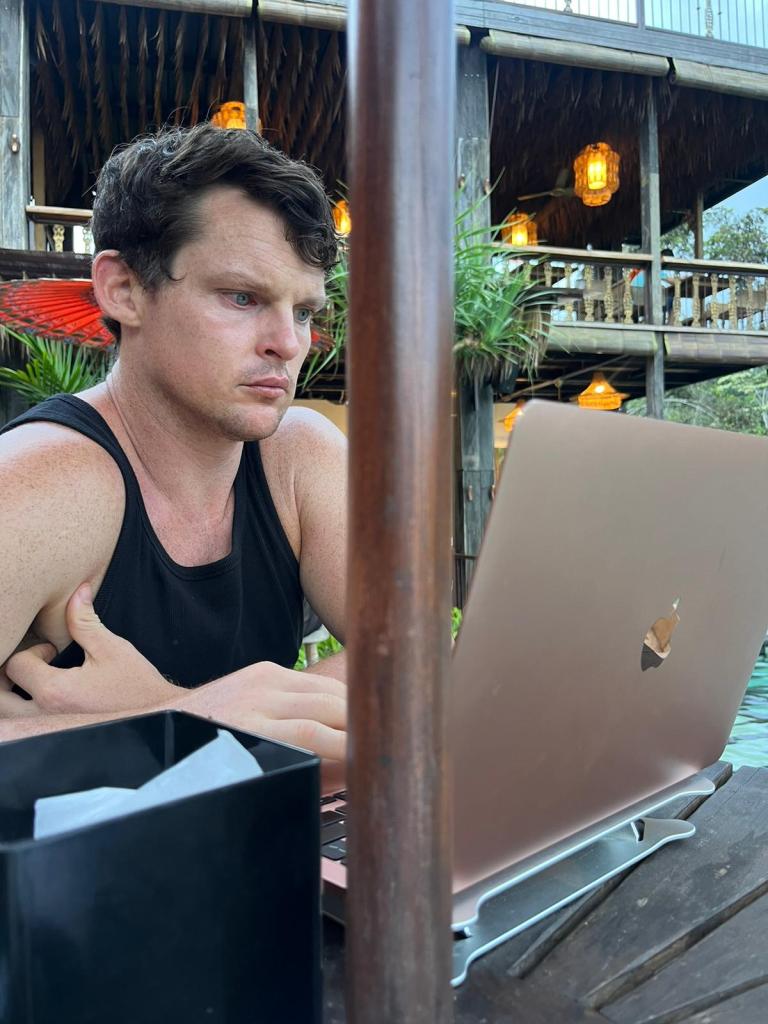
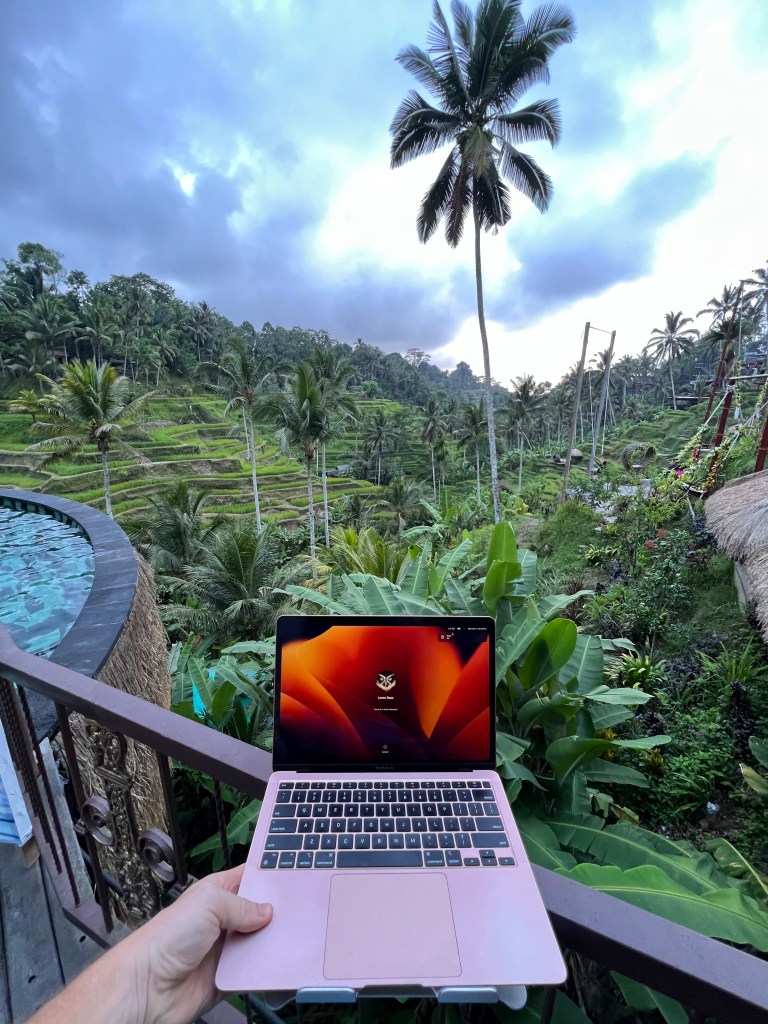
Working from one of Bali’s countless rice fields, surrounded by incredible views.
A Map of Where to Stay & Work in Bali, Indonesia
Choosing the right area in Bali can completely change your experience as a digital nomad. Canggu is the main beach-and-café hub, Ubud is the wellness and jungle hub, Uluwatu is best for surfing and ocean views, Sanur is calmer and easier for longer stays, and Seminyak offers a more upscale restaurant and nightlife scene. If you’re still figuring out where to stay, check out our How to Find Digital Nomad Accommodation | Expert Tips (2025) for practical advice on choosing the best place for your needs.
Use the colored points to explore cafés, coworking spaces, stays, gyms, and nature spots around Bali.
Co-Lives & Where I Stayed in Bali
Coliving☆
Coliving☆
Places To Stay in Bali – Honorable Mentions
This is a section where I’ll add hotels / places to stay at that I either didn’t stay at, or had a flaw that made me unable to recommend them completely.
Hotel☆
Coliving☆
Retreat☆
Hostel☆
Hostel☆
🏡 Want more coliving options in Bali? There are plenty of colivings across Canggu, Berawa and Ubud with built-in community, fast WiFi and coworking — browse coliving spaces in Bali here.
Co-Works & My Favorite Places To Work From in Bali
Café
☆
My favorite work café in Canggu. AC, big tables, comfy seating — and the 88 Mbps upload I tested here makes video calls and big file uploads painless.
⬇ 76.3 Mbps⬆ 88.5 Mbps⏱ 6ms
Café
☆
Design-forward café and boutique hotel in Batu Bolong. Quiet enough for focused work, and the WiFi I tested was seriously fast.
⬇ 82.8 Mbps⬆ 52.8 Mbps⏱ 24ms
Café
☆
Big, air-conditioned brunch spot in Berawa with tables you can actually spread out on — easy to settle in for a full work session.
⬇ 75.9 Mbps⬆ 74.1 Mbps⏱ 25ms
Café
☆
Relaxed Pererenan café with garden seating and indoor AC. The 13ms latency I tested here made calls feel like I was on local fiber.
⬇ 76.0 Mbps⬆ 70.9 Mbps⏱ 13ms
Café
☆
Quiet coffee-farm shop in Berawa with indoor/outdoor seating and AC inside — one of my favorite deep-work spots in Canggu.
⬇ 76.4 Mbps⬆ 84.8 Mbps⏱ 24ms
Café
☆
Ubud’s classic laptop café. The fastest download I tested in Ubud, but it gets lively — check the noise level before you take a call.
⬇ 86.9 Mbps⬆ 26.7 Mbps⏱ 26ms
Café
☆
Beautiful, peaceful jungle-view café above Penestanan. I’d save this one for light work and a slow morning — the upload won’t carry a heavy call day.
⬇ 22.7 Mbps⬆ 10.2 Mbps⏱ 58ms
Cowork
☆
Proper coworking in Berawa with real desks and call-friendly zones — the upgrade for when café-hopping stops cutting it.
Cowork
☆
Established Ubud coworking with AC workspaces, a strong community, and a jungle setting — better for focus and calls than just about any café in town.
more accurately, the daily views from my “offices.” Very professional, very stable, very hard life.
Health & Safety in Bali
Bali is generally safe for digital nomads, but it has a few very real risks that are easy to underestimate. The biggest practical safety issue is transportation, especially scooter crashes — if you rent a scooter, wear a helmet, make sure your license and insurance cover motorbike use, avoid driving at night when possible, and never drive after drinking. Petty theft can happen in tourist areas, especially phone snatching from scooters, bag theft, and scams: keep your phone away from the roadside, use bags that close securely, and be extra alert around nightlife areas. If you want a deeper breakdown of how to reduce risk while traveling, check out this guide on Reducing Risk While Nomading (Digital Nomad Safety Guide 2026)
🛡️ Safety Ranking
Global Peace Index: Indonesia ranks 49 out of 163 (Peaceful)
Crime Index: ~45 — Moderate
Common Risks: Scooter accidents, phone snatching, scams, strong surf and currents
Health Risks: Dengue (use mosquito repellent), rabies (avoid stray dogs and monkeys), Bali belly (food/water), high UV and humidity
Areas to Avoid at Night: Unlit rural roads on a scooter, isolated beaches
Solo Traveler Safety: Good — established nomad infrastructure; the road is a bigger risk than crime
💡 Nomad Tip: Use Grab/Gojek or Bluebird taxis instead of unmarked transport. Wear a helmet on every scooter ride and never drive after drinking. Indonesia has very strict drug laws — do not take risks.
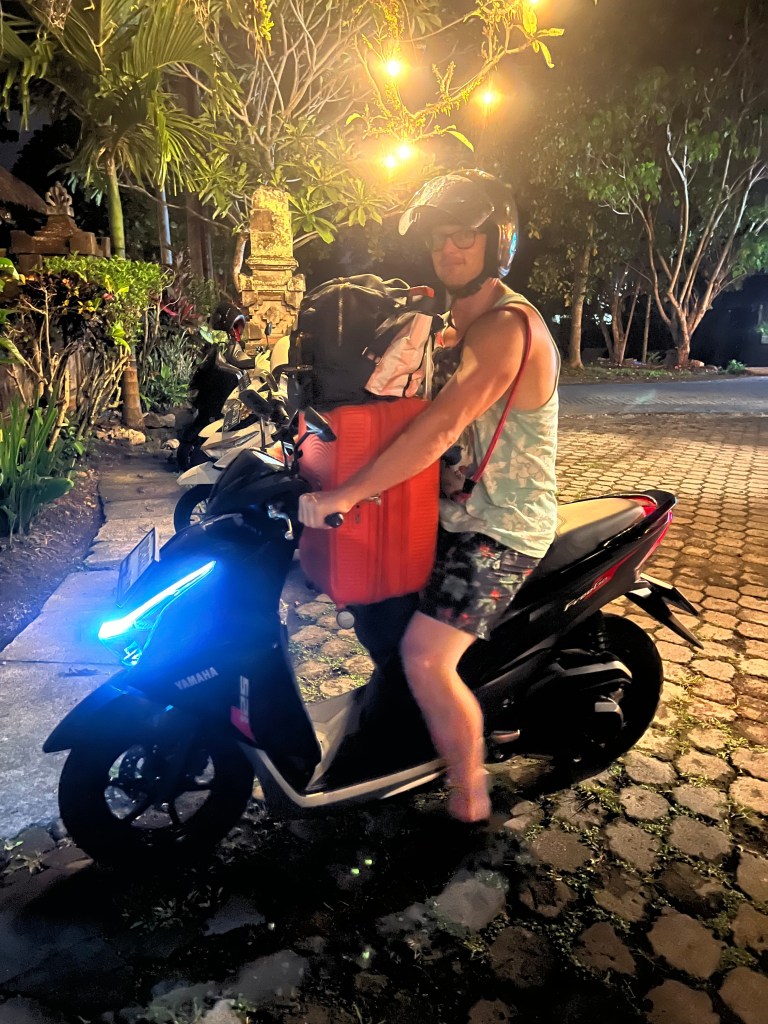
Hostel move, Bali style: everything on one scooter. Not the safest way to do it, but definitely not uncommon here.
🍽️ Food & Water Safety
Tap Water: Do NOT Drink — use bottled, filtered, or properly purified water. Many villas, colivings, and cafés have refill stations, but confirm the filtration quality first
Warungs & Street Food: Great and affordable — choose clean, busy places with high turnover
Raw Salads & Unpeeled Fruit: Be cautious at very local or low-turnover spots
Ice in Drinks: Usually fine in established cafés and restaurants — be careful at very local spots
Bali Belly: Common — hydrate aggressively, use oral rehydration salts, and seek medical help for fever, blood in stool, severe dehydration, or symptoms lasting more than a few days
Brushing Teeth: Use bottled or filtered water if your accommodation’s water quality is uncertain
Best Food Areas: Canggu (nomad cafés, brunch, vegan), Ubud (vegan/wellness and Indonesian food), Seminyak (upscale dining and nightlife), Sanur (calm and practical), Uluwatu (surf cafés and cliffside restaurants)


Food in Bali is actually amazing — vegetarian or not, there are always tons of options for every budget. Just be ready to wait 30 minutes for a bowl of fruit like it’s a Michelin-star meal.
🏥 Healthcare System
Healthcare Quality: Moderate — decent private clinics and international medical centers for routine care; serious trauma or complex surgery may require evacuation to Singapore, Australia, or Jakarta
Hospital Recommendation: BIMC Hospital (Kuta & Nusa Dua), Siloam Hospitals Denpasar
Pharmacy Access: Widely available (look for “Apotek”) — bring prescriptions in original packaging and check Indonesia’s medication restrictions
Emergency Number: 112 (general) / 118 (ambulance)
Travel Insurance: Essential — confirm it covers scooter/motorbike accidents and emergency evacuation
Avg. Doctor Visit Cost: $30–$80 USD (private clinic)
🌍 Travel Insurance for Nomads
Don’t travel without proper health coverage. We recommend Genki — built specifically for digital nomads and long-term travelers with flexible monthly plans.
Taking care of your health as a digital nomad goes beyond food and water safety. Mental well-being is just as important when living abroad, especially if you’re constantly moving or working remotely. If you’re struggling with isolation or want to stay balanced while traveling, check out this guide on: Beating Loneliness: 18 Essential Mental Health Tips for Digital Nomads.

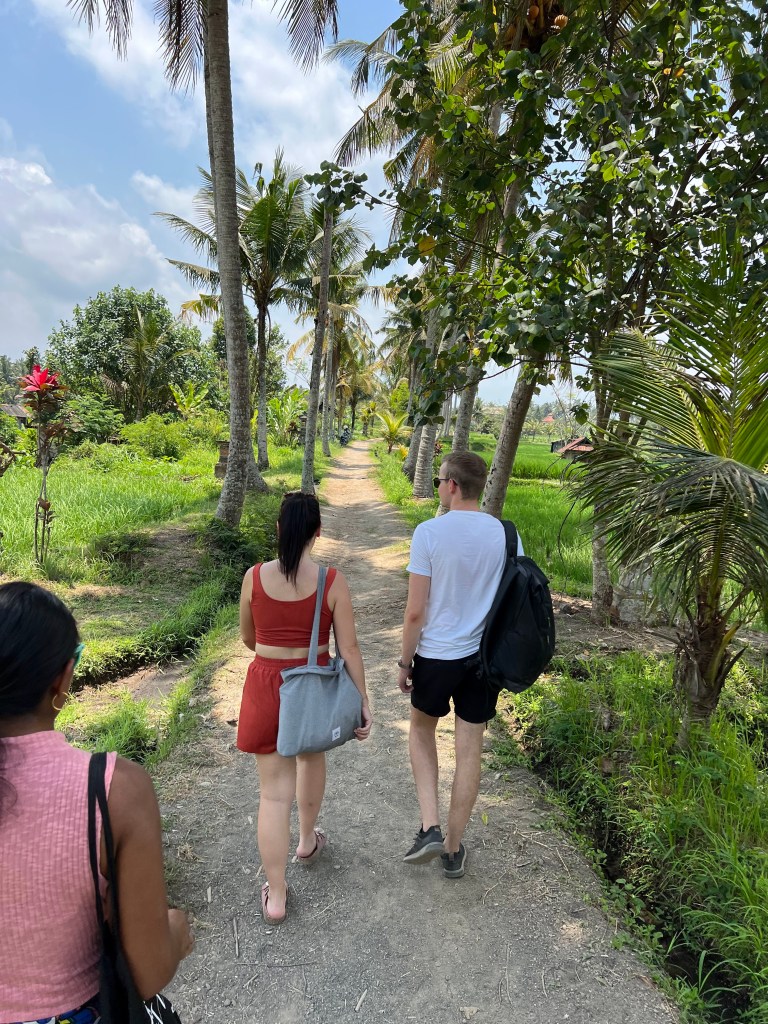
Looks like a cute rice field photo, but reality check: the paths are so narrow I actually fell. One of my most embarrassing Bali moments, but at least the view was nice
Transportation in Bali
Transportation in Bali is one of the biggest lifestyle factors for digital nomads. There is no island-wide metro or train system, and traffic can be intense in Canggu, Seminyak, Denpasar, Ubud, and on the main roads connecting popular areas. Most nomads get around by scooter, rideshare apps, taxis, private drivers, or walking within small neighborhood pockets. Here are the best options ranked for digital nomads:
💡 Pro Tip: Do not ride a scooter without a helmet, a valid license/permit, and insurance that covers motorbike use — scooter accidents are one of the most common serious problems for foreigners in Bali. Area notes: Canggu, a scooter is almost essential; central Ubud is walkable but a scooter/driver helps for rice fields and villas outside town; Uluwatu is spread out (scooter or driver needed); Sanur is the easiest area for walking and cycling; Seminyak is partly walkable but traffic is heavy. Packing for island life? Here’s my digital nomad packing list.
Best Neighborhoods For Digital Nomads in Bali
Bali is not one single digital nomad experience. Your lifestyle will feel completely different depending on whether you base in Canggu, Ubud, Uluwatu, Sanur, Seminyak, or Denpasar. Canggu is best for community, cafés, coworking, surf, and nightlife. Ubud is best for yoga, wellness, focus, nature, and rice fields. Uluwatu is best for surfing and a slower beach lifestyle. Sanur is calmer and more practical. Seminyak is more polished and nightlife-oriented. Denpasar is more local and affordable but less scenic. If you want street-level detail, I wrote full deep-dives on Canggu and Ubud.
🏄 Canggu
The main digital nomad hub: huge community, tons of cafés, gyms, coworking, surf, and nightlife. Cons: traffic, higher prices, crowds, less “local Bali” feel.
✔ Best for: first-time digital nomads & social life
🏖️ Berawa
Premium Canggu lifestyle with a strong café scene, gyms, restaurants, and coworking close to the beach. Cons: expensive and busy.
✔ Best for: premium Canggu lifestyle & fitness
🌊 Batu Bolong
The classic Canggu experience: beach access, surf, restaurants, and a social scene in walkable pockets. Cons: traffic and tourist crowds.
✔ Best for: beach access & nightlife
🌾 Pererenan
A calmer, beautiful Canggu alternative with good cafés, still close to everything. Cons: prices rising fast.
✔ Best for: a quieter Canggu base
🧘 Ubud
Yoga, wellness, deep work, nature, rice fields, and spiritual retreats. Calmer, green, and creative. Cons: not a beach area, traffic in the center, less nightlife.
✔ Best for: wellness, focus & nature
🏄♂️ Uluwatu
Beautiful cliffs, surf culture, and sunsets with a slower beach lifestyle. Cons: spread out, fewer coworking options, scooter/driver needed.
✔ Best for: surfers & ocean views
🚲 Sanur
Calm long stays with a beach path, calmer roads, and practical living. Cons: less of a young nomad/social scene.
✔ Best for: calm long stays, older nomads & families
🍸 Seminyak
Polished and upscale: restaurants, nightlife, shopping, and a good location. Cons: touristy, pricey, less community-focused than Canggu.
✔ Best for: upscale dining & nightlife
🏙️ Denpasar
Practical, local living with lower costs and central services. Cons: not scenic and less nomad-focused.
✔ Best for: local prices & practical living
💎 Hidden Gems in Bali
Beyond the well-known hotspots, there are several underrated destinations in Bali (and just off its coast) that offer a more magical, authentic experience for digital nomads — often with fewer crowds, lower costs, and unforgettable nature.
I love Canggu, but at rush hour it can feel like one big parking lot. If you want the Bali that makes people fall in love with the island, these spots are worth the trip:
| Destination | Why Digital Nomads Like It |
|---|---|
| 🌾 Jatiluwih Rice Terraces | UNESCO-listed rice terraces, quieter than Tegallalang, great for nature walks. |
| ⛰️ Sidemen | Peaceful rice fields, Mount Agung views, slower local Bali. |
| 🤿 Amed | Diving, snorkeling, black sand beaches, quieter coastal life. |
| 💦 Munduk | Waterfalls, mountain air, cooler climate, nature escapes. |
| 🏝️ Nusa Penida | Dramatic cliffs, beaches, and day/weekend trip potential. |
| 🌊 Nusa Lembongan | Island escape with a slower pace, surfing, and diving. |
| 🐠 Menjangan Island | Snorkeling and diving near West Bali National Park. |
| 🏞️ Sekumpul Waterfall | One of Bali’s most impressive waterfall areas. |
| 🥾 Campuhan Ridge Walk | Easy scenic walk right inside Ubud. |
| 🌅 Tegalalang Rice Terrace | Iconic Ubud rice terrace experience. |
| 🏖️ Nyang Nyang Beach | Wild beach near Uluwatu, much less developed. |
| 🏄 Balian Beach | Quieter surf-town vibe away from Canggu. |
Climate in Bali
Bali has a tropical climate with warm temperatures and high humidity throughout the year. The island has two main seasons: dry season and rainy season. The dry season generally runs from April to October and is the best time for beach days, surfing, hiking, and outdoor exploring. The rainy season generally runs from November to March, with heavier humidity, afternoon storms, lush green landscapes, and lower prices in some areas — and for digital nomads, Bali stays very workable if you pick a stay with solid WiFi and an indoor desk. The best overall months are May, June, September, and October — great shoulder-season months with good weather and value.
Always with the best views and the prettiest sunsets. Very stressful office conditions, Obviously.
Finding Community in Bali / Making Friends / Giving Back
Bali is one of the easiest places in the world to meet other digital nomads, but the type of community depends heavily on where you stay. Canggu is the most social and international, Ubud is more wellness/spiritual/creative, Uluwatu is surf-focused, and Sanur is calmer and more lifestyle-oriented. If you want community, choose accommodation and workspaces intentionally rather than staying isolated in a private villa. If you’re looking for ways to connect, build community, and avoid feeling isolated, this guide on How To Make Friends & Build Community As A Digital Nomad is a great place to start.
Here are a few ways to build community while living in Bali:
🌍 Find Community in Bali
💡 Other ways to build community
- Work regularly from coworking spaces — BWork Bali, Tropical Nomad, Tribal Bali, Outpost Ubud, and Livit Hub Sanur all host events and attract long-term remote workers.
- Become a regular at cafés — you’ll naturally start seeing the same people.
- Join fitness and wellness communities — Body Factory Bali, Nirvana Strength, Bali MMA, Avenue Fitness, Ubud Yoga Center, Alchemy Yoga, The Practice, Radiantly Alive — or surf in Canggu, Berawa, Batu Bolong, Uluwatu, Bingin, and Padang Padang.
- Attend events — coworking meetups, ecstatic dance in Ubud, breathwork, yoga workshops, surf lessons, language exchanges, and fitness classes.
- Consider coliving spaces or shared stays to meet people instantly.
- Give back — Bali is not just a “digital nomad playground.” It is a living culture with local customs, temples, ceremonies, families, and environmental pressures. Be respectful at temples, dress appropriately, support local businesses, reduce plastic use, avoid overusing water in drought-prone areas, and do not treat local communities like a backdrop for content.
Use the Meetup button below to browse live events happening in Bali.


A community tour with people from my hotel — one of the easiest ways to make friends while traveling. The other one? Going to the same bar and bonding over arak like we’ve known each other for years
Exercise / Outdoors in Bali
Bali is one of the best digital nomad destinations in the world for staying active. Canggu has serious gyms, CrossFit-style training, martial arts, recovery spaces, and surf. Ubud is best for yoga, walking, rice fields, retreats, and wellness. Uluwatu is ideal for surfing, beach workouts, and ocean-view training. The main challenge is heat, humidity, traffic, and staying consistent when the social scene gets busy.
🌿 Nature
🌿 Nature
🌿 Nature
🌿 Nature
🌿 Nature
🌿 Nature
💪 Exercise
💪 Exercise
Turns out the best workout plan comes with a view like this.
Traveling As A Couple — Our Accidental Bali Honeymoon
Quick backstory: a month before Bali, I met a girl in Paris. We talked every single day for a month and made a plan for her to fly out and meet me on the island. Then we had an argument big enough that I mentally archived the whole thing. I landed in Bali fully prepared to do this trip solo.
Then she showed up.
We spent the next month traveling Bali together, and the most accurate way I can describe it is a honeymoon with someone I barely knew. A few weeks of texting, and suddenly we were together 24/7 — scooters, waterfalls, temples, and the true test of any relationship: deciding where to eat. At some point people started taking photos of us that looked suspiciously like wedding shots, so I’m officially counting that as our wedding photo session. Saved a fortune on the photographer. 😂
A shot from the “wedding session” — the photographer had no idea they were working a wedding.
Here’s the honest part though: traveling solo and traveling as a couple are two completely different sports, and neither one is bad. Solo, I default to my routine — gym, café, work, repeat. I like adventure, but man do I love a routine. With a partner, you somehow find the courage for things you’d never do alone. “Want to ride two hours across the island for a waterfall we saw on a blurry Instagram reel?” Solo me: absolutely not. Couple me: apparently yes.
That month in Bali turned out to be the start of a story that’s now closing in on 3 years — and we’re still traveling and nomading together. Not bad for two people who almost cancelled the whole thing before it started.
Stay In The Loop
Join 14 Years Of Lessons Learned
Unsubscribe anytime — no spam, just stuff that works.
Been to Bali? Share Your Experience!
About Me

The Creator Of Digital Nomad Lifestyle
Hi! My name is Loren Ross, after establishing my own business while traveling the world I decided to create this blog for existing and aspiring digital nomads.
See My Full Journey To Being A Digital Nomad Here
Anything you want that you’re not seeing? Please reach out to me on one of the social media channels below, I’d love to see if I can help out. Check out my digital marketing business.
searchmarketingconsultingdenver.com
Planning to base yourself in Bali? Indonesia’s E33G Remote Worker Visa is one of the options in our digital nomad visa comparison — see the income, tax and cost for every country side by side.
Leave a Comment