
Published Date:
Published By:
Digital Nomad FAQ’s
Is Laos a good destination for digital nomads?
Yes, especially in cities like Luang Prabang, Vientiane, and Vang Vieng. Laos has a slower, calmer pace than its neighbors Thailand and Vietnam — the scene is smaller and less built-out, but it’s very affordable, welcoming, and doable for remote work, particularly for nomads who enjoy nature, walkable towns, and a low-key atmosphere.
How is the internet speed and reliability in Laos?
Generally workable for remote work, especially from cafés and city hotels. Across my tests in Luang Prabang and Vientiane I averaged around 49 Mbps download and 35 Mbps upload. Hotel rooms are often slower than lobbies or cafés, and rural areas can be unstable — carrying a local eSIM (Unitel or LaoTelecom) or a Starlink Mini as backup is a smart move. See a full breakdown of speeds here.
Is it easy to meet people and make friends in Laos?
Yes, though community tends to form more organically than in bigger nomad hubs. The easiest way is staying at social hostels or guesthouses and joining group experiences — cooking classes, bike tours, kayaking trips, or day excursions to waterfalls. Luang Prabang and Vang Vieng in particular attract a steady flow of travelers year-round. Learn how to connect with others here.
How much does it cost to live in Laos per month?
Laos is one of the most affordable countries in Southeast Asia. Budget nomads can get by on around $600–$900 USD per month eating local and staying in hostels or guesthouses, while a more comfortable lifestyle with private apartments and Western meals typically runs $1,200–$1,800 depending on the city. See a full cost breakdown here.
Are there good places to work remotely in Laos?
Yes — cafés are the main remote-work setup. Work-friendly spots include Saffron Coffee, Aromdee Nature, and Zaori Cafe in Luang Prabang, and Hichillico Cafe in Vientiane. Dedicated coworking spaces are still limited, but the café scene is consistent enough for steady work sessions. More details here.
What are the best areas for digital nomads in Laos?
Luang Prabang (around the Old Town and along the Nam Khan river) is ideal for walkability, culture, and a calmer pace. Vientiane, the capital, works well for stronger infrastructure and everyday conveniences. Vang Vieng is great if you want dramatic karst landscapes and an adventure-oriented lifestyle between work sessions.
Visitor / Working Visas
The visa information below may not be up to date. This should not be used as official visa advice. Always refer to your nearest Laos embassy or the official Lao Department of Immigration website for the latest information. At Digital Nomad Lifestyle we believe in following the laws and regulations of every country. In Government We Trust — Digital Nomad Lifestyle
Want to learn more about digital nomad visas around the world? Click here: Digital Nomad Visa Guide: Countries Offering Long-Term Stay Options 2025
Average Tourist Visa Length
Most travelers can enter Laos with a 30-day Visa on Arrival at major airports and key land borders. The fee is usually $30 to $45 USD, depending on nationality. You can also apply for an eVisa online before arrival.
Tourist visas can usually be extended, but rules and costs may change. Many travelers who want to stay longer leave the country and return with a new entry.
Digital Nomad Visa Option
Laos does not currently offer a digital nomad visa. Most remote workers stay on tourist visas and extensions.
Long-Term Visa Options for Remote Workers
If you want to stay in Laos longer, these are the main options:
Business Visa (NB-B2)
For people sponsored by a registered Lao company.
Work Permit + Residence Visa
For those employed by a local or international company based in Laos.
Investor / Entrepreneur Visa
For people investing in a business in Laos.
Tip
From personal experience, travel in Laos can take longer and require more planning than you might expect.
My family and I traveled from Chiang Mai to Chiang Rai. From there, I continued by bicycle all the way to Luang Namtha. It turned into a major expedition of almost 10 hours, and the final stretch was especially difficult. My family took a taxi from Chiang Rai to the border, then continued by bus into the city.
The border crossing itself was very easy as long as you have all the required documents ready. Even if you do not have enough cash on hand, there is a cash machine available nearby where you can withdraw money.
One important thing to keep in mind is that transport in Laos is more limited than in nearby countries. Always check the best routes, schedules, and transport options in advance before heading to your next destination.
Important
Always bring:
- Your passport with at least 6 months of validity
- Cash in USD for visa-related fees if needed
- A passport photo, just in case
Visa rules can change, so always confirm the latest information with official sources before you travel.
Cost Of Living / Traveling Through
Before you decide how long to stay, it’s important to understand your monthly expenses. If you want a complete breakdown of costs and smart budgeting strategies, read our Digital Nomad Budget Guide.
(Single Adult)
(city center)
(One Way)
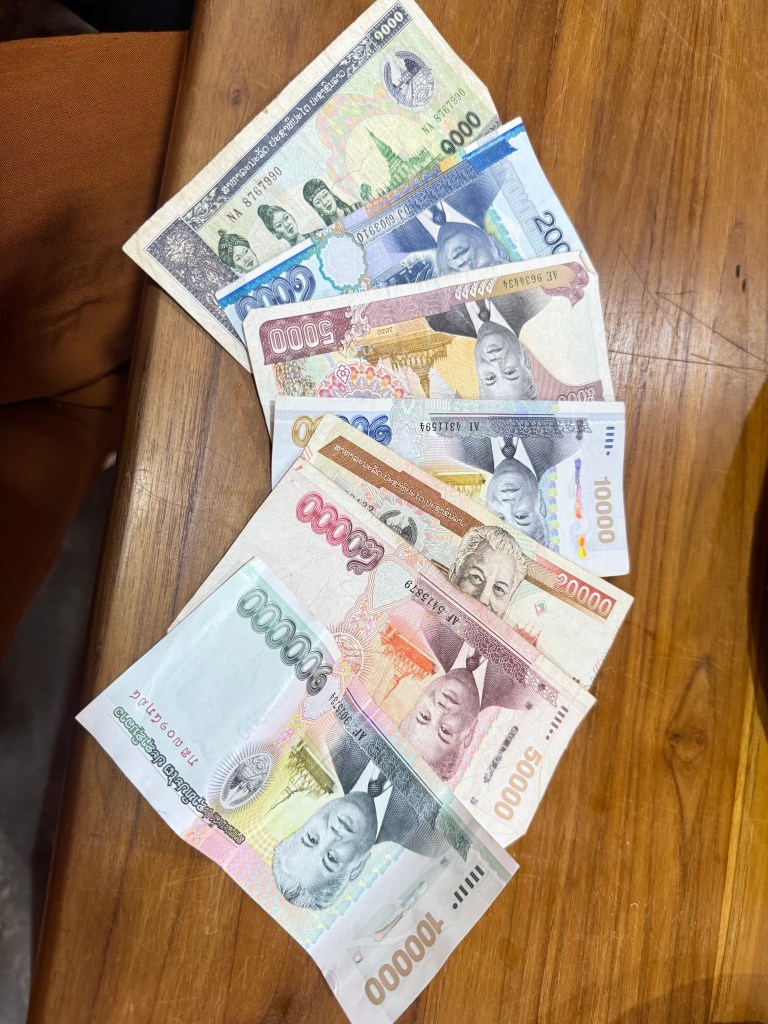
Some of the most common banknotes used in Laos.
Wifi Speed Tests
Reliable internet is one of the most important factors when choosing a destination as a digital nomad. Speeds can vary significantly depending on the area, type of accommodation, and local infrastructure, so it’s important to know what to expect before you arrive.
Read my guide to getting fast wifi anywhere in the world here
Get a sneak peek at WiFi speeds you won’t find anywhere else
We’ll email our real speed notes from places we’ve actually stayed.

My sister and I getting some work done from a café in Luang Prabang..
A Map of Where to Stay & Work in Laos
Choosing the right area to stay and work in Laos can make a huge difference in your overall experience as a digital nomad. From the UNESCO-listed charm and walkable old town of Luang Prabang, to the calmer capital vibe and stronger infrastructure of Vientiane, to the karst-mountain adventure lifestyle of Vang Vieng, each location offers a unique balance of cost, lifestyle, and work-friendly environments.. If you’re still figuring out where to stay, check out our How to Find Digital Nomad Accommodation | Expert Tips (2025) for practical advice on choosing the best place for your needs.
Use the colored points to explore cafés, coworking spaces, and stays around Laos.
Co-Lives & Where I Stayed
Hotel☆
Places To Stay – Honorable Mentions
Hostel☆
Hostel☆
Hostel☆
Hostel☆
Hostel☆
Co-Works & My Favorite Places To Work From
Café
☆
One of the most popular cafés in Luang Prabang and a reliable option for remote work. Riverside location, excellent coffee, and a professional-yet-relaxed atmosphere. The second floor is the sweet spot for focused sessions and calls — the ground floor can get crowded during peak tourist hours.
⬇ 65.2 Mbps⬆ 73 Mbps⏱ 32ms
Café
☆
A relaxed, work-friendly café with a calm atmosphere that makes it easy to stay focused. Reliable WiFi, comfortable seating, and a peaceful vibe compared to the busier cafés in the Old Town. Great spot for a long work session — often quieter than Saffron.
⬇ 63.9 Mbps⬆ 22.4 Mbps⏱ 31ms
Café
☆
The best work café tested across Laos. Symmetrical download and upload speeds with ultra-low latency make it the top choice for video calls, live streaming, or any cloud-heavy remote work. Modern, quiet, and Western-style — perfect if you need several hours of focused output.
⬇ 60.8 Mbps⬆ 59.3 Mbps⏱ 6.3ms
Health & Safety
Laos generally felt very safe during our time there. The atmosphere was calm, people were kind, and in most places we felt comfortable moving around without much concern. Still, like anywhere, it is important to stay careful with your belongings. One experience that stayed with me happened while I was cycling toward Vientiane, my final stop in Laos. I got a flat tire and stopped near a house in a very remote area with almost nothing around it. I asked for help, but no one wanted to get involved, maybe because of the language barrier. While fixing my bike, a young girl came over and stayed nearby watching me for a while. At some point, I took out my phone to record a video, then continued my route and only later realized I had left it behind. I went back the same day, asked about it, and again no one helped. The next day, after tracking the phone through my Mac, my girlfriend and I rented a motorbike and returned. The location showed the same house. At first, the family denied knowing anything, but after I showed them the tracking location, a man eventually came out holding my phone. What made the situation feel uncomfortable was that, right after returning it, an older woman started asking me for money and gesturing that I should pay the girl because she had “found” it. I did not feel good about that, especially because the day before I had asked for help and they had acted like they knew nothing. Later, I also realized they had removed my SIM card, which made the whole situation feel even more suspicious. Even with that experience, I would still say Laos felt safe overall — but it reminded me that even in peaceful places, you should stay alert, trust your instincts, and be extra careful with your valuables, especially in rural areas., check out this guide on Reducing Risk While Nomading (Digital Nomad Safety Guide 2026)
🛡️ Safety Ranking
Global Peace Index: 60 out of 163 (Relatively Peaceful — one of the safer countries in Southeast Asia)
Crime Index: 42.5 — Low to Moderate
Common Risks: Petty theft at night markets, motorbike accidents, motorbike rental scams (passport held as deposit), occasional bag-snatching from scooters, unexploded ordnance (UXO) in rural/off-trail areas
Areas to Avoid at Night: Unlit streets outside the Old Town in Luang Prabang, remote rural paths, unmarked riverside areas, and anywhere with posted UXO warning signs in the countryside
Solo Traveler Safety: Good — violent crime against foreigners is rare, and both solo men and solo women generally report feeling safe. Stick to tourist zones, avoid walking isolated rural roads after dark, and use registered transport at night.
💡 Nomad Tip: Use LOCA (the local Lao ride-hailing app) or tuk-tuk drivers recommended by your accommodation instead of flagging down random street taxis. Never leave your passport as a deposit when renting motorbikes — it's a well-documented scam where the renter claims a helmet or part is missing and refuses to return your passport without an extra fee. Always pay a cash deposit, take photos of the bike + helmets when you pick it up, and use well-reviewed rental shops. Luang Prabang's Old Town, central Vientiane, and central Vang Vieng are generally safe for digital nomads. In rural areas, stay on marked paths — there are still live unexploded bombs from the Vietnam-era Secret War in parts of Xieng Khouang, Savannakhet, and along the old Ho Chi Minh trail
🍽️ Food & Water Safety
Laos has some of the best food in Southeast Asia — sticky rice (khao niao), larb, Lao sausage, khao jee, and of course Beerlao. For digital nomads, the main thing to know is that while the street food culture is excellent, water quality is not up to Western standards, so a few simple habits can save you from a ruined work week. When in doubt, eat where the locals eat — busy stalls usually mean fresher food and better turnover. One thing to keep in mind is that many salads and local dishes use fish sauce, which can create much stronger flavors than some travelers expect, so it is worth trying a little first before ordering a full dish. It is also good to remember that Laos is not as developed as some neighboring countries, so you will not always find familiar international breakfast or comfort food everywhere. My mom actually cried one morning because she could not find eggs and bacon for breakfast — which sounds funny now, but it is also a real part of travel. Laos is a place where it helps to stay open, try new flavors, and learn to say what you do and do not like.
Tap Water: Not safe to drink anywhere in Laos. Use bottled water or a filter/purifier (LifeStraw, Grayl) for drinking, teeth brushing, and rinsing fruit.
Ice in Drinks: Generally safe in tourist-facing cafés, restaurants, and hotels (made from filtered water — often shaped as cylinders with holes). Be more cautious with ice at roadside stalls and cheap local eateries.
Street Food: Generally safe, especially at busy stalls with high turnover. Luang Prabang's Night Market, Vientiane's Khua Din Market, and Vang Vieng's street stalls are popular and well-regarded.
Fresh Salads / Raw Vegetables: Be cautious — may be washed with tap water. Safer at mid-range and Western-style restaurants.
Fruit: Peel it yourself when possible (bananas, mangoes, rambutan, mangosteen). Wash cut fruit with bottled water.
Common Illnesses: Traveler's diarrhea (most common), occasional dengue fever (mosquito-borne, especially rainy season May–Oct), rare cases of typhoid or Hepatitis A.
Must-Try Lao Dishes: Larb (spiced meat salad), khao soi (Lao noodle soup, different from Thai khao soi), sai oua (herby pork sausage), khao piak sen (rice noodle soup), jaew bong (chili paste), and of course Beerlao with everything.
My mother and I trying one of Laos’ local spirits.
🏥 Healthcare System
Laos' healthcare system is one of the most under-resourced in Southeast Asia, and most expats and long-term travelers plan around this reality rather than try to work around it. Public hospitals exist in every province, but for anything beyond very basic care the standard is low, and English-speaking staff are rare outside a handful of private clinics in Vientiane. The practical approach for most digital nomads: handle minor issues (colds, stomach bugs, simple infections) at a pharmacy or private clinic in Vientiane, and for anything serious plan to cross the border to Thailand — Udon Thani is only ~1 hour from Vientiane and has excellent international hospitals.
Travel Insurance: Non-negotiable for Laos given the limited healthcare infrastructure. I personally use Genki — flat monthly rate, covers worldwide, includes Laos, and the claims process is actually reasonable. Check them out here: My Travel Insurance (Genki)
🌍 Travel Insurance for Nomads
Don’t travel without proper health coverage. We recommend Genki — built specifically for digital nomads and long-term travelers with flexible monthly plans.
Taking care of your health as a digital nomad goes beyond food and water safety. Mental well-being is just as important when living abroad, especially if you’re constantly moving or working remotely. If you’re struggling with isolation or want to stay balanced while traveling, check out this guide on: Beating Loneliness: 18 Essential Mental Health Tips for Digital Nomads.
Transportation
Laos has become dramatically easier to travel through in the last few years thanks to the new China-Laos Railway, which connects Vientiane, Vang Vieng, and Luang Prabang in just a couple of hours. Combined with tuk-tuks, songthaews, and a small local ride-hailing app, getting around as a digital nomad is affordable and straightforward — though you'll want to plan more in advance than in neighboring Thailand or Vietnam. Here are the best options ranked for digital nomads:
🛵 Motorbike Rental Warning
If you rent a motorbike in Laos, do not leave your passport as a deposit. In Luang Prabang, a rental shop kept our passports and later claimed a helmet was missing, even though we returned everything. We had to pay to get our passports back. To avoid problems: leave cash, not your passport, take photos of the bike and helmets before leaving, and rent only from well-reviewed shops.
🎫 China–Laos Railway Tips
The railway is one of the best ways to get around Laos, but tickets can sell out quickly. Best tip: book 1–2 days in advance, especially for popular routes. The easiest option is buying at the LCR ticket office in town. Just remember that train stations are usually outside the city center, so plan extra time to get there.
💡 Quick Transport Tip
Transport in Laos can be more limited than in nearby countries, so check routes and schedules before you travel. Also, agree on tuk-tuk prices before the ride and use LOCA in bigger cities when available.

My family and I celebrating Christmas after picking up pajamas during one of our motorbike rides.
Best Neighborhoods
Laos is not a one-city destination. Each region has a completely different feel — from the UNESCO charm and walkable old streets of Luang Prabang, to the calmer capital vibe of Vientiane, to the dramatic karst mountains and outdoor adventure scene of Vang Vieng. Whether you're looking for fast WiFi and cafés built for remote work, or quiet riverside villages where you can fully disconnect, there's a neighborhood here that fits your style. Luang Prabang continues to be one of the most magical places I've ever traveled through — the kind of town that leaves an impression long after you've left. I rode my bicycle across much of Laos with my family, and those slow mornings along the Mekong and Nam Khan rivers turned into some of my favorite memories of the whole trip. That should tell you something about how special this country is.
🏛️ Old Town, Luang Prabang
UNESCO-listed historic heart of Luang Prabang. Walkable streets, riverside cafés, strong nomad-friendly culture, and the best café work scene in Laos. Sits between the Mekong and Nam Khan rivers.
✔ Best for: first-time nomads in Laos & culture lovers
🏙️ Chanthabuly & Nam Phu, Vientiane
Central Vientiane near the Mekong and Nam Phu fountain square. French colonial vibes, the best WiFi infrastructure in the country, and Hichillico Café — the fastest work spot we tested anywhere in Laos.
✔ Best for: city nomads & long-stay productivity
⛰️ Vang Vieng Town Center
Dramatic karst mountain backdrop and the Nam Song river running through town. Active social scene at hostels, tubing, kayaking, caving, and hot-air balloon sunrises. Growing café scene and a favorite for adventure-minded nomads.
✔ Best for: active & social nomads
🏞️ Nong Khiaw
Riverside village surrounded by towering limestone peaks — what Vang Vieng was 15 years ago. Limited WiFi but truly unmatched natural beauty. Our favorite place in Laos to unplug fully and just breathe.
✔ Best for: nature & disconnecting
💎 Hidden Gems in Laos
Beyond the well-known hotspots — Luang Prabang, Vientiane, and Vang Vieng — there are several underrated destinations in Laos that offer a great lifestyle for digital nomads, often with fewer tourists, lower costs, and a much more authentic experience. Most travelers stick to the classic Luang Prabang–Vang Vieng–Vientiane triangle, which is great, but it only scratches the surface of the country. Vang Vieng in particular can feel a little overrun with the tubing/party crowd — if you're looking for something slower-paced and more livable long-term, these spots are well worth considering:
| Destination | Why Digital Nomads Like It |
|---|---|
| 🏝️ 4,000 Islands (Si Phan Don) | Archipelago on the Mekong in southern Laos. Don Det and Don Khon are the main islands — hammocks, bicycles, waterfalls, and some of the slowest living you'll find anywhere in SEA. WiFi is limited but workable; perfect for a short digital detox or writing retreat. |
| ☕ Bolaven Plateau & Pakse | Laos's coffee country in the south. Cooler mountain climate, dramatic waterfalls (Tad Fane, Tad Yuang), and rolling coffee plantations. Pakse is a solid base city with decent WiFi; the plateau works as day trips on a rented motorbike. |
| 🏺 Phonsavan & Plain of Jars | UNESCO-listed archaeological site in Xieng Khouang province — thousands of ancient stone jars scattered across highland plains. Quiet, mysterious, and almost entirely uncrowded. Limited WiFi, but ideal for a few days of focused work + exploration. |
| 🌳 Luang Namtha | Northern Laos near the Chinese border. Base for ethnic-minority village trekking, river trips, and cycling routes. Loren actually crossed into Laos here by bicycle from Chiang Rai — it's where the bigger trip began. Authentic, peaceful, and extremely affordable. |
| 🏛️ Champasak & Wat Phu | Khmer temple ruins from the 5th century, often called the "little Angkor Wat." Small riverside town near Pakse, very few tourists, atmospheric at sunrise. Perfect for culture lovers and slow travelers who want to skip the crowds of Cambodia. |

A glimpse of everyday life on the streets of Vientiane.
Climate
Laos has a tropical monsoon climate with three distinct seasons, not two — a very different rhythm than the Caribbean or even the Thai coast. The country shifts from a cool dry season (November–February) with crisp mornings perfect for remote work, to a hot dry season (March–April) where lowland cities like Vientiane regularly hit 35–38°C, to a rainy/monsoon season (May–October) with heavy afternoon storms, lush green landscapes, and dramatic skies. Average temperatures range from about 22°C in cooler Luang Prabang in January up to 29°C in Vientiane in April–May, so timing matters more here than in most Southeast Asian destinations. Laos is landlocked, so there are no hurricanes — but crop burning in rural northern Laos and northern Thailand can cause significant haze in Luang Prabang from late February through April.
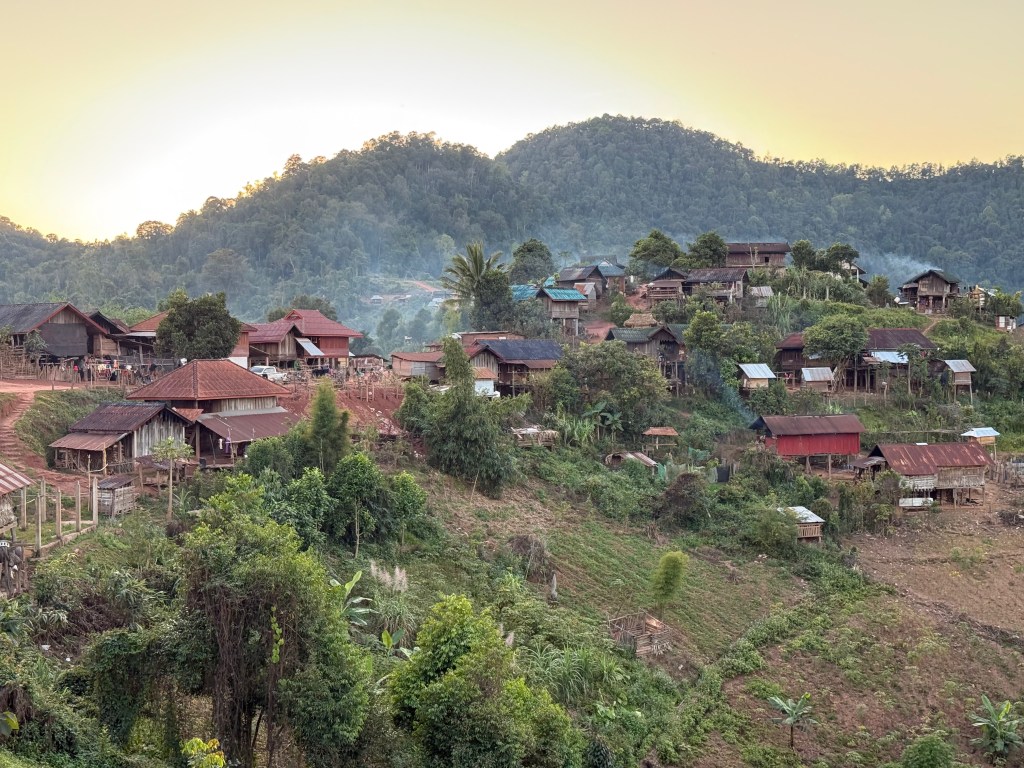
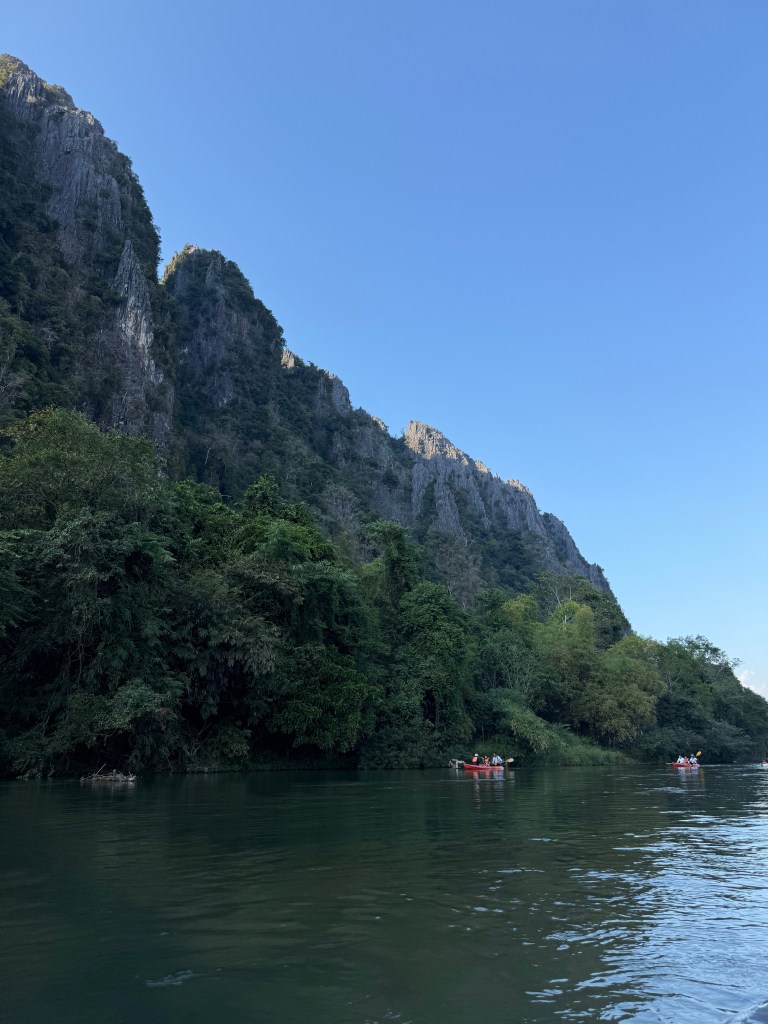
Sunsets and river days in the natural beauty of Laos.
Finding Community / Making Friends / Giving back
Being a digital nomad is not just about where you work, but also about the people you meet along the way. We spent more than 10 days in Laos, and one thing that really stood out to us is that there is not a huge foreigner or digital nomad community, especially outside the more touristy areas. But what Laos may lack in expat scene, it more than makes up for in the kindness of its people.
During our time there, we found locals to be incredibly warm and welcoming. One day, my family and I were simply trying to find a restaurant to eat at and ended up walking into what looked like a local gathering. It turned out to be a wedding celebration. Instead of turning us away, the people there completely welcomed us in. They invited us to sit down, shared food with us, and kept offering us beer. In Laos, people often drink beer in shots and toast constantly, so the drinks just kept coming all day. It was such a fun and unexpected experience, and it reminded us how friendly and generous people can be, even when there is a language barrier.

That said, if you are hoping to meet other foreigners or remote workers, it may take a bit more effort than in places like Thailand or Vietnam. In Laos, those connections are more likely to happen in cafés, hostels, day trips, or small traveler circles rather than through a large built-in nomad scene. this guide on How To Make Friends & Build Community As A Digital Nomad is a great place to start.
Here are some ways to build community while living in Laos:
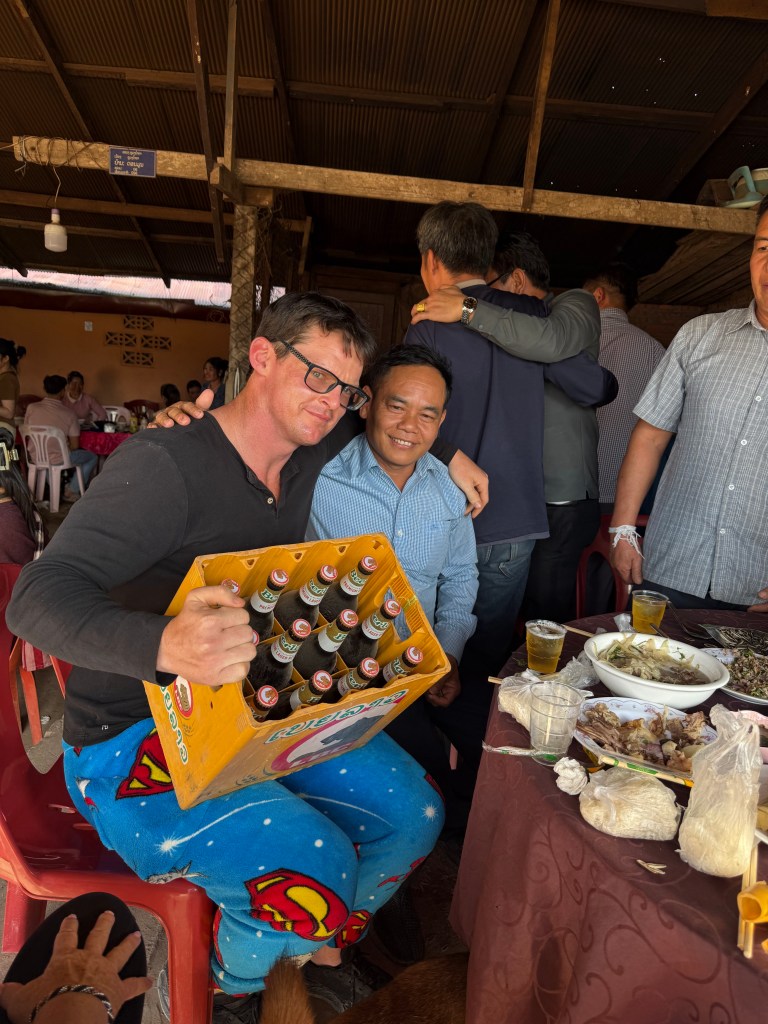
What started as a search for a restaurant turned into one of our favorite memories in Laos — being welcomed into a local wedding with food, beer, and incredible kindness.
Exercise / Outdoors
Laos is not just about temples, slow travel, and mountain views — it can also be a great place to stay active. Personally, my main form of exercise there was cycling from one city to another while my family traveled by train. I started in Chiang Mai, continued through Chiang Rai, and then crossed into Laos, riding through Luang Namtha, Muang Xay, Luang Prabang, Vang Vieng, and finally Vientiane. It was a big challenge with long days and difficult stretches, but for me it was one of the best ways to experience the country. It also became an important part of my training for my next race in June. If cycling is not your thing, there are still other good ways to stay active in Laos:
- Run: Some towns have quiet roads and riverside areas that work well for an easy run.
- Hike: Laos has beautiful mountain landscapes, trails, and nature areas that make hiking a great option.
- Explore nature: Waterfalls, viewpoints, caves, and countryside routes make it easy to stay moving while sightseeing.
- Go to the gym: In larger towns and cities, you can also find local gyms for a more structured workout.
Below, I’m sharing a map of my route through Laos.

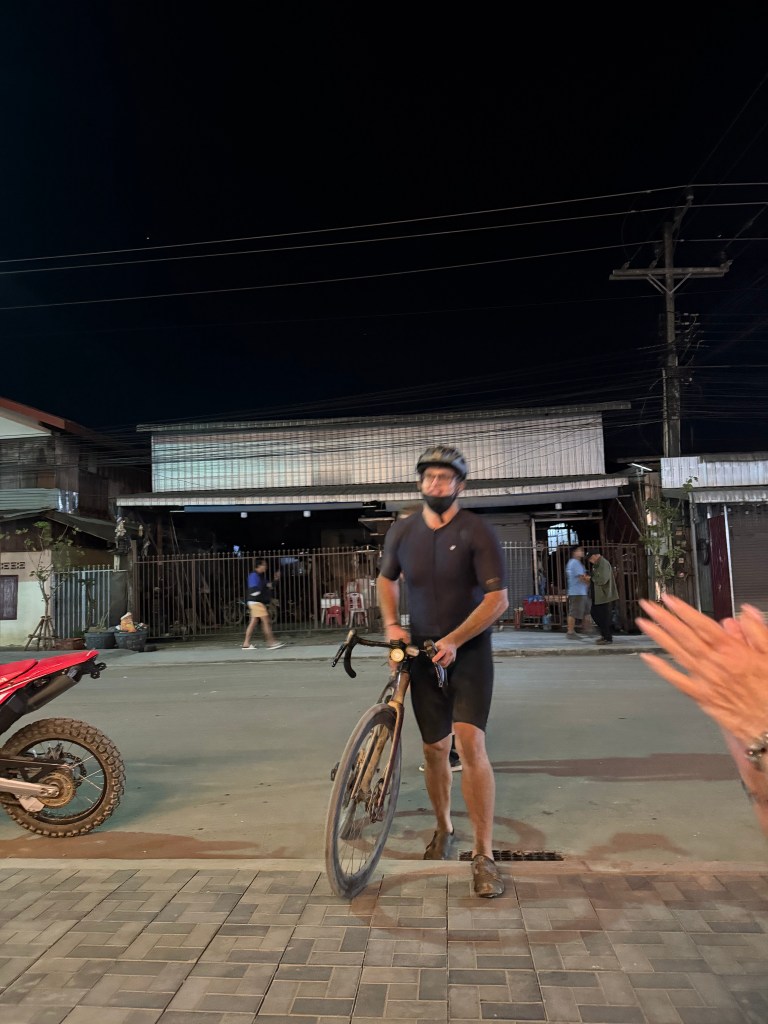
My bike stayed with me the whole journey — this photo was taken after finishing more than 200 kilometers on New Year’s Day.
Been to laos? Share Your Experience!
About Me

The Creator Of Digital Nomad Lifestyle
Hi! My name is Loren Ross, after establishing my own business while traveling the world I decided to create this blog for existing and aspiring digital nomads.
See My Full Journey To Being A Digital Nomad Here
Anything you want that you’re not seeing? Please reach out to me on one of the social media channels below, I’d love to see if I can help out. Check out my digital marketing business.
searchmarketingconsultingdenver.com
Leave a Comment